record found here
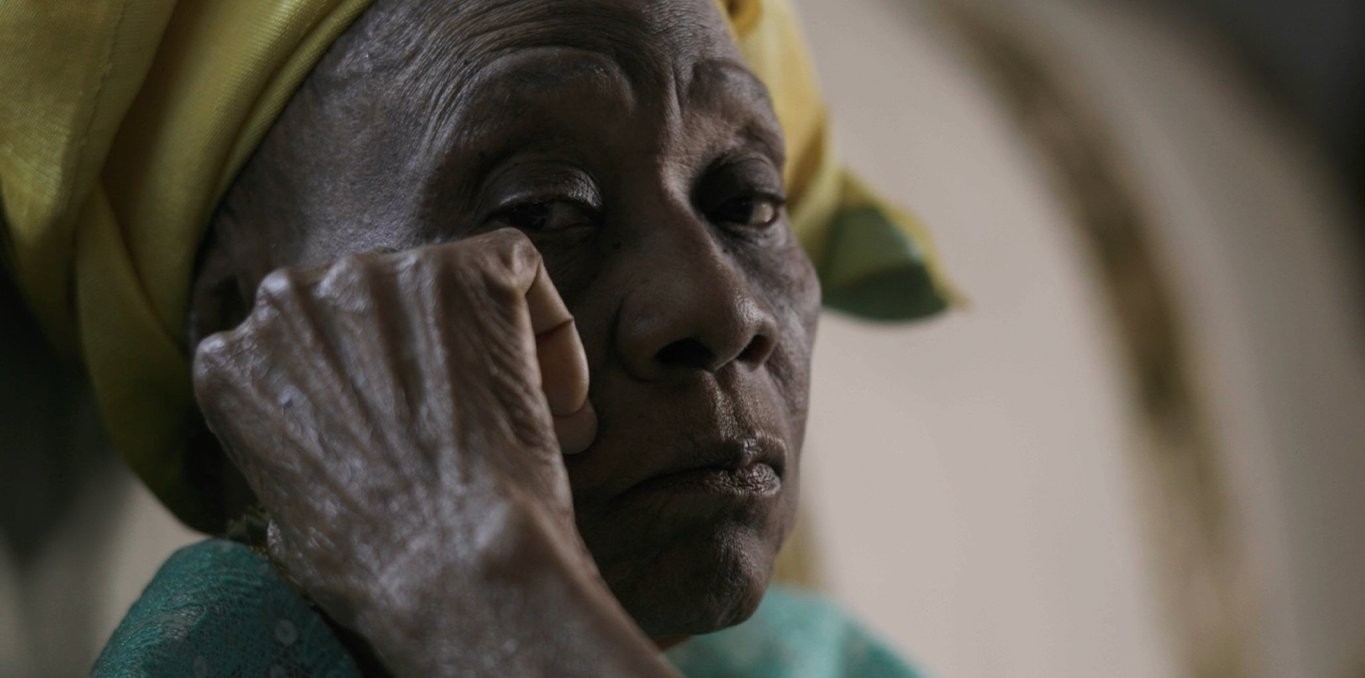
Ten years ago, lanaire aderemi’s grandmother told her about the Egba Women’s Revolt, a resistance movement against colonial taxation in the late 1940s in Abeokuta, Nigeria. Inspired by this story, lanaire explores archival documents, historical sites and oral testimonies to document the imaginative and revolutionary spirit of Abeokuta women in the 1940s.
| Directors | lanaire aderemi, lanaire aderemi |
| Actors | Badewa Ajibade, Badewa Ajibade |
| Share on |
The short film record found here foregrounds colonialism, feminism, modern archival practices vis-à-vis oral history, and Yoruba culture. The film, through the lens of filmmaker lanaire adeyemi, examines the past and present, youth and the elderly, within the context of knowledge formation, preservation, and dissemination. She not only invites us to meet her at the intersection of varied and sometimes polarizing perspectives, such as the pre-colonial and the post-colonial, modern and historical, oral history and written history, but also holds our hands, willingly participating in the discovery of cultural histories and secrets alongside her audience.
Her narration complements the visuals and, most importantly, provides a strong contrast to the oral interviews with her participants. Her perspective as a young, modern-day female Nigerian researcher is key and provides us with critical postcolonial insight, which is then used to interrogate pre-colonial and colonial Nigeria as a representation of the consequences of British imperialism—a system that tried to impose its ways on the market women of Egbaland but was met with resistance, the kind that ultimately led to postcolonial independence.
Badewa Ajibade
Filmmaker and programmer

-

English
Language: English
- Année 2024
- Pays Nigeria
- Durée 19
- Producteur lanaire aderemi
- Langue Yoruba, English
- Sous-titres English
- Résumé court Using oral testimonies and archival materials, a filmmaker retraces the Egba Women’s Revolt in Abeokuta, Nigeria, in the late 1940s.
- Ordre 3
- TLF_Applismb_CA 1
- Date édito CA 2026-01-30
The short film record found here foregrounds colonialism, feminism, modern archival practices vis-à-vis oral history, and Yoruba culture. The film, through the lens of filmmaker lanaire adeyemi, examines the past and present, youth and the elderly, within the context of knowledge formation, preservation, and dissemination. She not only invites us to meet her at the intersection of varied and sometimes polarizing perspectives, such as the pre-colonial and the post-colonial, modern and historical, oral history and written history, but also holds our hands, willingly participating in the discovery of cultural histories and secrets alongside her audience.
Her narration complements the visuals and, most importantly, provides a strong contrast to the oral interviews with her participants. Her perspective as a young, modern-day female Nigerian researcher is key and provides us with critical postcolonial insight, which is then used to interrogate pre-colonial and colonial Nigeria as a representation of the consequences of British imperialism—a system that tried to impose its ways on the market women of Egbaland but was met with resistance, the kind that ultimately led to postcolonial independence.
Badewa Ajibade
Filmmaker and programmer
-
English
Language: English
- Année 2024
- Pays Nigeria
- Durée 19
- Producteur lanaire aderemi
- Langue Yoruba, English
- Sous-titres English
- Résumé court Using oral testimonies and archival materials, a filmmaker retraces the Egba Women’s Revolt in Abeokuta, Nigeria, in the late 1940s.
- Ordre 3
- TLF_Applismb_CA 1
- Date édito CA 2026-01-30