Up the River with Acid
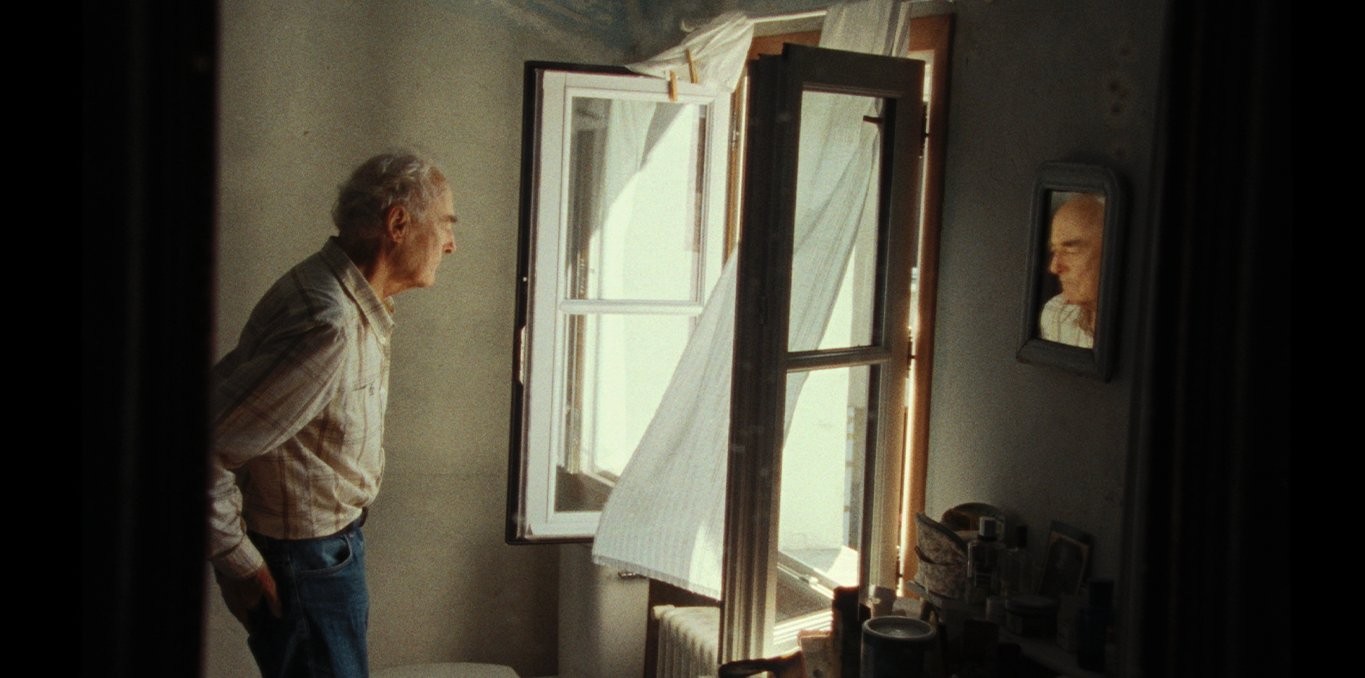
_Up the River with Acid_ is an intimate, impressionistic documentary by Harald Hutter that unfolds over two days in the life of his father, Horst, a former professor whose daily life is profoundly disrupted by cognitive decline. Shot on 16 mm, the film gently observes gestures, silences, and perceptions as memory begins to fragment, while subtly sketching the deep bond that unites Horst and his wife.
| Director | Harald Hutter |
| Actor | Jason Burnham |
| Share on |
Inside an old house bathed in light, a bird has walled itself in. Tracing concentric circles, it flutters, searching for a way out. The outside world is kept at a distance by the walls that rise silently, indifferent. The bird remembers the sky; yet its wings strike walls. The bird remembers…
In this very beautiful film, which unfolds like a love letter from a son to his parents—which the father is experiencing cognitive decline—the filmmaker Harald Hutter explores memory, fleeting time, and family bonds with great tenderness and keen sensory awareness. Shaped by a constant attention to the physicality of bodies and nourished by the mother’s writings, the film allows us to see and feel the couple’s everyday life during this crucial period of their lives; this present in which “learning how to die has become a more pressing exercise”... for the father, but also for those close to him.
In this learning process, countless mnemonic processes are set in motion. For Horst, the father, memory oscillates between dormancy and wandering: it circles, searches, persists, clings. At times, it finds its bearings again. In a suspended moment, touched by grace—a slow 360° panoramic shot revealing a room in the house inhabited by memories—the filmmaker’s parents recall their first meeting. Horst remembers. Everything, including certain details that Francine, the mother, would rather not recall.
Beyond illness, Up the River with Acid questions our existential relationship to memory: how it inhabits our intimacy, how it resurfaces, is transmitted, fragments, shared, preserved… willingly or not. How it can also become a source of creation, as it does here, when an attentive, loving, and deeply human gaze takes hold of it and turns it into a gesture of love. For what remains, at the twilight of life, if not the love of one’s own?
A bird never forgets how to fly.
Jason Burnham
Tënk editorial manager

-
Français
1h03
Language: Français
Subtitles: Français -
English
1h03
Language: English
Subtitles: English
- Année 2023
- Pays France
- Durée 63
- Producteur Harald Hutter
- Langue French, English
- Sous-titres French, English
- Résumé court Two days in the life of Horst, a man whose life took a decisive turn following a series of cognitive declines.
- Mention festival Grand Prix · Cinéma du Réel 2023
- Ordre 3
- TLF_Applismb_CA 1
- Date édito CA 2025-12-26
Inside an old house bathed in light, a bird has walled itself in. Tracing concentric circles, it flutters, searching for a way out. The outside world is kept at a distance by the walls that rise silently, indifferent. The bird remembers the sky; yet its wings strike walls. The bird remembers…
In this very beautiful film, which unfolds like a love letter from a son to his parents—which the father is experiencing cognitive decline—the filmmaker Harald Hutter explores memory, fleeting time, and family bonds with great tenderness and keen sensory awareness. Shaped by a constant attention to the physicality of bodies and nourished by the mother’s writings, the film allows us to see and feel the couple’s everyday life during this crucial period of their lives; this present in which “learning how to die has become a more pressing exercise”... for the father, but also for those close to him.
In this learning process, countless mnemonic processes are set in motion. For Horst, the father, memory oscillates between dormancy and wandering: it circles, searches, persists, clings. At times, it finds its bearings again. In a suspended moment, touched by grace—a slow 360° panoramic shot revealing a room in the house inhabited by memories—the filmmaker’s parents recall their first meeting. Horst remembers. Everything, including certain details that Francine, the mother, would rather not recall.
Beyond illness, Up the River with Acid questions our existential relationship to memory: how it inhabits our intimacy, how it resurfaces, is transmitted, fragments, shared, preserved… willingly or not. How it can also become a source of creation, as it does here, when an attentive, loving, and deeply human gaze takes hold of it and turns it into a gesture of love. For what remains, at the twilight of life, if not the love of one’s own?
A bird never forgets how to fly.
Jason Burnham
Tënk editorial manager
-
Français
Duration: 1h03Language: Français
Subtitles: Français1h03 -
English
Duration: 1h03Language: English
Subtitles: English1h03
- Année 2023
- Pays France
- Durée 63
- Producteur Harald Hutter
- Langue French, English
- Sous-titres French, English
- Résumé court Two days in the life of Horst, a man whose life took a decisive turn following a series of cognitive declines.
- Mention festival Grand Prix · Cinéma du Réel 2023
- Ordre 3
- TLF_Applismb_CA 1
- Date édito CA 2025-12-26