Solecito
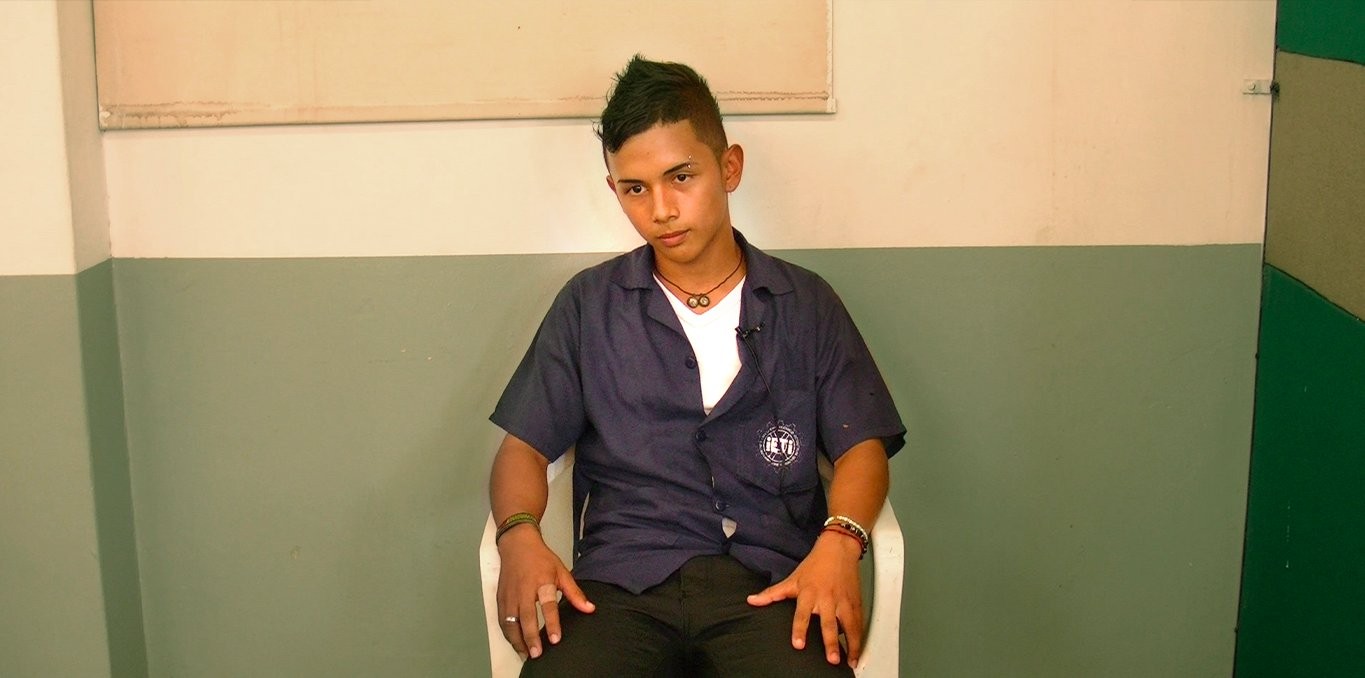
It was during a casting call at their school that the two protagonists of this film met the filmmaker. Separately, each of them shared the story of their breakup. What if fiction could bring them back together?
| Directors | Oscar Ruiz Navia, Oscar Ruiz Navia |
| Share on |
From this curious—unclassifiable—cinematic object emerges something like a promise of freedom. It has to do with Oscar Ruiz Navia’s approach, which seems to reinvent his cinema with each new film, as if every project demanded its own distinct way of being made. Here, what guides the direction are the traits of these two “characters.” Camila and Maicol have gestures that cannot be replicated. They, too, have ways of doing things that are entirely their own, even as they are shaped by all kinds of myths and cultures: adolescence, machismo, language, popular culture, cinema. What does it mean to be looked at by a filmmaker—how can that singular bubble be extended through mise-en-scène? To play the game of one’s own life and to see oneself represented in this way, magnified, seen. The two teenagers of Solecito are at once utterly unique—with their turns of phrase, their mannerisms, their pasts, their feelings and desires—and yet they are also characters; they capture something of the human experience. The promises of adolescence and the disappointments of love. The shift from interview to fiction opens up that precious space that exists within each of us: those romances nurtured in the recesses of our imaginations and our inner dialogues. To exist more intensely than life itself, like a character in fiction—whether literary, cinematic, or documentary…
Naomie Décarie-Daigneault
Tënk Artistic Director

-
Français
20 mn
Language: Français -
English
20 mn
Language: English
- Année 2013
- Pays Colombia, Denmark, France
- Durée 20
- Producteur Contravia Films, Burning Blue, Fischer Film, Arizona Productions
- Langue Spanish
- Sous-titres French, English
- Résumé court At a casting call, two students met the filmmaker and, separately, shared their breakup stories. Could fiction bring them back together?
- TLF_Applismb_CA 1
- Date édito CA 2026-04-24
From this curious—unclassifiable—cinematic object emerges something like a promise of freedom. It has to do with Oscar Ruiz Navia’s approach, which seems to reinvent his cinema with each new film, as if every project demanded its own distinct way of being made. Here, what guides the direction are the traits of these two “characters.” Camila and Maicol have gestures that cannot be replicated. They, too, have ways of doing things that are entirely their own, even as they are shaped by all kinds of myths and cultures: adolescence, machismo, language, popular culture, cinema. What does it mean to be looked at by a filmmaker—how can that singular bubble be extended through mise-en-scène? To play the game of one’s own life and to see oneself represented in this way, magnified, seen. The two teenagers of Solecito are at once utterly unique—with their turns of phrase, their mannerisms, their pasts, their feelings and desires—and yet they are also characters; they capture something of the human experience. The promises of adolescence and the disappointments of love. The shift from interview to fiction opens up that precious space that exists within each of us: those romances nurtured in the recesses of our imaginations and our inner dialogues. To exist more intensely than life itself, like a character in fiction—whether literary, cinematic, or documentary…
Naomie Décarie-Daigneault
Tënk Artistic Director
-
Français
Duration: 20 minutesLanguage: Français20 mn -
English
Duration: 20 minutesLanguage: English20 mn
- Année 2013
- Pays Colombia, Denmark, France
- Durée 20
- Producteur Contravia Films, Burning Blue, Fischer Film, Arizona Productions
- Langue Spanish
- Sous-titres French, English
- Résumé court At a casting call, two students met the filmmaker and, separately, shared their breakup stories. Could fiction bring them back together?
- TLF_Applismb_CA 1
- Date édito CA 2026-04-24