Lloyd Wong, Unfinished
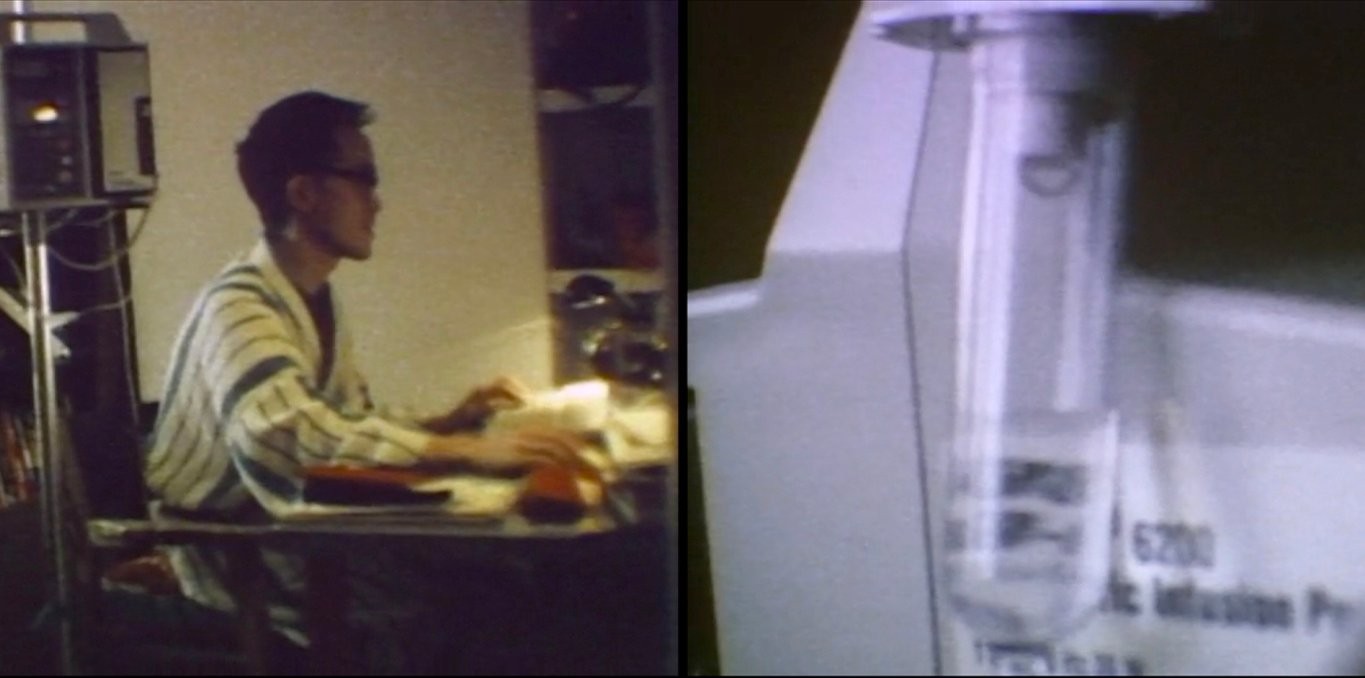
In the early 1990s, Lloyd Wong began to make a work based on his experiences living with AIDS in Toronto, but he died from AIDS-related illnesses before completing it. For three decades, his work-in-progress was considered "long-lost" until it resurfaced at The ArQuives. In this experimental documentary, Lesley Loksi Chan combines Lloyd Wong's footage with fragments of her research notes to reflect on what it means to inherit images from queer communities and to attempt to understand someone through multiple takes. Rough and unprocessed, this film explores the meaning of incompletion.
| Directors | Lesley Loksi Chan, Lloyd Wong |
| Actor | Naomie Décarie-Daigneault |
| Share on |
Videotapes are entrusted to a filmmaker—Richard Fung. He later donates them to The ArQuives, the world's largest independent archive dedicated to 2SLGBTQIA+ people. On these tapes, we see Lloyd Wong, a Toronto-based artist, writer, and activist who died of AIDS-related complications. He films himself preparing an intravenous infusion of antiviral medication, with a cooking show playing in the background. A guide in self-defense for people living with HIV; a lesson in self-determination and autonomy in care.
Once lost, the tapes are rediscovered and digitized by a historian… before ending up in the hands of an artist, Lesley Loksi Chan, who feels called to bring Wong's testimony back into the world. Chan never knew him; a strange interplay of chance and connections ultimately assigned her this mission.
How does one think through such a testimony? How does one honor this raw, clear-sighted voice that exposes the invisible realities of people living with AIDS? Chan opts for restraint and reflects on incompleteness. For the task is perpetual—an ongoing process, an attempt to give form to the ghosts of the struggle, to the actors of that era who fought so hard for care and research. The film is as much about Wong's fight as it is about the perpetual processes of memory: a constant dialogue, an endless reactivation of traces from the past within present-day struggles.
While AIDS-related battles have been relegated—like so many other aspects of our lives—to the individual sphere since the advent of treatment, the stigma, the invisibility, and the profound trauma generated by this epidemic have not disappeared. The resurgence of memorial works, the publication of collective volumes, and the gathering of testimonies from people affected by the disease now allow us to reaffirm the social and public nature of health, and the contribution of grassroots activism to the evolution of treatments. For the fight remains, as ever, unfinished.
Naomie Décarie-Daigneault
Tënk's Artistic Director

-
English
30 mn
Language: English
Subtitles: English -
Français
30 mn
Language: Français
Subtitles: Français
- Année 2025
- Pays Canada
- Durée 30
- Producteur Lesley Loksi Chan, Luo Li, Phanuel Antwi
- Langue English
- Sous-titres French, English
- Résumé court An artist takes up the unfinished work of Lloyd Wong, a Chinese Canadian filmmaker who died prematurely from AIDS-related illness.
- Mention festival Prix du meilleur court ou moyen métrage national · RIDM 2025
- TLF_Applismb_CA 1
- Date édito CA 2026-03-20
Videotapes are entrusted to a filmmaker—Richard Fung. He later donates them to The ArQuives, the world's largest independent archive dedicated to 2SLGBTQIA+ people. On these tapes, we see Lloyd Wong, a Toronto-based artist, writer, and activist who died of AIDS-related complications. He films himself preparing an intravenous infusion of antiviral medication, with a cooking show playing in the background. A guide in self-defense for people living with HIV; a lesson in self-determination and autonomy in care.
Once lost, the tapes are rediscovered and digitized by a historian… before ending up in the hands of an artist, Lesley Loksi Chan, who feels called to bring Wong's testimony back into the world. Chan never knew him; a strange interplay of chance and connections ultimately assigned her this mission.
How does one think through such a testimony? How does one honor this raw, clear-sighted voice that exposes the invisible realities of people living with AIDS? Chan opts for restraint and reflects on incompleteness. For the task is perpetual—an ongoing process, an attempt to give form to the ghosts of the struggle, to the actors of that era who fought so hard for care and research. The film is as much about Wong's fight as it is about the perpetual processes of memory: a constant dialogue, an endless reactivation of traces from the past within present-day struggles.
While AIDS-related battles have been relegated—like so many other aspects of our lives—to the individual sphere since the advent of treatment, the stigma, the invisibility, and the profound trauma generated by this epidemic have not disappeared. The resurgence of memorial works, the publication of collective volumes, and the gathering of testimonies from people affected by the disease now allow us to reaffirm the social and public nature of health, and the contribution of grassroots activism to the evolution of treatments. For the fight remains, as ever, unfinished.
Naomie Décarie-Daigneault
Tënk's Artistic Director
-
English
Duration: 30 minutesLanguage: English
Subtitles: English30 mn -
Français
Duration: 30 minutesLanguage: Français
Subtitles: Français30 mn
- Année 2025
- Pays Canada
- Durée 30
- Producteur Lesley Loksi Chan, Luo Li, Phanuel Antwi
- Langue English
- Sous-titres French, English
- Résumé court An artist takes up the unfinished work of Lloyd Wong, a Chinese Canadian filmmaker who died prematurely from AIDS-related illness.
- Mention festival Prix du meilleur court ou moyen métrage national · RIDM 2025
- TLF_Applismb_CA 1
- Date édito CA 2026-03-20