The Shape of Things
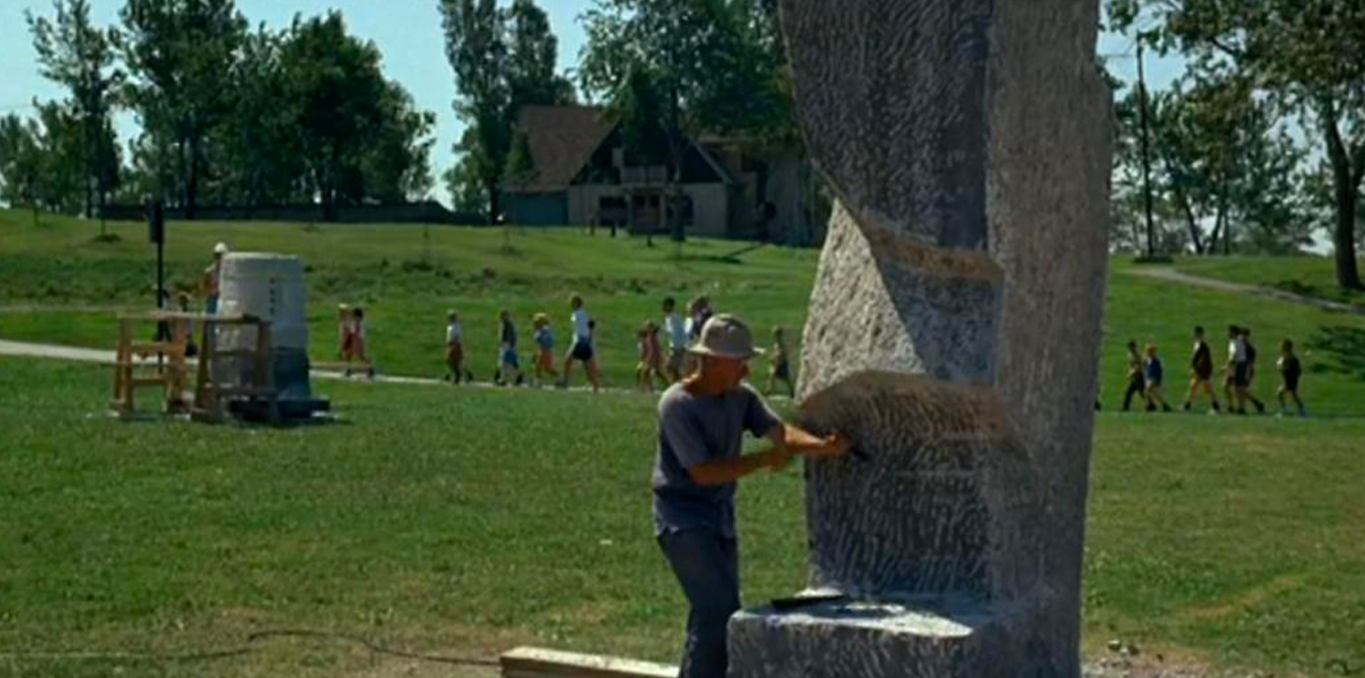
A spectacular film shot during the first sculpture symposium held in North America, in Montreal in the summer of 1964, _The Shape of Things_ follows eleven sculptors from nine countries as they hammer, carve, and shape stone.
| Director | Jacques Giraldeau |
| Actor | Frédéric Savard |
| Share on |
The sound of matter being hammered echoes through the city as the very first international sculpture symposium in North America takes place. It is the summer of 1964, and a dozen artists from all over the world gather on Mount Royal to participate in this one-of-a-kind event, which will be documented by the NFB in an impressionistic short film by Jacques Giraldeau, who would later become a leading figure in art films in Quebec.
Devoid of talking heads, interviews, or biographical details, the barely ten-minute documentary emphasizes the act of sculpting and the works that emerge from the symposium, rather than dwelling on the circumstances surrounding the creation of this international gathering. By inventively filming the sculptors at work and the unusual structures that result, Giraldeau creates an avant-garde work that resembles a cinematic sculpture more than a traditional documentary.
This approach gives us privileged access to the artists’ creative process—something that would have been impossible without the collaborative presence of the camera, brilliantly handled by cinematographer George Dufaux. In an interview with René Rozon for Vie des Arts magazine in 1978, the director stated:
“Wanting to capture what was happening, I therefore remained on the surface, outside the subject, focusing on four aspects of the symposium: a place, the green spaces of Mount Royal where the sculptors worked; textures, notably stone, marble, and metals; faces, those of the artists at work, bringing out their temperament and their relationships with one another; and the universe of forms they created.”¹
Finally, the film also stands out for its experimental soundtrack, designed by the great Montreal composer Pierre Mercure. Made up mostly of sounds recorded on magnetic tape during filming and later manipulated and incorporated into the instrumentation, this modern composition contributes to the immersive feeling sought by Giraldeau. It is also one of the earliest examples of musique concrète produced in Quebec, only a few years after Mercure took part in a study program in France with Pierre Schaeffer. The Shape of Things won the award for Best Documentary at the La Felguera Cultural Film Festival in Spain upon its release.
Frédéric Savard
Archivist and programmer
1. Rozon, R. (1978). Jacques Giraldeau, ou le cheminement de la culture populaire. Vie des arts, 23(93), 63–67.

-
Français
10 mn
Language: Français -
English
10 mn
Language: English
- Année 1965
- Pays Quebec
- Durée 10
- Producteur ONF / NFB
- Langue French, English
- Résumé court A spectacular film shot during the first sculpture symposium held in North America, in Montreal in 1964, where eleven sculptors hammer, carve, and shape stone.
- Ordre 4
- TLF_Applismb_CA 1
- Date édito CA 2026-05-15
The sound of matter being hammered echoes through the city as the very first international sculpture symposium in North America takes place. It is the summer of 1964, and a dozen artists from all over the world gather on Mount Royal to participate in this one-of-a-kind event, which will be documented by the NFB in an impressionistic short film by Jacques Giraldeau, who would later become a leading figure in art films in Quebec.
Devoid of talking heads, interviews, or biographical details, the barely ten-minute documentary emphasizes the act of sculpting and the works that emerge from the symposium, rather than dwelling on the circumstances surrounding the creation of this international gathering. By inventively filming the sculptors at work and the unusual structures that result, Giraldeau creates an avant-garde work that resembles a cinematic sculpture more than a traditional documentary.
This approach gives us privileged access to the artists’ creative process—something that would have been impossible without the collaborative presence of the camera, brilliantly handled by cinematographer George Dufaux. In an interview with René Rozon for Vie des Arts magazine in 1978, the director stated:
“Wanting to capture what was happening, I therefore remained on the surface, outside the subject, focusing on four aspects of the symposium: a place, the green spaces of Mount Royal where the sculptors worked; textures, notably stone, marble, and metals; faces, those of the artists at work, bringing out their temperament and their relationships with one another; and the universe of forms they created.”¹
Finally, the film also stands out for its experimental soundtrack, designed by the great Montreal composer Pierre Mercure. Made up mostly of sounds recorded on magnetic tape during filming and later manipulated and incorporated into the instrumentation, this modern composition contributes to the immersive feeling sought by Giraldeau. It is also one of the earliest examples of musique concrète produced in Quebec, only a few years after Mercure took part in a study program in France with Pierre Schaeffer. The Shape of Things won the award for Best Documentary at the La Felguera Cultural Film Festival in Spain upon its release.
Frédéric Savard
Archivist and programmer
1. Rozon, R. (1978). Jacques Giraldeau, ou le cheminement de la culture populaire. Vie des arts, 23(93), 63–67.
-
Français
Duration: 10 minutesLanguage: Français10 mn -
English
Duration: 10 minutesLanguage: English10 mn
- Année 1965
- Pays Quebec
- Durée 10
- Producteur ONF / NFB
- Langue French, English
- Résumé court A spectacular film shot during the first sculpture symposium held in North America, in Montreal in 1964, where eleven sculptors hammer, carve, and shape stone.
- Ordre 4
- TLF_Applismb_CA 1
- Date édito CA 2026-05-15