Upstairs With David Amram
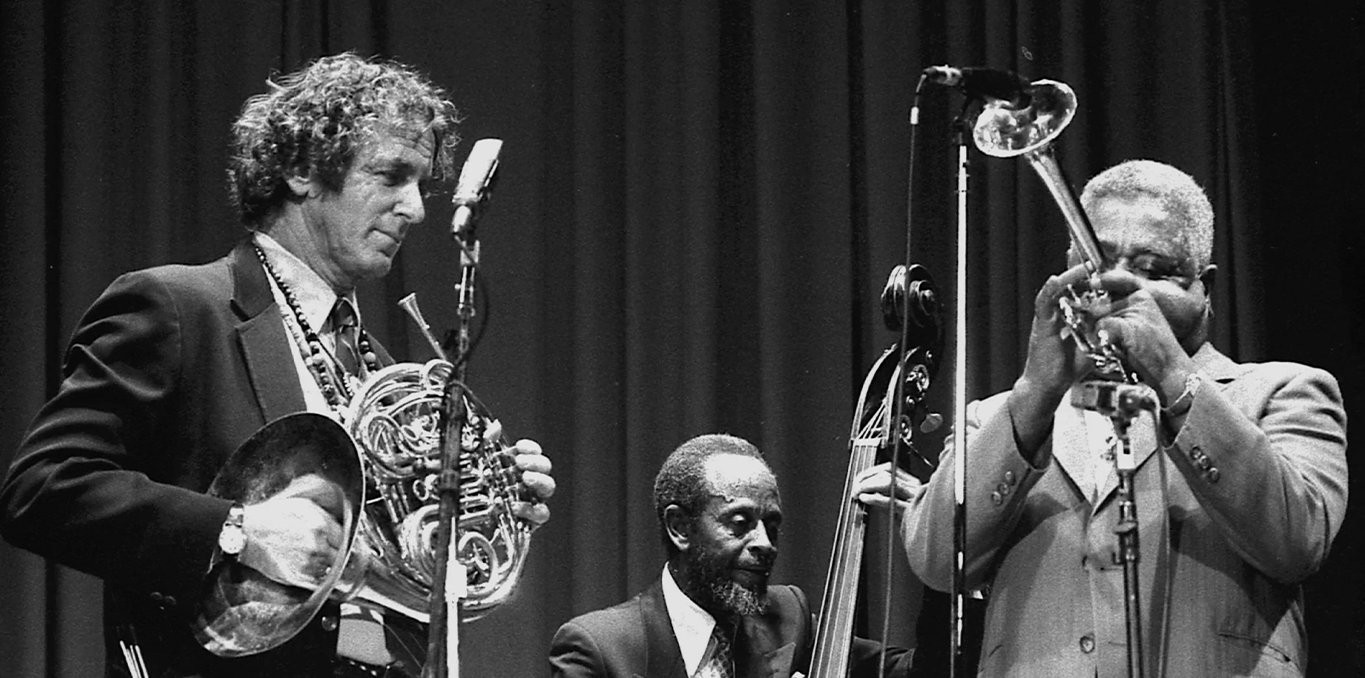
Before her illustrious career as one of Canada’s foremost documentary filmmakers, Alanis Obomsawin was an acclaimed singer and musician at the forefront of the Indigenous rights movement in North America. During this unprecedented time, she befriended fellow musician and activist David Amram, often described as the “Renaissance man of American music.” A legendary talent and multi-instrumentalist, David embodies the passion and love musicians have for their artform. In this remarkable conversation recorded in 2008 at Montreal’s celebrated Upstairs jazz bar, Alanis and David reflect on their shared history and a time when music was a powerful tool for social change.
| Directors | Alanis Obomsawin, Alanis Obomsawin |
| Share on |
Now 95 years old, David Amram has worn many hats (and many necklaces!) throughout his long life: a highly accomplished multi-instrumentalist, a composer of film scores (notably for Elia Kazan and John Frankenheimer), and an actor in the legendary Pull My Daisy (Robert Frank and Alfred Leslie, 1959), a short film that offers an energetic portrait of the Beat Generation. A Francophile with an insatiable curiosity and an advocate for minority cultures, the American often spoke in the language of Molière with Jack Kerouac, whom he met in 1956, one year before the publication of On the Road. In 1957, the two friends are said to have organized the first poetry readings accompanied by jazz music in the history of New York City.
It is therefore easy to understand the enthusiasm visible, some fifty years later, on the faces of Normand Guilbeault and Pierre Tanguay, the two musicians accompanying Amram for this performance filmed by Martin Duckworth at Upstairs. During their conversation, Amram and Obomsawin bring up a frequently overlooked fact of history: Indigenous participation at Woodstock in 1969. It is also an opportunity to evoke, through remarkable archival footage from the Mariposa Festival, the great documentarian’s past as a musician.
In the 1970s, alongside figures such as Muhammad Ali and Marlon Brando, Amram was among the first to publicly defend Indigenous rights in the United States. In front of Obomsawin’s camera, he emphasizes the importance of first knowing and loving one’s own heritage (what First Nations have passed down to North Americans) before being able to appreciate other cultures. These remarks echo the universalism, anti-elitism, and openness to the world that have always been at the heart of the musician’s thought and artistic practice.
Jean-Philippe Desrochers
Critic

-
Français
16 mn
Language: Français -
English
16 mn
Language: English
- Année 2021
- Pays Quebec
- Durée 16
- Producteur ONF / NFB
- Langue French, English
- Sous-titres French
- Résumé court In this remarkable conversation recorded in 2008, Alanis Obomsawin and David Amram reflect on their shared history and on a time when music was a powerful tool for social change.
- TLF_Applismb_CA 1
- Date édito CA 2026-07-03
Now 95 years old, David Amram has worn many hats (and many necklaces!) throughout his long life: a highly accomplished multi-instrumentalist, a composer of film scores (notably for Elia Kazan and John Frankenheimer), and an actor in the legendary Pull My Daisy (Robert Frank and Alfred Leslie, 1959), a short film that offers an energetic portrait of the Beat Generation. A Francophile with an insatiable curiosity and an advocate for minority cultures, the American often spoke in the language of Molière with Jack Kerouac, whom he met in 1956, one year before the publication of On the Road. In 1957, the two friends are said to have organized the first poetry readings accompanied by jazz music in the history of New York City.
It is therefore easy to understand the enthusiasm visible, some fifty years later, on the faces of Normand Guilbeault and Pierre Tanguay, the two musicians accompanying Amram for this performance filmed by Martin Duckworth at Upstairs. During their conversation, Amram and Obomsawin bring up a frequently overlooked fact of history: Indigenous participation at Woodstock in 1969. It is also an opportunity to evoke, through remarkable archival footage from the Mariposa Festival, the great documentarian’s past as a musician.
In the 1970s, alongside figures such as Muhammad Ali and Marlon Brando, Amram was among the first to publicly defend Indigenous rights in the United States. In front of Obomsawin’s camera, he emphasizes the importance of first knowing and loving one’s own heritage (what First Nations have passed down to North Americans) before being able to appreciate other cultures. These remarks echo the universalism, anti-elitism, and openness to the world that have always been at the heart of the musician’s thought and artistic practice.
Jean-Philippe Desrochers
Critic
-
Français
Duration: 16 minutesLanguage: Français16 mn -
English
Duration: 16 minutesLanguage: English16 mn
- Année 2021
- Pays Quebec
- Durée 16
- Producteur ONF / NFB
- Langue French, English
- Sous-titres French
- Résumé court In this remarkable conversation recorded in 2008, Alanis Obomsawin and David Amram reflect on their shared history and on a time when music was a powerful tool for social change.
- TLF_Applismb_CA 1
- Date édito CA 2026-07-03