In Praise of Darkness
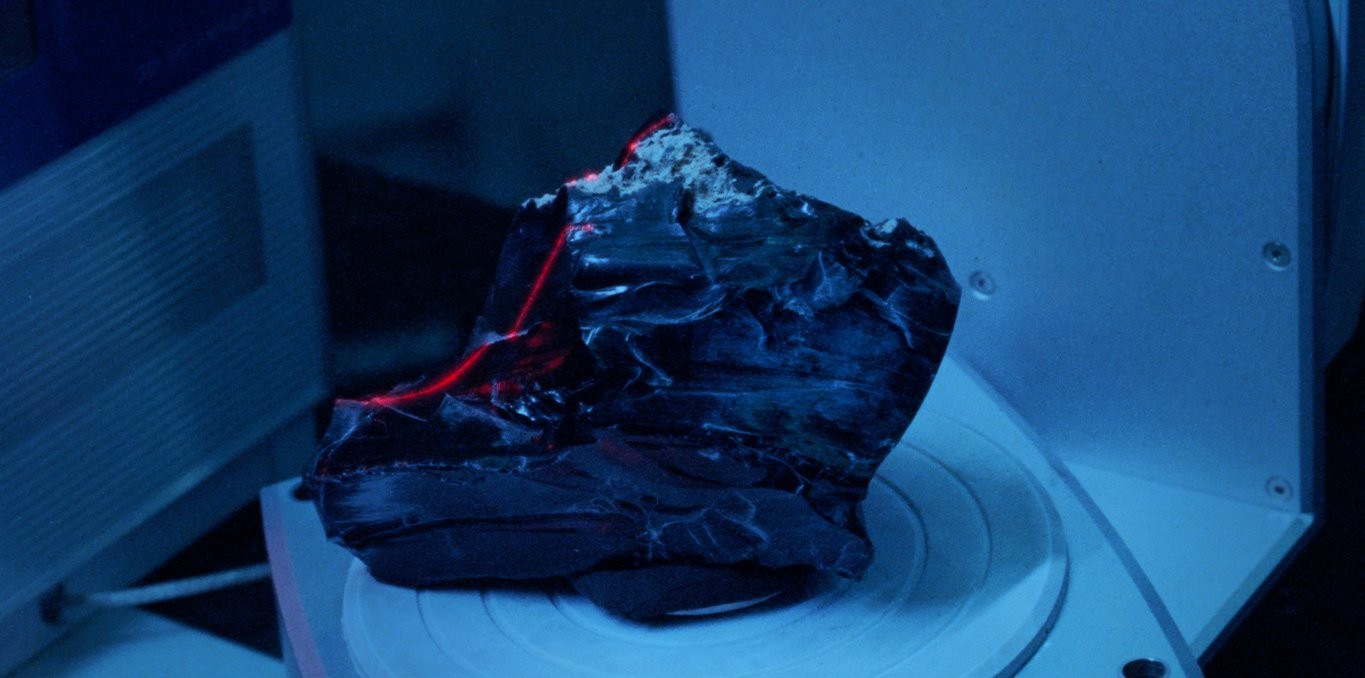
Deep in Ecuador’s Mullumica Valley, figures are busy extracting obsidian, an opaque volcanic rock. The rock then begins its metamorphosis, transported from the quarry to the pristine confines of a laboratory where it takes on its ultimate role – as a replacement for the director’s artificial eye. A mineral chronicle charting the course of healing.
| Director | Adrián Balseca |
| Actor | Jason Todd |
| Share on |
Patient, methodical, assured, and perhaps a little austere. These four adjectives are embraced without hesitation by In Praise of Darkness. The camera, along with the sumptuous grain of its images, takes us on a winding journey from the caves of Ecuador to a dark, state-of-the-art laboratory, accompanied by medical imagery that grows increasingly elusive.
The film’s highly sensory meandering is reminiscent of the filmmaker’s own journey, having lost his sight. Darkness feels strangely comforting despite its omnipresence. The cave, the elegant surface of obsidian, the coldness of the technological tools populating the frame—all these elements come together to form something utterly mesmerizing. There is no trace of warmth to be found, and yet here we are, perfectly at ease. After all, the destination is already known; the synopsis reveals it. The sum of these many places, gestures, and machines serves only one purpose: the artist’s well-being. To have an artificial eye; to reclaim a part of his humanity.
Jason Todd
Programmer and filmmaker

-

Français
Language: Français
- Année 2024
- Pays Ecuador
- Durée 18
- Producteur Angamarca Cine
- Langue Without dialogue
- Résumé court A geological chronicle tracing the journey of a rock, from the valley where it was quarried to the filmmaker's artificial eye.
- Ordre 1
- TLF_Applismb_CA 1
- Date édito CA 2026-09-04
Patient, methodical, assured, and perhaps a little austere. These four adjectives are embraced without hesitation by In Praise of Darkness. The camera, along with the sumptuous grain of its images, takes us on a winding journey from the caves of Ecuador to a dark, state-of-the-art laboratory, accompanied by medical imagery that grows increasingly elusive.
The film’s highly sensory meandering is reminiscent of the filmmaker’s own journey, having lost his sight. Darkness feels strangely comforting despite its omnipresence. The cave, the elegant surface of obsidian, the coldness of the technological tools populating the frame—all these elements come together to form something utterly mesmerizing. There is no trace of warmth to be found, and yet here we are, perfectly at ease. After all, the destination is already known; the synopsis reveals it. The sum of these many places, gestures, and machines serves only one purpose: the artist’s well-being. To have an artificial eye; to reclaim a part of his humanity.
Jason Todd
Programmer and filmmaker
-
Français
Language: Français
- Année 2024
- Pays Ecuador
- Durée 18
- Producteur Angamarca Cine
- Langue Without dialogue
- Résumé court A geological chronicle tracing the journey of a rock, from the valley where it was quarried to the filmmaker's artificial eye.
- Ordre 1
- TLF_Applismb_CA 1
- Date édito CA 2026-09-04