The Blind Owl
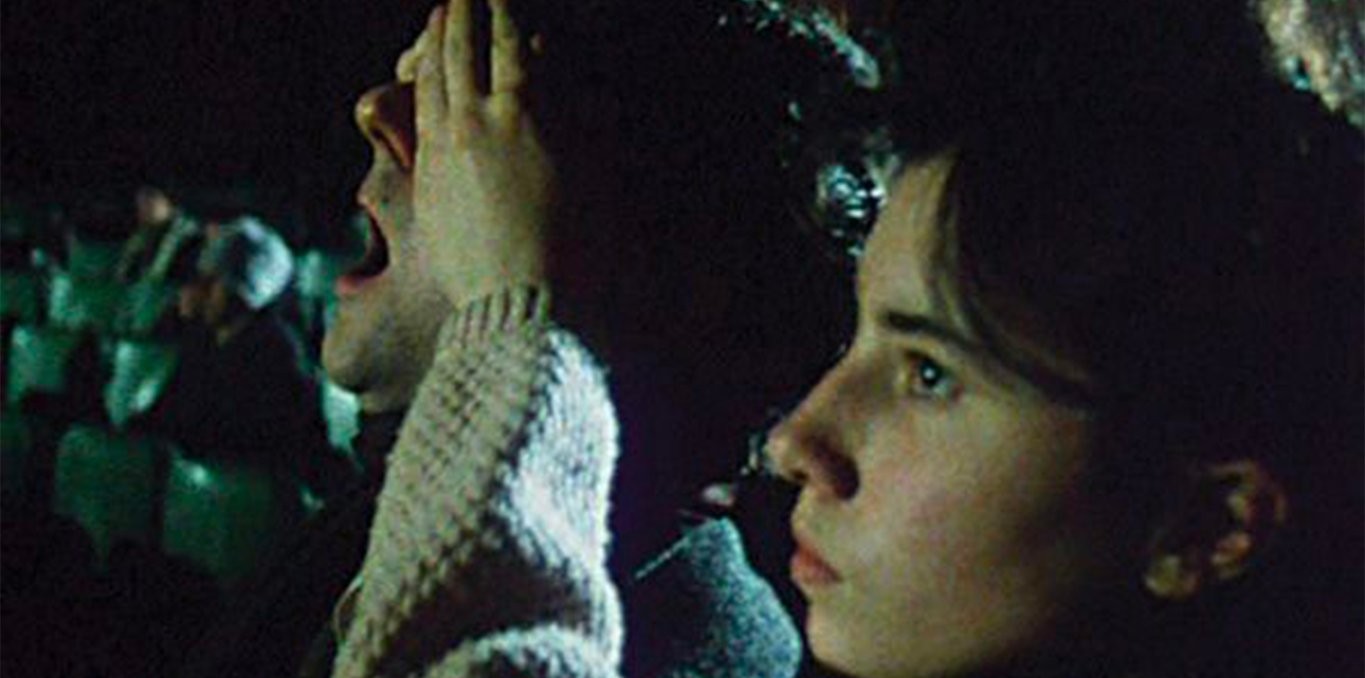
An immigrant movie projectionist drifts into an oneiric and fantastical spiral after falling in love with a dancer who appears on his screen. With this singular film, Raoul Ruiz crafts a highly free and hybrid adaptation of two major literary works: _The Blind Owl_ by Sadegh Hedayat and _Damned by Despair_ by Tirso de Molina.
| Director | Raúl Ruiz |
| Actor | Claire Valade |
| Share on |
Welcome to Raúl Ruiz’s house. If you have never stepped inside before today, a few suggestions: relax, take off your coat, keep your shoes on if you like, settle wherever you feel comfortable, as long as it is a resting place that leaves your mind perfectly free and open, ready to receive the waking dreams that will be gently breathed into it. Ruiz is a filmmaker like no other. Astonishingly prolific, he directed a staggering number of films—119 in total, between 1963 and 2023, including five released posthumously (he passed away in 2011!)—weaving together styles, genres, and formats according to the whims of his imagination, whether in his native Chile or his adopted France. From documentary to fiction to art cinema, his works always privilege a singular relationship to time, dreams, and the construction—or deconstruction—of narrative.
Although The Blind Owl belongs more to the realm of experimental fiction than to proper documentary, it often finds its way onto lists devoted to nonfiction cinema. Which is, one has to admit, wonderfully mad and, in a way, not altogether surprising, since this is the hypnotist Ruiz we are talking about. As if film programmers and documentary specialists had fallen under the spell of the film. As if Ruiz had managed to convince them that these adaptations of two literary works captured the spirit and substance of their source texts with such precision and fidelity, despite the film’s dreamlike and surreal qualities, that it was almost as though the film itself were, in some sense, documenting the works in question.
That said, The Blind Owl nevertheless adopts many of the hallmarks of Ruiz’s documentary cinema: his meticulous attention to the rendering of color, his fondness for spoken text and narration (sometimes layered or multiple) that conveys states of mind and describes unexpected or intangible gestures, his static shots, and his tableau-like staging. In fact, the film serves as a perfect gateway into Ruiz’s cinema—documentary and fiction alike (and everything in between)—for it seems to hover somewhere above the familiar world, like a journey through a mind that does not perceive things as most people do, and for which reality resides somewhere within the imaginary, fantasy, and the invisible, while invention inhabits the interstices of the concrete, the material, and the corporeal. The point is not to understand everything, but rather to absorb, to let oneself be steeped in it, to surrender, and to discover where one emerges on the other side of the dream.
Claire Valade
Critic and programmer

-
Français
1h34
Language: Français -
English
1h34
Language: English
- Année 1987
- Pays France
- Durée 94
- Producteur Light Night Productions, Maison de la Culture du Havre, La Sept
- Langue French, Spanish, Imaginary language
- Résumé court A projectionist at an old movie theater finds echoes of his own life in the images he projects.
- Avertissement Although it includes Spanish and an imaginary language, the absence of subtitles is an intentional directorial choice.
- TLF_Applismb_CA 1
- Date édito CA 2026-05-22
Welcome to Raúl Ruiz’s house. If you have never stepped inside before today, a few suggestions: relax, take off your coat, keep your shoes on if you like, settle wherever you feel comfortable, as long as it is a resting place that leaves your mind perfectly free and open, ready to receive the waking dreams that will be gently breathed into it. Ruiz is a filmmaker like no other. Astonishingly prolific, he directed a staggering number of films—119 in total, between 1963 and 2023, including five released posthumously (he passed away in 2011!)—weaving together styles, genres, and formats according to the whims of his imagination, whether in his native Chile or his adopted France. From documentary to fiction to art cinema, his works always privilege a singular relationship to time, dreams, and the construction—or deconstruction—of narrative.
Although The Blind Owl belongs more to the realm of experimental fiction than to proper documentary, it often finds its way onto lists devoted to nonfiction cinema. Which is, one has to admit, wonderfully mad and, in a way, not altogether surprising, since this is the hypnotist Ruiz we are talking about. As if film programmers and documentary specialists had fallen under the spell of the film. As if Ruiz had managed to convince them that these adaptations of two literary works captured the spirit and substance of their source texts with such precision and fidelity, despite the film’s dreamlike and surreal qualities, that it was almost as though the film itself were, in some sense, documenting the works in question.
That said, The Blind Owl nevertheless adopts many of the hallmarks of Ruiz’s documentary cinema: his meticulous attention to the rendering of color, his fondness for spoken text and narration (sometimes layered or multiple) that conveys states of mind and describes unexpected or intangible gestures, his static shots, and his tableau-like staging. In fact, the film serves as a perfect gateway into Ruiz’s cinema—documentary and fiction alike (and everything in between)—for it seems to hover somewhere above the familiar world, like a journey through a mind that does not perceive things as most people do, and for which reality resides somewhere within the imaginary, fantasy, and the invisible, while invention inhabits the interstices of the concrete, the material, and the corporeal. The point is not to understand everything, but rather to absorb, to let oneself be steeped in it, to surrender, and to discover where one emerges on the other side of the dream.
Claire Valade
Critic and programmer
-
Français
Duration: 1h34Language: Français1h34 -
English
Duration: 1h34Language: English1h34
- Année 1987
- Pays France
- Durée 94
- Producteur Light Night Productions, Maison de la Culture du Havre, La Sept
- Langue French, Spanish, Imaginary language
- Résumé court A projectionist at an old movie theater finds echoes of his own life in the images he projects.
- Avertissement Although it includes Spanish and an imaginary language, the absence of subtitles is an intentional directorial choice.
- TLF_Applismb_CA 1
- Date édito CA 2026-05-22