Al Basateen (The Orchards)
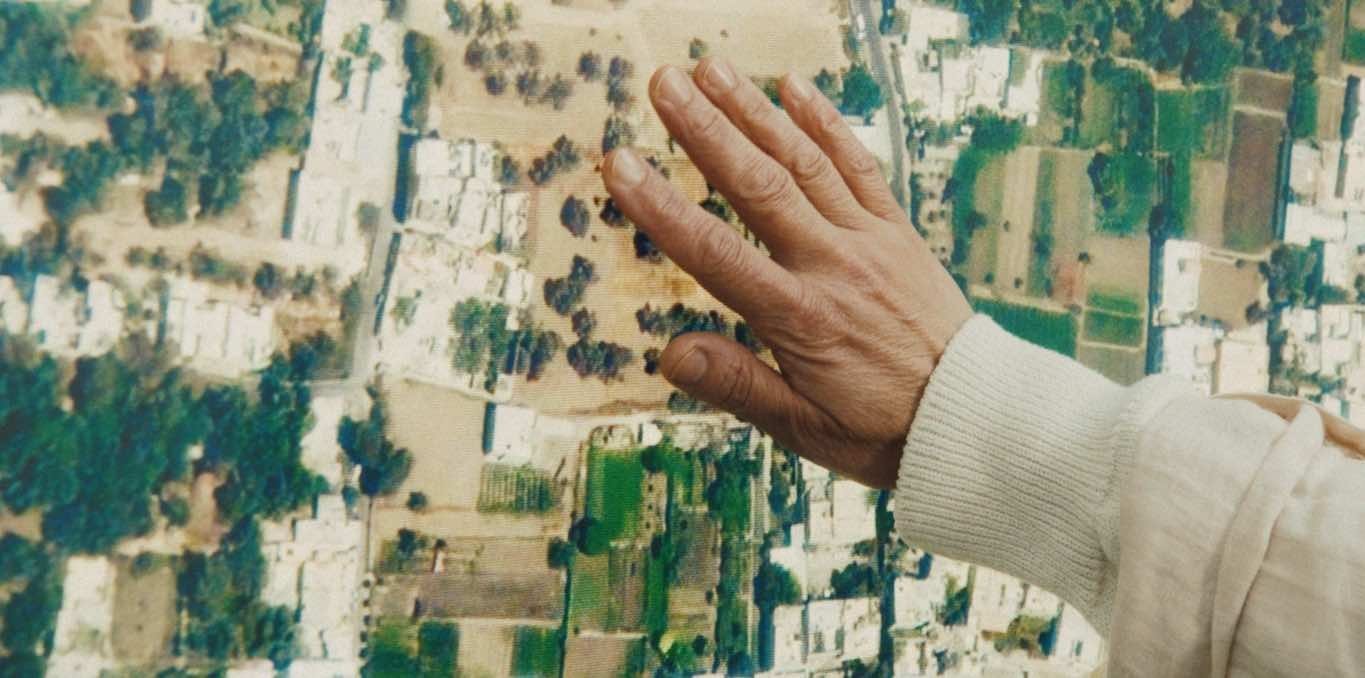
In 2015 in Damascus, the Basateen al-Razi neighborhood was razed to the ground to punish the population for rising up against Bashar al-Assad’s regime. This site is set to make way for Marota City, a project for a modern, connected neighborhood featuring 80 skyscrapers. Having lost everything, two former residents recall their neighborhood, where their homes once stood alongside the city’s oldest orchards. Through their testimonies and the repurposing of the regime’s 3D animations, memory is reawakened and resists this planned erasure.
| Directors | Antoine Chapon, Antoine Chapon |
| Share on |
It is not only a neighbourhood that Bashar al-Assad’s regime razed to the ground in Damascus in 2015; it is a history it sought to silence—a history made of bonds slowly forged between neighbours, of land patiently cultivated, and of repeated uprisings against the central state.
On the ruins of Basateen al-Razi, the architects of power envision a “modern” and interchangeable urban landscape, the kind that, everywhere in the world, covers the life and memory of working-class neighbourhoods with the same layer of glass and concrete.
Unable to prevent this destructive project, Basima and Anas, two former residents now exiled in Europe, bring back to life what is no longer there: pomegranate trees, mulberry trees, prickly pear trees, and the city’s oldest orchards. This is where the film’s gesture lies: reclaiming the empty, bland 3D images produced by the regime, and making graffiti, wild and rebellious vegetation, and everything the propaganda sought to erase grow within them. And while the film cannot save a neighbourhood from disappearing, it saves it from being erased.
Cyril Hugonnet
Programmer · À bientôt j'espère

-
Français
25 mn
Language: Français
Subtitles: Français -
English
25 mn
Language: English
Subtitles: English
- Année 2025
- Pays France
- Durée 25
- Producteur Petit Chaos
- Langue Arab
- Sous-titres French, English
- Résumé court Two former residents of a Damascus neighborhood razed by Bashar al-Assad’s regime are bringing it back to life. Through their words and the creative use of 3D animations, the orchards are sprouting again. Life is returning.
- TLF_Applismb_CA 1
- Date édito CA 2026-08-14
It is not only a neighbourhood that Bashar al-Assad’s regime razed to the ground in Damascus in 2015; it is a history it sought to silence—a history made of bonds slowly forged between neighbours, of land patiently cultivated, and of repeated uprisings against the central state.
On the ruins of Basateen al-Razi, the architects of power envision a “modern” and interchangeable urban landscape, the kind that, everywhere in the world, covers the life and memory of working-class neighbourhoods with the same layer of glass and concrete.
Unable to prevent this destructive project, Basima and Anas, two former residents now exiled in Europe, bring back to life what is no longer there: pomegranate trees, mulberry trees, prickly pear trees, and the city’s oldest orchards. This is where the film’s gesture lies: reclaiming the empty, bland 3D images produced by the regime, and making graffiti, wild and rebellious vegetation, and everything the propaganda sought to erase grow within them. And while the film cannot save a neighbourhood from disappearing, it saves it from being erased.
Cyril Hugonnet
Programmer · À bientôt j'espère
-
Français
Duration: 25 minutesLanguage: Français
Subtitles: Français25 mn -
English
Duration: 25 minutesLanguage: English
Subtitles: English25 mn
- Année 2025
- Pays France
- Durée 25
- Producteur Petit Chaos
- Langue Arab
- Sous-titres French, English
- Résumé court Two former residents of a Damascus neighborhood razed by Bashar al-Assad’s regime are bringing it back to life. Through their words and the creative use of 3D animations, the orchards are sprouting again. Life is returning.
- TLF_Applismb_CA 1
- Date édito CA 2026-08-14