City of a Dream
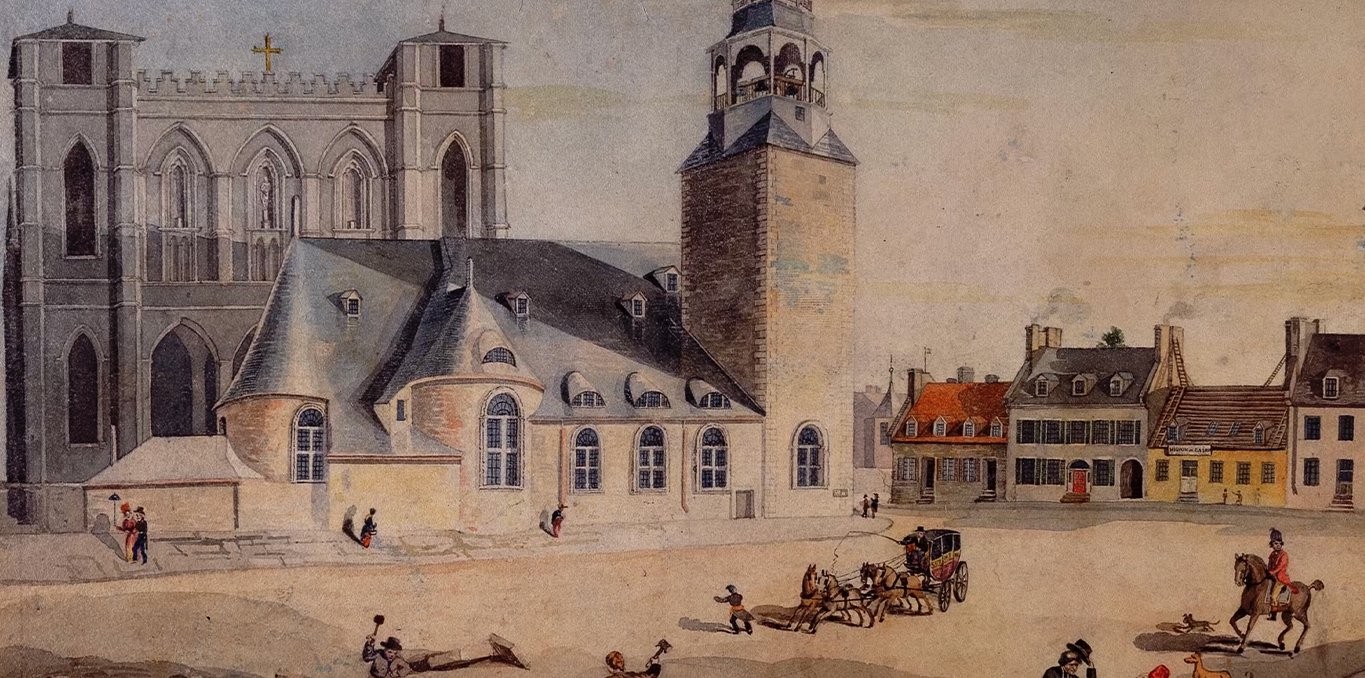
Montreal was born from a dream, carried by those who believed in the possibility of creating a better world in New France. Who were these people? What ideal were they pursuing and why? The answers can be found in a 17th century manuscript, which undoubtedly contains the hidden memoirs of Jeanne Mance. With a unique and personal angle, filmmaker Annabel Loyola revisits this story where the past resonates with an ever-present desire to create a world closer to humanistic values.
| Director | Annabel Loyola |
| Share on |
While it goes without saying that we inhabit a city, Annabel Loyola skillfully blends historical inquiry and personal narrative to show us that the city also inhabits us. Embracing her sense of sisterhood with a fellow citizen who preceded her by nearly four centuries on a transatlantic migratory journey, the Montreal-based filmmaker offers a poignant declaration of love to her adopted city and its founder, Jeanne Mance (1606–1673). The fact that both women hailed from the small Champagne town of Langres only serves to highlight the exceptional nature of this biographical parallel.
Far from obscuring the historical narrative, this personal connection amplifies the extraordinary yet little-known story of Montreal’s origins. Through the personification of the city’s co-founder (voiced by Pascale Bussières), Loyola seeks to reveal the messianic aspirations behind the project, whose spiritual devotion stood in stark contrast to the mercantile motivations prevailing at the time. At its heart, the film is also about the revitalization of a civilization, driven by the fervour of a devout community that brought together religious and secular people, all imbued with the spirit of the Catholic Reformation of their time.
Critical of Europe’s shortcomings, the community combined a romanticized vision of the "noble savage", rooted in an idealization of Indigenous vitality and the purity of the New World’s natural environment, with what was worth preserving from France. This is one of the film’s most fascinating aspects, brought skillfully to light by Jonathan Lainey, historian and Curator of Indigenous Cultures at the McCord Stewart Museum and a member of the Huron-Wendat Nation, whose perspective offers an essential contribution to understanding this unusual undertaking. Montreal’s earliest days bore little resemblance to the typical trading posts established in other colonial settlements. And the project’s success was far from guaranteed, as it was quickly diverted from its original aspirations. The film invites us to reflect on how much of the exceptionalism of Montreal’s founding vision the city still carries today.
City of a Dream also offers an interesting reflection on the role of historical sources in the construction of historical knowledge. Through the singular account of François Dollier de Casson (1636–1701)—a chronicler of Montreal’s first thirty years, whose words are brought to life by Alexis Martin— we encounter a testimony that is as invaluable as it is unique. This is due not only to the scarcity of historical records from that era that have survived to the present day, but also to Jeanne Mance’s central role in shaping the narrative of the city’s origins, at a time when the original project was already beginning to falter. This polyphony of historical voices unfolds before us, revealing the very mechanics of historical knowledge production through the intersecting efforts of those who shaped the past and those who interpret it today.
Mathieu Boivin-Chouinard
Teacher and historian
Presented in collaboration with


-

Français
Language: Français -
English
Language: English
- Année 2022
- Pays Québec
- Durée 74
- Producteur Arabesque Films
- Langue French
- Sous-titres English
- Résumé court Explore the hidden memoirs of Jeanne Mance and the dreams that inspired the founding of Montreal.
- Ordre 2
While it goes without saying that we inhabit a city, Annabel Loyola skillfully blends historical inquiry and personal narrative to show us that the city also inhabits us. Embracing her sense of sisterhood with a fellow citizen who preceded her by nearly four centuries on a transatlantic migratory journey, the Montreal-based filmmaker offers a poignant declaration of love to her adopted city and its founder, Jeanne Mance (1606–1673). The fact that both women hailed from the small Champagne town of Langres only serves to highlight the exceptional nature of this biographical parallel.
Far from obscuring the historical narrative, this personal connection amplifies the extraordinary yet little-known story of Montreal’s origins. Through the personification of the city’s co-founder (voiced by Pascale Bussières), Loyola seeks to reveal the messianic aspirations behind the project, whose spiritual devotion stood in stark contrast to the mercantile motivations prevailing at the time. At its heart, the film is also about the revitalization of a civilization, driven by the fervour of a devout community that brought together religious and secular people, all imbued with the spirit of the Catholic Reformation of their time.
Critical of Europe’s shortcomings, the community combined a romanticized vision of the "noble savage", rooted in an idealization of Indigenous vitality and the purity of the New World’s natural environment, with what was worth preserving from France. This is one of the film’s most fascinating aspects, brought skillfully to light by Jonathan Lainey, historian and Curator of Indigenous Cultures at the McCord Stewart Museum and a member of the Huron-Wendat Nation, whose perspective offers an essential contribution to understanding this unusual undertaking. Montreal’s earliest days bore little resemblance to the typical trading posts established in other colonial settlements. And the project’s success was far from guaranteed, as it was quickly diverted from its original aspirations. The film invites us to reflect on how much of the exceptionalism of Montreal’s founding vision the city still carries today.
City of a Dream also offers an interesting reflection on the role of historical sources in the construction of historical knowledge. Through the singular account of François Dollier de Casson (1636–1701)—a chronicler of Montreal’s first thirty years, whose words are brought to life by Alexis Martin— we encounter a testimony that is as invaluable as it is unique. This is due not only to the scarcity of historical records from that era that have survived to the present day, but also to Jeanne Mance’s central role in shaping the narrative of the city’s origins, at a time when the original project was already beginning to falter. This polyphony of historical voices unfolds before us, revealing the very mechanics of historical knowledge production through the intersecting efforts of those who shaped the past and those who interpret it today.
Mathieu Boivin-Chouinard
Teacher and historian
Presented in collaboration with
-
Français
Language: Français -
English
Language: English
- Année 2022
- Pays Québec
- Durée 74
- Producteur Arabesque Films
- Langue French
- Sous-titres English
- Résumé court Explore the hidden memoirs of Jeanne Mance and the dreams that inspired the founding of Montreal.
- Ordre 2