Colour Poems
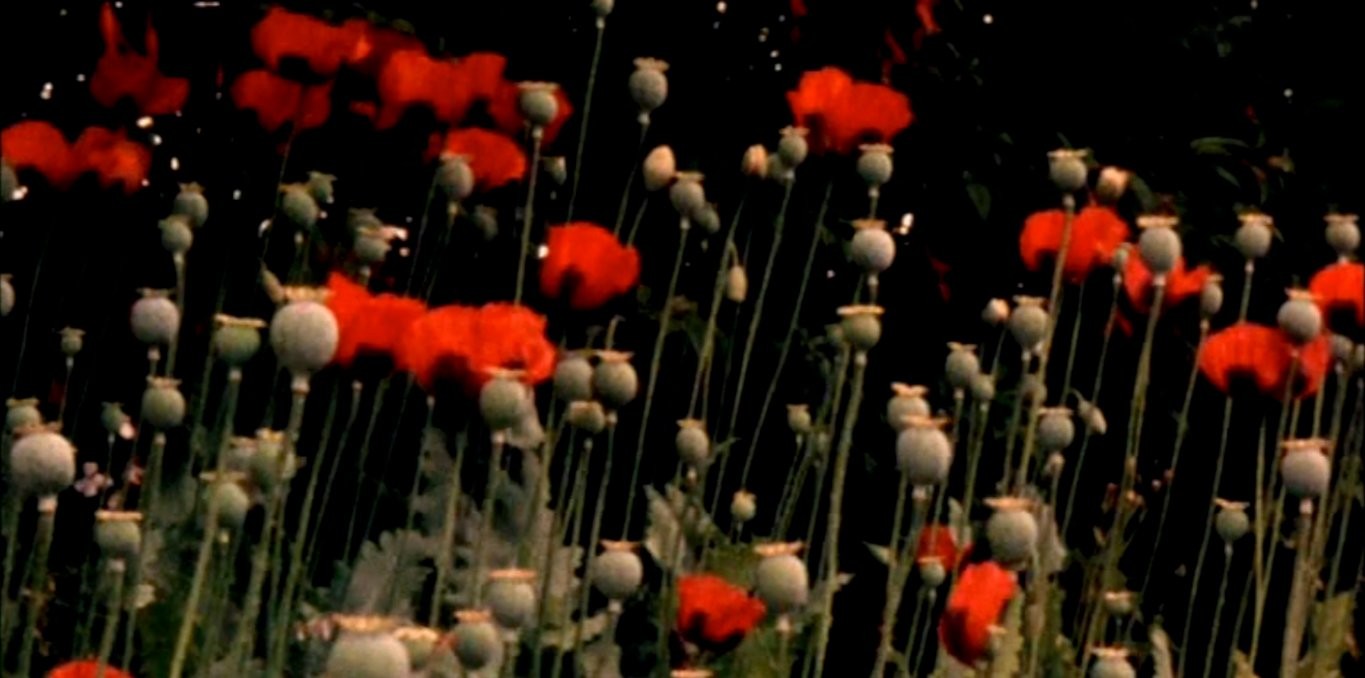
"Nine linked short films. Memory, chance observation, and the subsuming of one in the other. [...] A poem started in words is continued by the picture, part of another poem is read for the last of the nine. Some images are formed by direct-on-film animation, others are found by the camera." – Margaret Tait
| Director | Margaret Tait |
| Actor | Jack Guariento |
| Share on |
In a section of the written poem that also serves as a voiceover to Colour Poems (and which was the initial impetus for the film), Tait describes memories of seeing newsreels of the Spanish Civil War. She would have been a young adult at the time, and her memories of that event seem to be hazy and unreliable. This sense of incompleteness shapes the film aesthetically. Pictures—of birds, sailboats, bent figures—are drawn as simple line images onto the film strip, pulsing and shifting erratically at 24 frames per second. We hear partial snippets of news items on the radio (talk of Venezuelan guerrillas, Labour Party machinations, the rising price of oil, the weather). In another section, we see an old pair of wellies standing upright and empty, one of them moving gently and rhythmically in a breeze as if tapping out some kind of catchy tune. And in the various shots of men marching solemnly along the road, Tait films them from the shoulders down, never showing us their faces. It’s a way, perhaps, to suggest a kind of fragmentation of memory and experience: a half-remembered image of the act of marching, but not of any specific men. But looked at differently, it could also be read as the point of view of a child watching adults—those odd, unknowable beings—performing some odd, unknowable ritual.
Jack Guariento
Filmmaker and programmer

-
Français
11 mn
Language: Français
Subtitles: Français -
English
11 mn
Language: English
Subtitles: English
- Année 1974
- Pays United Kingdom
- Durée 11
- Producteur Ancona Films
- Langue English
- Sous-titres French
- Résumé court Memory, chance observation, and the subsuming of one in the other. A poem started in words and continued in images.
- TLF_Applismb_CA 1
- Date édito CA 2026-07-31
In a section of the written poem that also serves as a voiceover to Colour Poems (and which was the initial impetus for the film), Tait describes memories of seeing newsreels of the Spanish Civil War. She would have been a young adult at the time, and her memories of that event seem to be hazy and unreliable. This sense of incompleteness shapes the film aesthetically. Pictures—of birds, sailboats, bent figures—are drawn as simple line images onto the film strip, pulsing and shifting erratically at 24 frames per second. We hear partial snippets of news items on the radio (talk of Venezuelan guerrillas, Labour Party machinations, the rising price of oil, the weather). In another section, we see an old pair of wellies standing upright and empty, one of them moving gently and rhythmically in a breeze as if tapping out some kind of catchy tune. And in the various shots of men marching solemnly along the road, Tait films them from the shoulders down, never showing us their faces. It’s a way, perhaps, to suggest a kind of fragmentation of memory and experience: a half-remembered image of the act of marching, but not of any specific men. But looked at differently, it could also be read as the point of view of a child watching adults—those odd, unknowable beings—performing some odd, unknowable ritual.
Jack Guariento
Filmmaker and programmer
-
Français
Duration: 11 minutesLanguage: Français
Subtitles: Français11 mn -
English
Duration: 11 minutesLanguage: English
Subtitles: English11 mn
- Année 1974
- Pays United Kingdom
- Durée 11
- Producteur Ancona Films
- Langue English
- Sous-titres French
- Résumé court Memory, chance observation, and the subsuming of one in the other. A poem started in words and continued in images.
- TLF_Applismb_CA 1
- Date édito CA 2026-07-31