Yugoslavia: How Ideology Moved Our Collective Body
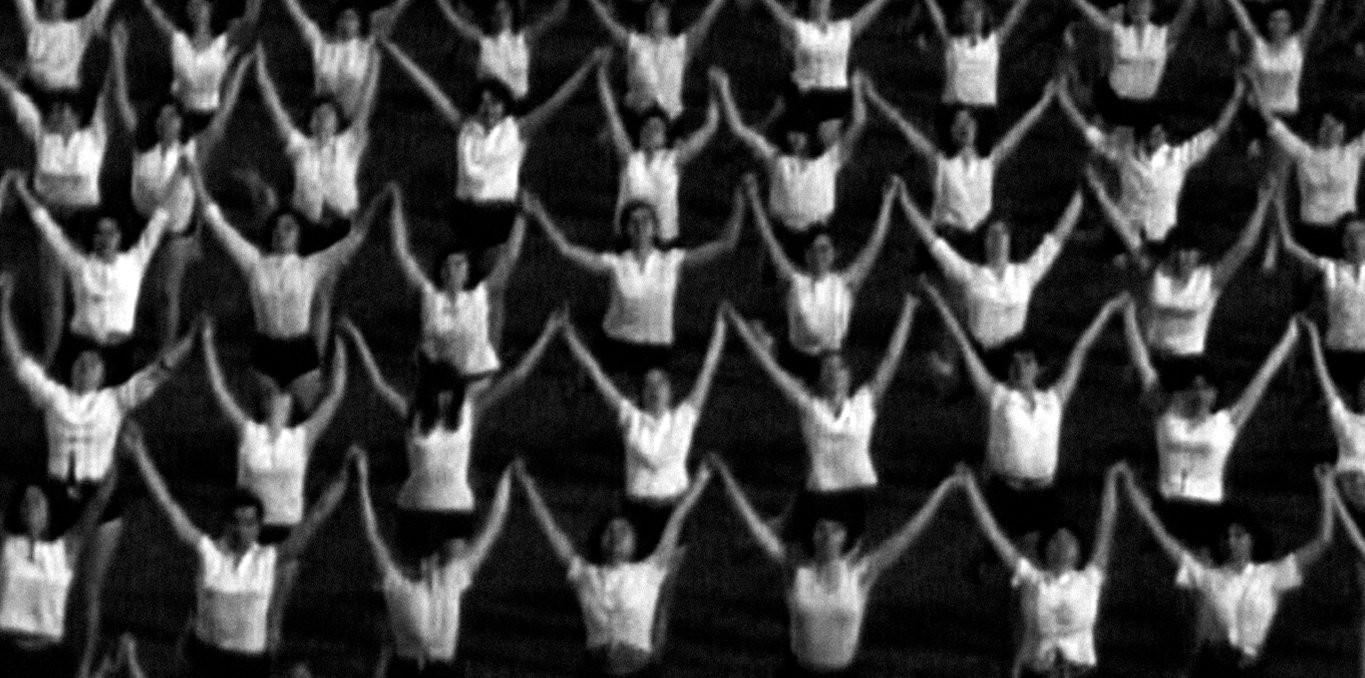
The film deals with the question of how ideology performs itself in public space through mass performances. The author collected and analyzed film and video footage from the period of Yugoslavia (1945 – 2000), focusing on state performances (youth work actions, May Day parades, celebrations of the Youth Day, etc.) as well as counter-demonstrations (’68, student and civic demonstrations in the ‘90s, 5th October revolution, etc.). Going back through the images, the film traces how communist ideology was gradually exhausted through the changing relations between the people, ideology, and the state.
| Directors | Marta Popivoda, Marta Popivoda |
| Actors | Amandine Gay, Amandine Gay |
| Share on |
Yugoslavia: How Ideology Moved Our Collective Body immerses us, with remarkable skill and honesty, in Marta Popivoda’s intimate and political work of reconstructing a socialist Yugoslav memory. Through extensive use of 4:3 archival footage spanning the years 1945–2000, combined with voices from the era and her own reflective voice-over narration, Popivoda revisits the history and collapse of a communist country that has since become seven capitalist nation-states. The film seeks to move beyond stereotypical narratives about the social systems of former communist countries: there is no nostalgia or lyricism here, but rather a reminder of what a social system centered on collective interest once made possible, beyond the violence of the political institutions that ultimately corrupted it.
As its title suggests, Yugoslavia: How Ideology Moved Our Collective Body explores the evolution of communist ideology through its materialization in public space. Collectivism was intrinsically tied to mass performances—both genuine and staged—which were extensively documented by the state itself. We move through Yugoslav history from May Day parades to Youth Day celebrations, from scenes of collective labor to all kinds of official performances. Where Popivoda introduces nuance is in the way she reveals the tensions within this carefully choreographed ballet orchestrated by the authorities, bringing to light spontaneous mass performances—such as the counter-demonstrations of 1968 and 1990—as voices determined to expose the complexity of the national narrative. What Popivoda shows us, without embellishment or manicheanism, is the collapse of one ideology and its replacement by others that proved equally destructive, particularly unrestrained capitalism and nationalism under Milosevic.
If Yugoslavia: How Ideology Moved Our Collective Body continues to haunt us long after viewing it, perhaps it is because the film above all seeks to break through the silence and confusion experienced by several peoples, bringing us back to our own fragmented identities and national traumas.
Amandine Gay
Filmmaker

-
Français
1h02
Language: Français -
English
1h02
Language: English
- Année 2013
- Pays Germany, France, Serbia
- Durée 62
- Producteur TkH [Walking Theory], Les Laboratoires d'Aubervilliers, Universität der Künste Berlin, Joon Film
- Langue Serbian
- Sous-titres French, English
- Résumé court Drawing on half a century of Yugoslav archives, this film examines the staging of state ideology and the forms of resistance that gradually led to its exhaustion.
- TLF_Applismb_CA 1
- Date édito CA 2026-05-08
Yugoslavia: How Ideology Moved Our Collective Body immerses us, with remarkable skill and honesty, in Marta Popivoda’s intimate and political work of reconstructing a socialist Yugoslav memory. Through extensive use of 4:3 archival footage spanning the years 1945–2000, combined with voices from the era and her own reflective voice-over narration, Popivoda revisits the history and collapse of a communist country that has since become seven capitalist nation-states. The film seeks to move beyond stereotypical narratives about the social systems of former communist countries: there is no nostalgia or lyricism here, but rather a reminder of what a social system centered on collective interest once made possible, beyond the violence of the political institutions that ultimately corrupted it.
As its title suggests, Yugoslavia: How Ideology Moved Our Collective Body explores the evolution of communist ideology through its materialization in public space. Collectivism was intrinsically tied to mass performances—both genuine and staged—which were extensively documented by the state itself. We move through Yugoslav history from May Day parades to Youth Day celebrations, from scenes of collective labor to all kinds of official performances. Where Popivoda introduces nuance is in the way she reveals the tensions within this carefully choreographed ballet orchestrated by the authorities, bringing to light spontaneous mass performances—such as the counter-demonstrations of 1968 and 1990—as voices determined to expose the complexity of the national narrative. What Popivoda shows us, without embellishment or manicheanism, is the collapse of one ideology and its replacement by others that proved equally destructive, particularly unrestrained capitalism and nationalism under Milosevic.
If Yugoslavia: How Ideology Moved Our Collective Body continues to haunt us long after viewing it, perhaps it is because the film above all seeks to break through the silence and confusion experienced by several peoples, bringing us back to our own fragmented identities and national traumas.
Amandine Gay
Filmmaker
-
Français
Duration: 1h02Language: Français1h02 -
English
Duration: 1h02Language: English1h02
- Année 2013
- Pays Germany, France, Serbia
- Durée 62
- Producteur TkH [Walking Theory], Les Laboratoires d'Aubervilliers, Universität der Künste Berlin, Joon Film
- Langue Serbian
- Sous-titres French, English
- Résumé court Drawing on half a century of Yugoslav archives, this film examines the staging of state ideology and the forms of resistance that gradually led to its exhaustion.
- TLF_Applismb_CA 1
- Date édito CA 2026-05-08