Diary
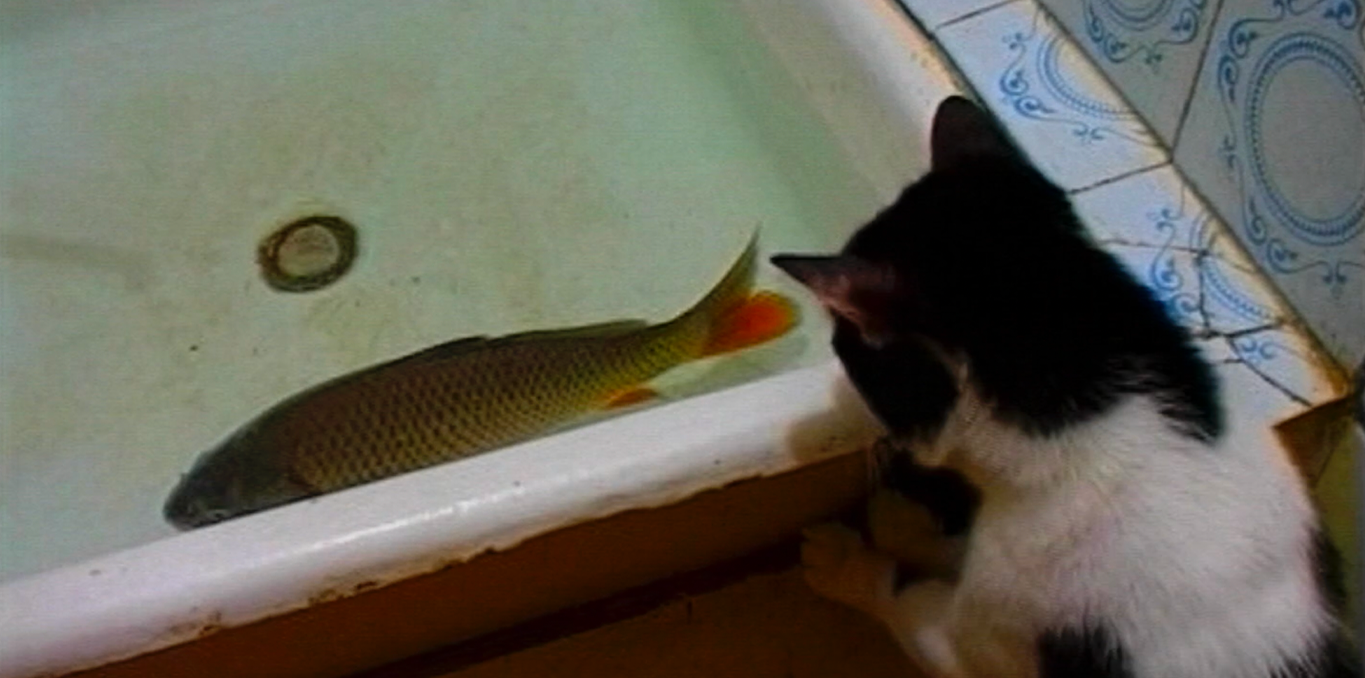
Larissa faces the many hardships of post-Soviet life: poverty, an alcoholic husband, and an uncertain future. By chance, she discovers her grandmother’s diary, in which she had recorded a dream that seems strangely connected to her own life. A poetic film about memory, family, and the traces of the past.
| Director | Oksana Buraja |
| Share on |
Larissa has cats. And at times, it seems as though we are watching her through a cat’s eyes. She and her husband, in their tiny apartment, while we sit in a corner, impassive witnesses to their daily life: debates over beer and recurring quarrels. Something in this life feels slightly in ruins, much like the battered apartment building that opens the film; perhaps like the Soviet empire, ten years after its collapse. Yet the film offers a strange escape from this harshness: Larissa’s grandmother had foreseen it all. More than 90 years ago, she had dreamed of and written down the troubles that would befall her granddaughter, who had not yet been born. The film thus oscillates between the utterly prosaic and the almost fantastical. The cats’ gaze then seems all the more piercing—and slightly unsettling: it is entirely possible that Larissa’s grandmother is a cat.
Jérémie Jorrand
Head of Programming and Editorial Content at Tënk France

-

Français
24 mn
Language: Français
Subtitles: Français -
English
24 mn
Language: English
- Année 2003
- Pays Lithuania
- Durée 24
- Producteur Studija 2000
- Langue Lithuanian
- Sous-titres French, English
- Résumé court The struggles of Larissa and her husband in their post-Soviet daily life.
- Mention festival Grand Prix · Festival international du court métrage de Clermont-Ferrand 2004
- Ordre 5
- TLF_Applismb_CA 1
- Date édito CA 2026-08-07
Larissa has cats. And at times, it seems as though we are watching her through a cat’s eyes. She and her husband, in their tiny apartment, while we sit in a corner, impassive witnesses to their daily life: debates over beer and recurring quarrels. Something in this life feels slightly in ruins, much like the battered apartment building that opens the film; perhaps like the Soviet empire, ten years after its collapse. Yet the film offers a strange escape from this harshness: Larissa’s grandmother had foreseen it all. More than 90 years ago, she had dreamed of and written down the troubles that would befall her granddaughter, who had not yet been born. The film thus oscillates between the utterly prosaic and the almost fantastical. The cats’ gaze then seems all the more piercing—and slightly unsettling: it is entirely possible that Larissa’s grandmother is a cat.
Jérémie Jorrand
Head of Programming and Editorial Content at Tënk France
-
Français
Duration: 24 minutesLanguage: Français
Subtitles: Français24 mn -
English
Duration: 24 minutesLanguage: English24 mn
- Année 2003
- Pays Lithuania
- Durée 24
- Producteur Studija 2000
- Langue Lithuanian
- Sous-titres French, English
- Résumé court The struggles of Larissa and her husband in their post-Soviet daily life.
- Mention festival Grand Prix · Festival international du court métrage de Clermont-Ferrand 2004
- Ordre 5
- TLF_Applismb_CA 1
- Date édito CA 2026-08-07