Animus femina
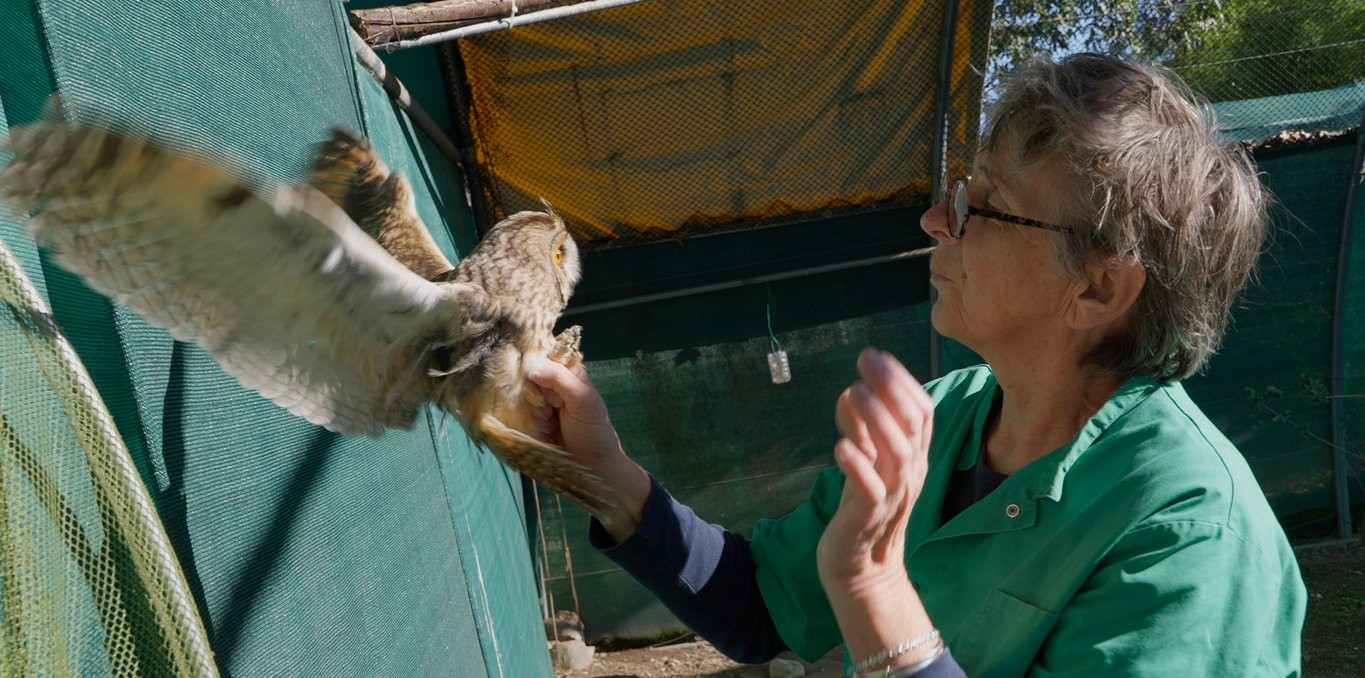
Four women in close contact with wildlife explore our relationship with living beings through repair, reflection, art and "living-with". Four exceptional journeys that invite us to decenter our human gaze and rethink our ways of inhabiting the world in a time of climate crisis.
| Director | Éliane de Latour |
| Share on |
In Jungian theory, the animus is defined as the masculine force within the feminine imagination, mirroring the anima, the feminine force within the masculine imagination. Drawing on these Jungian concepts, Éliane de Latour places imagination at the heart of our hope for the preservation of the living world. “The four weavers of worlds I am filming embody the necessary shift away from the self — through repair, reflection, art, and forms of living-with,” explains the filmmaker-anthropologist, for whom this is her tenth film, in describing her protagonists. There is Sara, a young biologist specializing in Antarctica; Francine, a reclusive hermit in the Asturian mountains; Marie-Pierre, a veterinarian in the Cévennes; and Isis, a modern-day Dibutades, who brings forth, from the shadows of her drawings on canvas, the souls of raptors sheltered in Marie-Pierre’s wildlife hospital. Image by image, between wildlife footage and audiovisual field notes — the legacy of an anthropologist trained in the patient recording of gestures and words of care — the film seeks to (re)build a reciprocal and egalitarian exchange of gazes between animals and humans, as a premise for the reweaving of our ties, at a time when “we are walking on our heads,” though there is still time. “Ties of exchange, of pleasure, of flow, of wonder,” Sara reflects emotionally. Bonds that make “family,” Francine confides. Bonds of mutual dependence “within the great chain of life,” Marie-Pierre reminds us, as she dreams of the future of her ecological haven at the newly acquired Domaine de Nicouleau, where it will be possible, “between animals, nature, and humans,” to “rebuild community.” Animus anima: a force that carries these women, in a film that urges us to make it our own.
Marion Froger
Professor, Université de Montréal

-
Français
1h42
Language: Français -
English
1h42
Language: English
- Année 2024
- Pays France
- Durée 102
- Producteur Les Films d'Ici Méditerranée, Les Films du tambour de soie
- Langue French, Spanish
- Sous-titres English
- Résumé court Four women in close contact with wildlife explore our relationship with living beings through repair, reflection, art and "living-with".
- TLF_Applismb_CA 1
- Date édito CA 2026-04-17
In Jungian theory, the animus is defined as the masculine force within the feminine imagination, mirroring the anima, the feminine force within the masculine imagination. Drawing on these Jungian concepts, Éliane de Latour places imagination at the heart of our hope for the preservation of the living world. “The four weavers of worlds I am filming embody the necessary shift away from the self — through repair, reflection, art, and forms of living-with,” explains the filmmaker-anthropologist, for whom this is her tenth film, in describing her protagonists. There is Sara, a young biologist specializing in Antarctica; Francine, a reclusive hermit in the Asturian mountains; Marie-Pierre, a veterinarian in the Cévennes; and Isis, a modern-day Dibutades, who brings forth, from the shadows of her drawings on canvas, the souls of raptors sheltered in Marie-Pierre’s wildlife hospital. Image by image, between wildlife footage and audiovisual field notes — the legacy of an anthropologist trained in the patient recording of gestures and words of care — the film seeks to (re)build a reciprocal and egalitarian exchange of gazes between animals and humans, as a premise for the reweaving of our ties, at a time when “we are walking on our heads,” though there is still time. “Ties of exchange, of pleasure, of flow, of wonder,” Sara reflects emotionally. Bonds that make “family,” Francine confides. Bonds of mutual dependence “within the great chain of life,” Marie-Pierre reminds us, as she dreams of the future of her ecological haven at the newly acquired Domaine de Nicouleau, where it will be possible, “between animals, nature, and humans,” to “rebuild community.” Animus anima: a force that carries these women, in a film that urges us to make it our own.
Marion Froger
Professor, Université de Montréal
-
Français
Duration: 1h42Language: Français1h42 -
English
Duration: 1h42Language: English1h42
- Année 2024
- Pays France
- Durée 102
- Producteur Les Films d'Ici Méditerranée, Les Films du tambour de soie
- Langue French, Spanish
- Sous-titres English
- Résumé court Four women in close contact with wildlife explore our relationship with living beings through repair, reflection, art and "living-with".
- TLF_Applismb_CA 1
- Date édito CA 2026-04-17