Sept-Îles ’72 : Archives du monde ordinaire
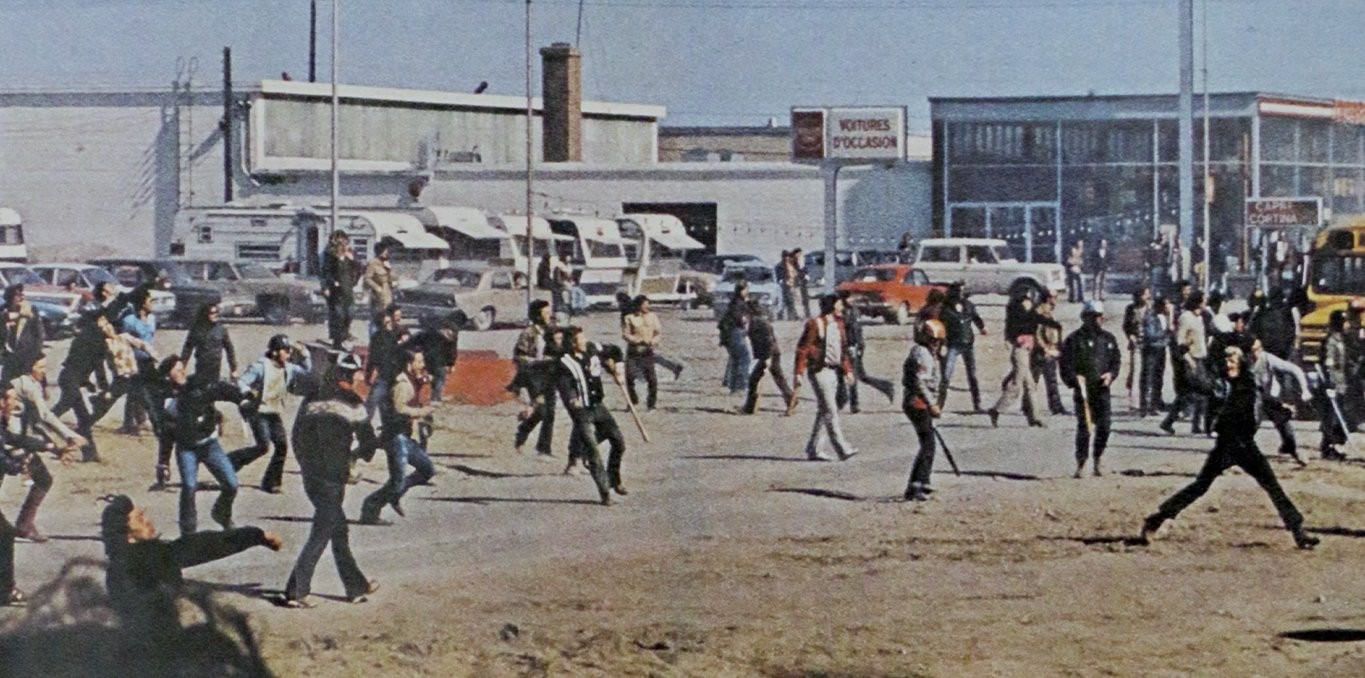
Following the arrest of the leaders of the Inter-Union Common Front (Front commun intersyndical) during the general strike of spring 1972 in Quebec, workers and activists in Sept-Îles spontaneously occupied the city. Through the testimonies of a handful of activist friends and archival footage, this film recounts the reasons behind the uprising, the sequence of events during the occupation—which ended tragically—and its impact on the lives of those who lived through it.
| Director | Etienne Langlois |
| Share on |
Sept-Îles ’72 : Archives du monde ordinaire transports us into a suspended moment, revisiting a chapter of Quebec’s history in which citizens—often invisible in history books—suddenly take center stage. The film draws on a rich array of archival material combined with personal accounts. This approach creates a powerful impression: we don’t just watch history, we hear it and feel it through those who lived it. The film captures the energy of a collective surge, the force of a solidarity that transforms a city and the people who inhabit it. For a brief moment, they shifted the course of events. Listening to these voices, one has the sense of being there, of feeling the hope, the tension, and that sense that anything can change. The film shows just how close Quebec came to a popular uprising, and in doing so, it resonates as much with the heart as with the mind.
Colette Loumède
Documentary Programmer
Rendez-Vous Québec Cinéma

-
Français
1h39
Language: Français
- Année 2024
- Pays Quebec
- Durée 99
- Producteur Productions Trinité
- Langue French, English
- Sous-titres French
- Résumé court A deep dive into the 1972 workers’ uprising in Sept-Îles, exploring its causes, its tragic course, and its human consequences.
- TLF_Applismb_CA 1
- Date édito CA 2026-05-01
Sept-Îles ’72 : Archives du monde ordinaire transports us into a suspended moment, revisiting a chapter of Quebec’s history in which citizens—often invisible in history books—suddenly take center stage. The film draws on a rich array of archival material combined with personal accounts. This approach creates a powerful impression: we don’t just watch history, we hear it and feel it through those who lived it. The film captures the energy of a collective surge, the force of a solidarity that transforms a city and the people who inhabit it. For a brief moment, they shifted the course of events. Listening to these voices, one has the sense of being there, of feeling the hope, the tension, and that sense that anything can change. The film shows just how close Quebec came to a popular uprising, and in doing so, it resonates as much with the heart as with the mind.
Colette Loumède
Documentary Programmer
Rendez-Vous Québec Cinéma
-
Français
Duration: 1h39Language: Français1h39
- Année 2024
- Pays Quebec
- Durée 99
- Producteur Productions Trinité
- Langue French, English
- Sous-titres French
- Résumé court A deep dive into the 1972 workers’ uprising in Sept-Îles, exploring its causes, its tragic course, and its human consequences.
- TLF_Applismb_CA 1
- Date édito CA 2026-05-01