Everything Everywhere Again Alive
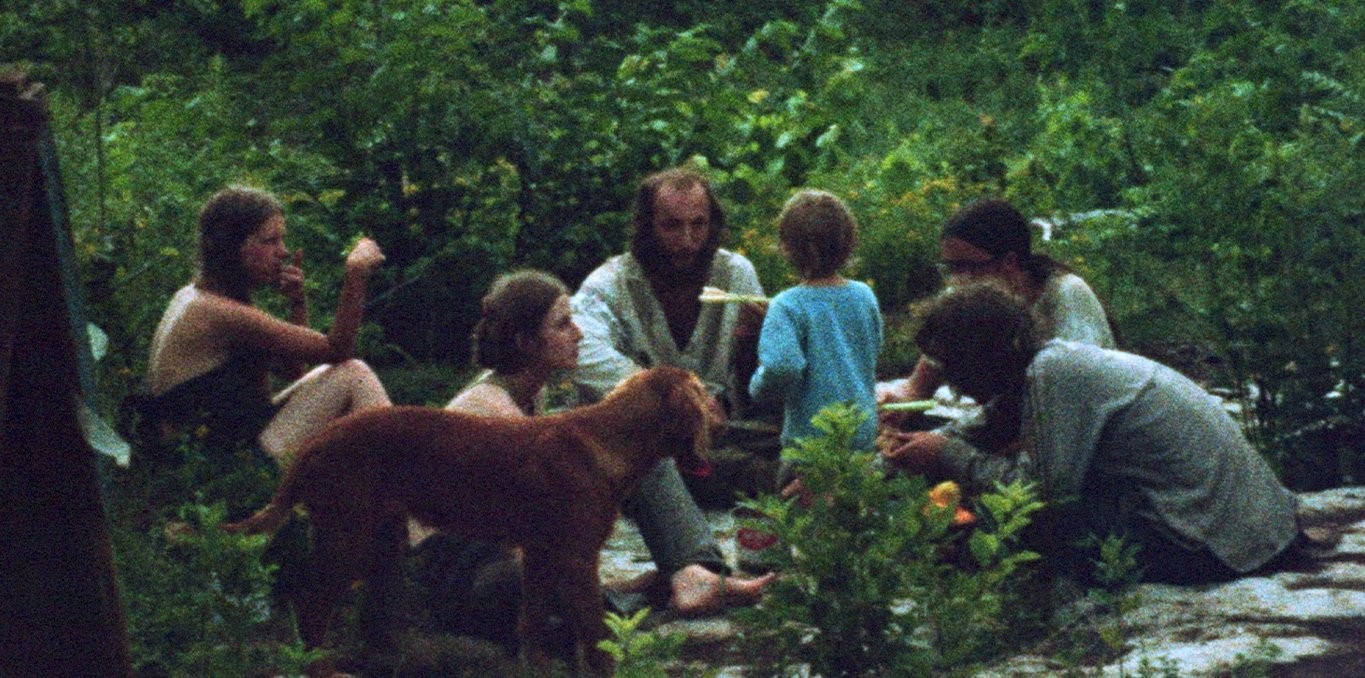
In the early 1970s, Keith Lock moved to the hippie community of Buck Lake, north of Kingston, Ontario. He went there to join members of Toronto’s underground scene, capturing the daily life of a horizontal, ideal society, free from urban oppression. The result is one of the masterpieces of Canadian experimental cinema, but above all a free-spirited film that challenges the very idea of freedom.
| Director | Keith Lock |
| Share on |
When Keith Lock first heard about Buck Lake, the idea of living there in a community, cut off from the world, was nothing more than a hippie dream, typical of the back-to-nature movements that fueled the hopes of the 1970s. At the same time, the young graduate from the inaugural Film Studies class at York University harbors ambitions of making a film “about Canada,” seeking to define a national identity that remains uncertain and still in the making. As a third-generation Chinese Canadian himself, he is grappling with doubts about his own diasporic culture—still fragile, still humiliated.
Once there, the shock is more visceral than expected. The result is a meditation that is at once poetic and methodical: on the passing of the seasons, on the resourcefulness and ingenuity learned from living off the land, and on what happens when we turn our camera toward people we love and respect. Although Lock’s film may initially resemble a naturalistic invitation tinged with ethnographic observation, it is the lyrical rhythm of this journey—conceived as a cycle and structured by glyphs printed directly onto the filmstrip as though it were a musical score—that gives it the quality of a secret formula, one that an ever-growing circle of initiates can learn to recognize and quietly pass along. Everything, everywhere, lives again—still, always, and now once more with the arrival of Keith Lock’s films in the French-speaking cinephile world. Gather around the fire, pay no mind to the pigs or the police. Welcome to Buck Lake.
Mathieu Li-Goyette
Film critic, programmer, researcher
and editor-in-chief of Panorama-Cinéma
Presented in collaboration with


-
English
1h12
Language: English
- Année 1975
- Pays Canada
- Durée 72
- Producteur Keith Lock
- Langue English
- Résumé court In the early 1970s, Keith Lock films the hippie community of Buck Lake and the ideals of a free, collective life liberated from urban oppression.
- Ordre 1
- Capsule film <p>For further reading, explore <em><a href="https://www.panorama-cinema.com/V2/article.php?categorie=3&id=1389" target="_blank"><strong><span style="color:#008080;">Keith Lock's Intimate Diasporas</span></strong></a>,</em> an issue published by <em>Panorama-Cinéma</em>.</p> <p> </p> <p style="text-align: center;"><a href="https://www.panorama-cinema.com/V2/index.php" target="_blank"><img src="https://dhkhp2rgto9nq.cloudfront.net/img/cms/LOGO_SIMPLE_PANO_300DPI-1.png" style="height: 68px; width: 250px;" /></a></p>
- TLF_Applismb_CA 1
- Date édito CA 2026-05-29
When Keith Lock first heard about Buck Lake, the idea of living there in a community, cut off from the world, was nothing more than a hippie dream, typical of the back-to-nature movements that fueled the hopes of the 1970s. At the same time, the young graduate from the inaugural Film Studies class at York University harbors ambitions of making a film “about Canada,” seeking to define a national identity that remains uncertain and still in the making. As a third-generation Chinese Canadian himself, he is grappling with doubts about his own diasporic culture—still fragile, still humiliated.
Once there, the shock is more visceral than expected. The result is a meditation that is at once poetic and methodical: on the passing of the seasons, on the resourcefulness and ingenuity learned from living off the land, and on what happens when we turn our camera toward people we love and respect. Although Lock’s film may initially resemble a naturalistic invitation tinged with ethnographic observation, it is the lyrical rhythm of this journey—conceived as a cycle and structured by glyphs printed directly onto the filmstrip as though it were a musical score—that gives it the quality of a secret formula, one that an ever-growing circle of initiates can learn to recognize and quietly pass along. Everything, everywhere, lives again—still, always, and now once more with the arrival of Keith Lock’s films in the French-speaking cinephile world. Gather around the fire, pay no mind to the pigs or the police. Welcome to Buck Lake.
Mathieu Li-Goyette
Film critic, programmer, researcher
and editor-in-chief of Panorama-Cinéma
Presented in collaboration with
-
English
Duration: 1h12Language: English1h12
- Année 1975
- Pays Canada
- Durée 72
- Producteur Keith Lock
- Langue English
- Résumé court In the early 1970s, Keith Lock films the hippie community of Buck Lake and the ideals of a free, collective life liberated from urban oppression.
- Ordre 1
- Capsule film <p>For further reading, explore <em><a href="https://www.panorama-cinema.com/V2/article.php?categorie=3&id=1389" target="_blank"><strong><span style="color:#008080;">Keith Lock's Intimate Diasporas</span></strong></a>,</em> an issue published by <em>Panorama-Cinéma</em>.</p> <p> </p> <p style="text-align: center;"><a href="https://www.panorama-cinema.com/V2/index.php" target="_blank"><img src="https://dhkhp2rgto9nq.cloudfront.net/img/cms/LOGO_SIMPLE_PANO_300DPI-1.png" style="height: 68px; width: 250px;" /></a></p>
- TLF_Applismb_CA 1
- Date édito CA 2026-05-29