Going
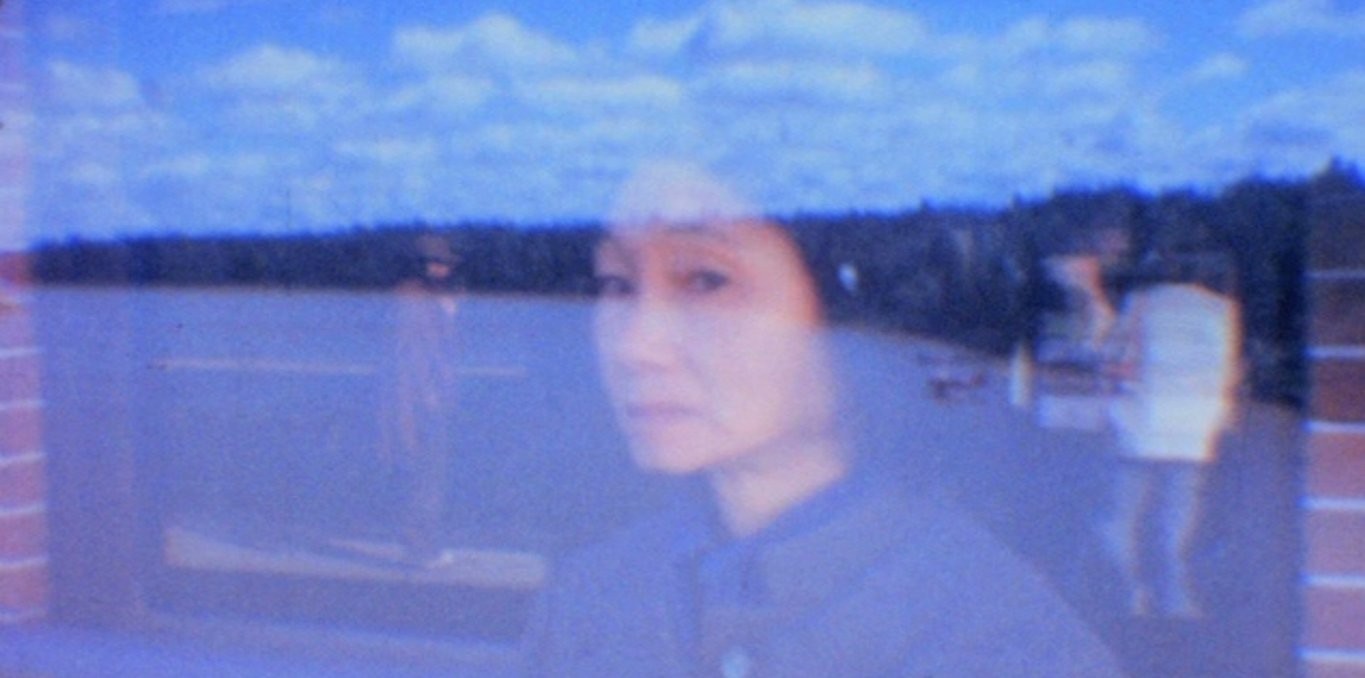
During a train trip from Toronto to Moose Bay with his mother and two friends, Keith Lock—then Michael Snow’s assistant—created an impressionistic travelogue using in-camera editing.
| Directors | Keith Lock, Keith Lock |
| Share on |
Keith Lock is the James Bond of diarists in this documentary road movie exploring the many faces of Ontario. Whether travelling by car, train, or motorboat, he is constantly on the move through the picturesque landscapes of his home province, gathering images of his companions against the fragmented backdrops of a heterogeneous Canada. Chronicling a journey from Toronto to Moose Factory via Moosonee, “the gateway to the Arctic,” Going presents a series of fleeting, incantatory panoramas worthy of a sociological postcard. Anticipating the analytical approach of Parade, Lock uses in-camera editing to juxtapose and superimpose shots, contrasting linearity and simultaneity in an effort to capture a world—and a cinema—poised somewhere between dream and reality.
From suburban neighbourhoods to untamed wilderness, from farm machinery to isolated mansions, from church steeples and banks to Indigenous communities, all set to Roy Patterson’s melancholic folk guitar, Lock crafts a miniature ethnography of the Canadian people and a concise history of Canadian cinema. The film recalls the colonial critique of Christmas at Moose Factory (1971) while foreshadowing the railway reveries of the cult classic Home for Christmas (1978), via the vehicle fetishism found in The Romance of Transportation in Canada (1952). All of this unfolds through the train, whose appearance on screen sets off a series of layered images that convey a sense of speed and a cinema apparatus swept into motion, intoxicated by the exhilaration of travel and the naïve desire to capture the nation from every possible angle.
Olivier Thibodeau
Critic
Presented in collaboration with


-
English
11 mn
Language: English
- Année 1973
- Pays Canada
- Durée 11
- Producteur Keith Lock
- Langue Without dialogue
- Résumé court An impressionistic portrait of a train journey between Toronto and Moose Bay taken by the filmmaker, his mother, and two friends.
- Ordre 3
- Capsule film <p>For further reading, explore <em><a href="https://www.panorama-cinema.com/V2/article.php?categorie=3&id=1389" target="_blank"><span style="color:#008080;"><strong>Keith Lock's Intimate Diasporas</strong></span></a>,</em> an issue published by <em>Panorama-Cinéma</em>.</p> <p> </p> <p style="text-align: center;"><a href="https://www.panorama-cinema.com/V2/index.php" target="_blank"><img src="https://dhkhp2rgto9nq.cloudfront.net/img/cms/LOGO_SIMPLE_PANO_300DPI-1.png" style="height: 68px; width: 250px;" /></a></p>
- TLF_Applismb_CA 1
- Date édito CA 2026-05-29
Keith Lock is the James Bond of diarists in this documentary road movie exploring the many faces of Ontario. Whether travelling by car, train, or motorboat, he is constantly on the move through the picturesque landscapes of his home province, gathering images of his companions against the fragmented backdrops of a heterogeneous Canada. Chronicling a journey from Toronto to Moose Factory via Moosonee, “the gateway to the Arctic,” Going presents a series of fleeting, incantatory panoramas worthy of a sociological postcard. Anticipating the analytical approach of Parade, Lock uses in-camera editing to juxtapose and superimpose shots, contrasting linearity and simultaneity in an effort to capture a world—and a cinema—poised somewhere between dream and reality.
From suburban neighbourhoods to untamed wilderness, from farm machinery to isolated mansions, from church steeples and banks to Indigenous communities, all set to Roy Patterson’s melancholic folk guitar, Lock crafts a miniature ethnography of the Canadian people and a concise history of Canadian cinema. The film recalls the colonial critique of Christmas at Moose Factory (1971) while foreshadowing the railway reveries of the cult classic Home for Christmas (1978), via the vehicle fetishism found in The Romance of Transportation in Canada (1952). All of this unfolds through the train, whose appearance on screen sets off a series of layered images that convey a sense of speed and a cinema apparatus swept into motion, intoxicated by the exhilaration of travel and the naïve desire to capture the nation from every possible angle.
Olivier Thibodeau
Critic
Presented in collaboration with
-
English
Duration: 11 minutesLanguage: English11 mn
- Année 1973
- Pays Canada
- Durée 11
- Producteur Keith Lock
- Langue Without dialogue
- Résumé court An impressionistic portrait of a train journey between Toronto and Moose Bay taken by the filmmaker, his mother, and two friends.
- Ordre 3
- Capsule film <p>For further reading, explore <em><a href="https://www.panorama-cinema.com/V2/article.php?categorie=3&id=1389" target="_blank"><span style="color:#008080;"><strong>Keith Lock's Intimate Diasporas</strong></span></a>,</em> an issue published by <em>Panorama-Cinéma</em>.</p> <p> </p> <p style="text-align: center;"><a href="https://www.panorama-cinema.com/V2/index.php" target="_blank"><img src="https://dhkhp2rgto9nq.cloudfront.net/img/cms/LOGO_SIMPLE_PANO_300DPI-1.png" style="height: 68px; width: 250px;" /></a></p>
- TLF_Applismb_CA 1
- Date édito CA 2026-05-29