Relics of Love and War
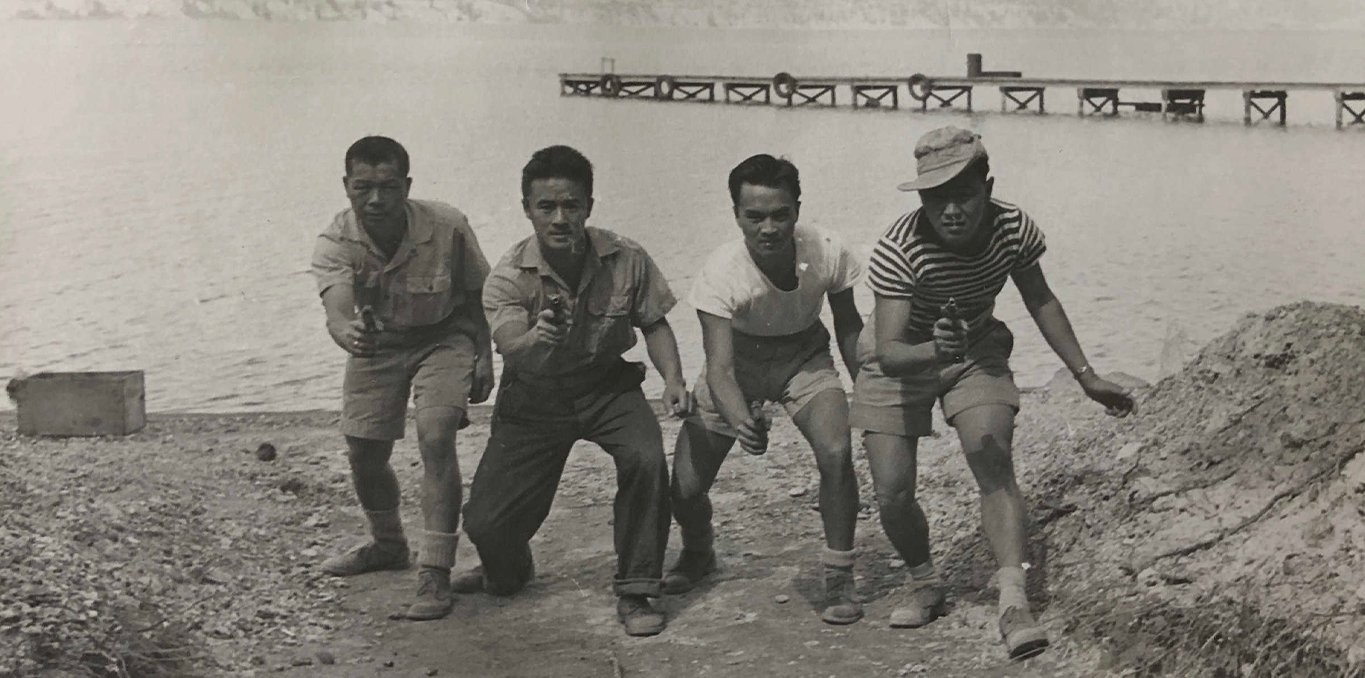
Chinese Canadian filmmaker, Keith Lock, narrates the story of how his mother married his father while he was training with other Chinese Canadian veteran volunteers for the top secret suicide mission: Operation Oblivion. This incredible story is set against the backdrop of the Second World War, a time when Chinese Canadians could not vote, swim in pools, or hire white women for their businesses. Lock celebrates his father, mother, and community of Chinese Canadian veterans as daring and vivacious badasses whose futures were yet to be written, in a tribute and record of this larger moment in Chinese Canadian history.
| Director | Keith Lock |
| Share on |
Somewhat made within the context of the centenary of the inexcusable Chinese Exclusion Act, the film immerses us in a world that is as little known as its director, and yet absolutely fascinating: that of the turbulent history of the Sino-Canadian community, the extraordinary efforts required for it to gain acceptance within the country, and the remarkable contribution of some of its men in the Canadian military effort during World War II.
Although this documentary appears classic and relatively conventional at first glance, with its Ken Burns-style montage of archival photographs, it nonetheless reveals a resolutely original educational core and a very personal reflection subtly woven into the background. This informative core is centered on the surprising revelations about the secret role of Chinese-Canadian soldiers in Operation Oblivion and the psychological violence inflicted on the Chinese community in Canada. Not only were its members poorly accepted by the general population, but they also saw their freedoms, their professional prospects, and their hopes of starting a family deliberately restricted by a variety of racist regulatory measures adopted by multiple levels of government. As for the quasi-confidential reflection, it lies in Lock’s discreet and neutral emphasis on the unbearable paradox to which Chinese Canadians were subjected—between their remarkable real talents and the crass ignorance that controlled their presence in Canadian society. The reflection is also found in this past that surfaces in the present, in these memories revealed to us in black and white that suddenly emerge amidst contemporary scenes in color.
Thus, while one enters Relics of Love and War with a reassuring sense of formal familiarity, one leaves it with a deeply stirring feeling of astonishment, indignation, empathy, and contemplation.
Claire Valade
Critic and programmer
Presented in collaboration with


-
English
40 mn
Language: English
- Année 2023
- Pays Canada
- Durée 40
- Producteur Wondrous Light Inc.
- Langue English
- Résumé court Keith Lock retraces the story of his parents during the Second World War, at a time when Chinese Canadians lived under the weight of profound discrimination.
- Ordre 5
- Description revue <p>For further reading, explore <em><a href="https://www.panorama-cinema.com/V2/article.php?categorie=3&id=1389" target="_blank"><span style="color:#008080;"><strong>Keith Lock's Intimate Diasporas</strong></span></a>,</em> an issue published by <em>Panorama-Cinéma</em>.</p> <p> </p> <p style="text-align: center;"><a href="https://www.panorama-cinema.com/V2/index.php" target="_blank"><img src="https://dhkhp2rgto9nq.cloudfront.net/img/cms/LOGO_SIMPLE_PANO_300DPI-1.png" style="height: 68px; width: 250px;" /></a></p> <p style="text-align: center;"> </p>
- TLF_Applismb_CA 1
- Date édito CA 2026-05-29
Somewhat made within the context of the centenary of the inexcusable Chinese Exclusion Act, the film immerses us in a world that is as little known as its director, and yet absolutely fascinating: that of the turbulent history of the Sino-Canadian community, the extraordinary efforts required for it to gain acceptance within the country, and the remarkable contribution of some of its men in the Canadian military effort during World War II.
Although this documentary appears classic and relatively conventional at first glance, with its Ken Burns-style montage of archival photographs, it nonetheless reveals a resolutely original educational core and a very personal reflection subtly woven into the background. This informative core is centered on the surprising revelations about the secret role of Chinese-Canadian soldiers in Operation Oblivion and the psychological violence inflicted on the Chinese community in Canada. Not only were its members poorly accepted by the general population, but they also saw their freedoms, their professional prospects, and their hopes of starting a family deliberately restricted by a variety of racist regulatory measures adopted by multiple levels of government. As for the quasi-confidential reflection, it lies in Lock’s discreet and neutral emphasis on the unbearable paradox to which Chinese Canadians were subjected—between their remarkable real talents and the crass ignorance that controlled their presence in Canadian society. The reflection is also found in this past that surfaces in the present, in these memories revealed to us in black and white that suddenly emerge amidst contemporary scenes in color.
Thus, while one enters Relics of Love and War with a reassuring sense of formal familiarity, one leaves it with a deeply stirring feeling of astonishment, indignation, empathy, and contemplation.
Claire Valade
Critic and programmer
Presented in collaboration with
-
English
Duration: 40 minutesLanguage: English40 mn
- Année 2023
- Pays Canada
- Durée 40
- Producteur Wondrous Light Inc.
- Langue English
- Résumé court Keith Lock retraces the story of his parents during the Second World War, at a time when Chinese Canadians lived under the weight of profound discrimination.
- Ordre 5
- Description revue <p>For further reading, explore <em><a href="https://www.panorama-cinema.com/V2/article.php?categorie=3&id=1389" target="_blank"><span style="color:#008080;"><strong>Keith Lock's Intimate Diasporas</strong></span></a>,</em> an issue published by <em>Panorama-Cinéma</em>.</p> <p> </p> <p style="text-align: center;"><a href="https://www.panorama-cinema.com/V2/index.php" target="_blank"><img src="https://dhkhp2rgto9nq.cloudfront.net/img/cms/LOGO_SIMPLE_PANO_300DPI-1.png" style="height: 68px; width: 250px;" /></a></p> <p style="text-align: center;"> </p>
- TLF_Applismb_CA 1
- Date édito CA 2026-05-29