Bonbons bijoux
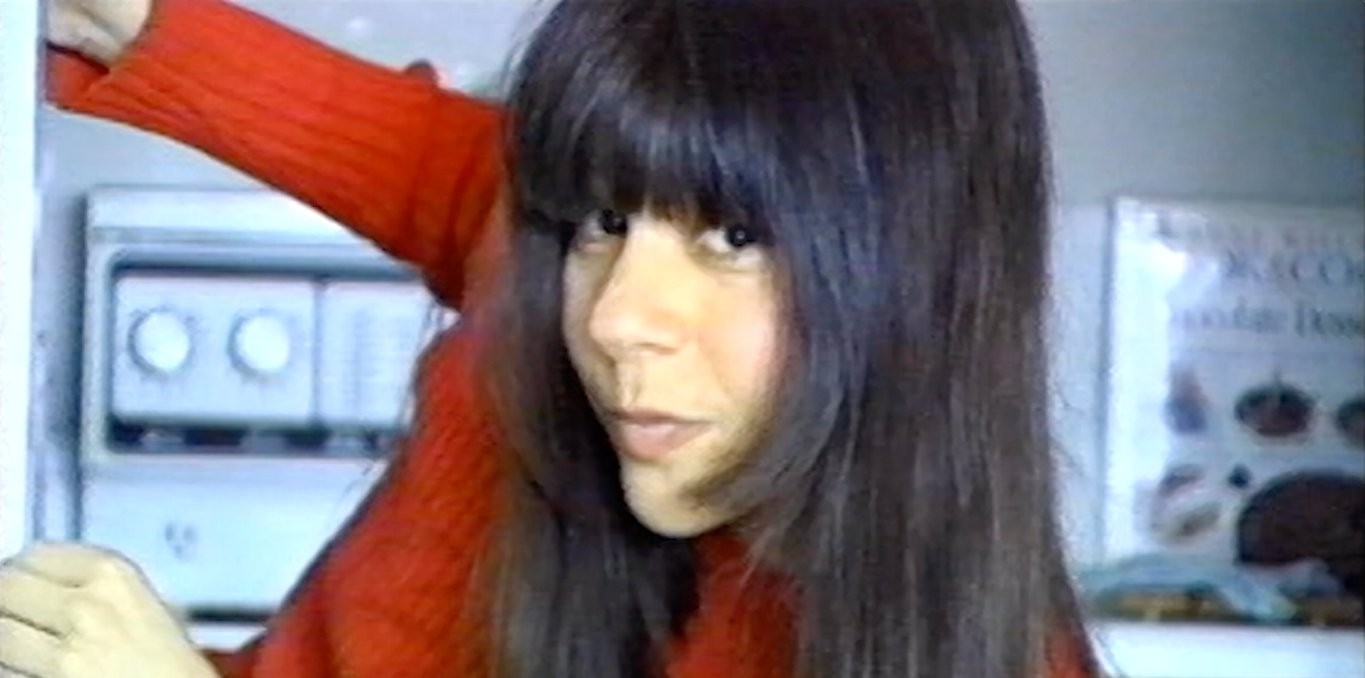
Sylvie Laliberté’s work centers on self-representation and narrative, and is often delivered in a humorously faux-naïve and playful aesthetic. In her first video, _Bonbons bijoux_, the artist speaks directly to the camera about simple, trivial things, delivered in a whimsical and spirited manner. In a succession of brief vignettes, the artist, like a candid half-woman, half-child, tells stories or sings with comic and poetic effect. Sylvie Laliberté uses the private and intimate nature of the camera as a new narrative tool, and with full awareness of the history of art and criticism, she cleverly defuses the narcissistic trap that hides therein.
| Director | Sylvie Laliberté |
| Share on |
I don’t know whether it’s a real memory—I have the unfortunate habit of stealing memories from my twin sister or inventing them out of daydreams—but I seem to remember discovering Bonbons bijoux during my first visit to the MAC, when I was around twelve or thirteen. In my (perhaps fabricated) memory, I was completely stunned. Who is this mischievous fairy filming herself in close-up? Why has she decided to record this unclassifiable performance of language? Who is she speaking to? Could it possibly be me, a young girl trying to figure out what life is made of? Why do these big brown eyes and this expressive mouth make me want to cry, while also giving me the feeling of being understood, across the screen in the exhibition room? Who, in this vast, cold museum, recognized that this woman was an artist? Why does this unsteady, tentative approach move me more than all the masterful and technically flawless works I’ve come to call art? Why do this voice, this body, and this posture shake up all my reservations, my preconceptions, and my limits regarding what was possible, forbidden, or reserved for others?
When we say that Sylvie Laliberté creates post-feminist art—in the scholarly language of art history—I think we are talking about a way of being able to film oneself, think about oneself, and represent oneself that was not possible before the first feminist revolution. And since it was impossible, this way of imagining ourselves didn’t enter little girls’ dreams. We were prisoners of distorted representations that made some of us feel claustrophobic. And when, at age twelve or thirteen—in my perhaps invented memory—I stumbled upon this work, with no prior exposure to art history, and found myself connecting with Sylvie Laliberté’s words, audacity, body, and frame. My dark night lit up, my chest opened up, and I thought then that the world would be different.
Naomie Décarie-Daigneault
Tënk's Artistic Director

-

Français
Language: Français -
English
Language: English
- Année 1996
- Pays Quebec
- Durée 13
- Producteur Montage Parallele, Sylvie Laliberté
- Langue French
- Sous-titres English
- Résumé court With whimsy and humour, Sylvie Laliberté steps in front of the camera to playfully subvert the conventions of the video self-portrait.
- TLF_Applismb_CA 1
- Date édito CA 2026-09-18
I don’t know whether it’s a real memory—I have the unfortunate habit of stealing memories from my twin sister or inventing them out of daydreams—but I seem to remember discovering Bonbons bijoux during my first visit to the MAC, when I was around twelve or thirteen. In my (perhaps fabricated) memory, I was completely stunned. Who is this mischievous fairy filming herself in close-up? Why has she decided to record this unclassifiable performance of language? Who is she speaking to? Could it possibly be me, a young girl trying to figure out what life is made of? Why do these big brown eyes and this expressive mouth make me want to cry, while also giving me the feeling of being understood, across the screen in the exhibition room? Who, in this vast, cold museum, recognized that this woman was an artist? Why does this unsteady, tentative approach move me more than all the masterful and technically flawless works I’ve come to call art? Why do this voice, this body, and this posture shake up all my reservations, my preconceptions, and my limits regarding what was possible, forbidden, or reserved for others?
When we say that Sylvie Laliberté creates post-feminist art—in the scholarly language of art history—I think we are talking about a way of being able to film oneself, think about oneself, and represent oneself that was not possible before the first feminist revolution. And since it was impossible, this way of imagining ourselves didn’t enter little girls’ dreams. We were prisoners of distorted representations that made some of us feel claustrophobic. And when, at age twelve or thirteen—in my perhaps invented memory—I stumbled upon this work, with no prior exposure to art history, and found myself connecting with Sylvie Laliberté’s words, audacity, body, and frame. My dark night lit up, my chest opened up, and I thought then that the world would be different.
Naomie Décarie-Daigneault
Tënk's Artistic Director
-
Français
Language: Français -
English
Language: English
- Année 1996
- Pays Quebec
- Durée 13
- Producteur Montage Parallele, Sylvie Laliberté
- Langue French
- Sous-titres English
- Résumé court With whimsy and humour, Sylvie Laliberté steps in front of the camera to playfully subvert the conventions of the video self-portrait.
- TLF_Applismb_CA 1
- Date édito CA 2026-09-18