Il n’est pas innocent que le bonheur soit heureux
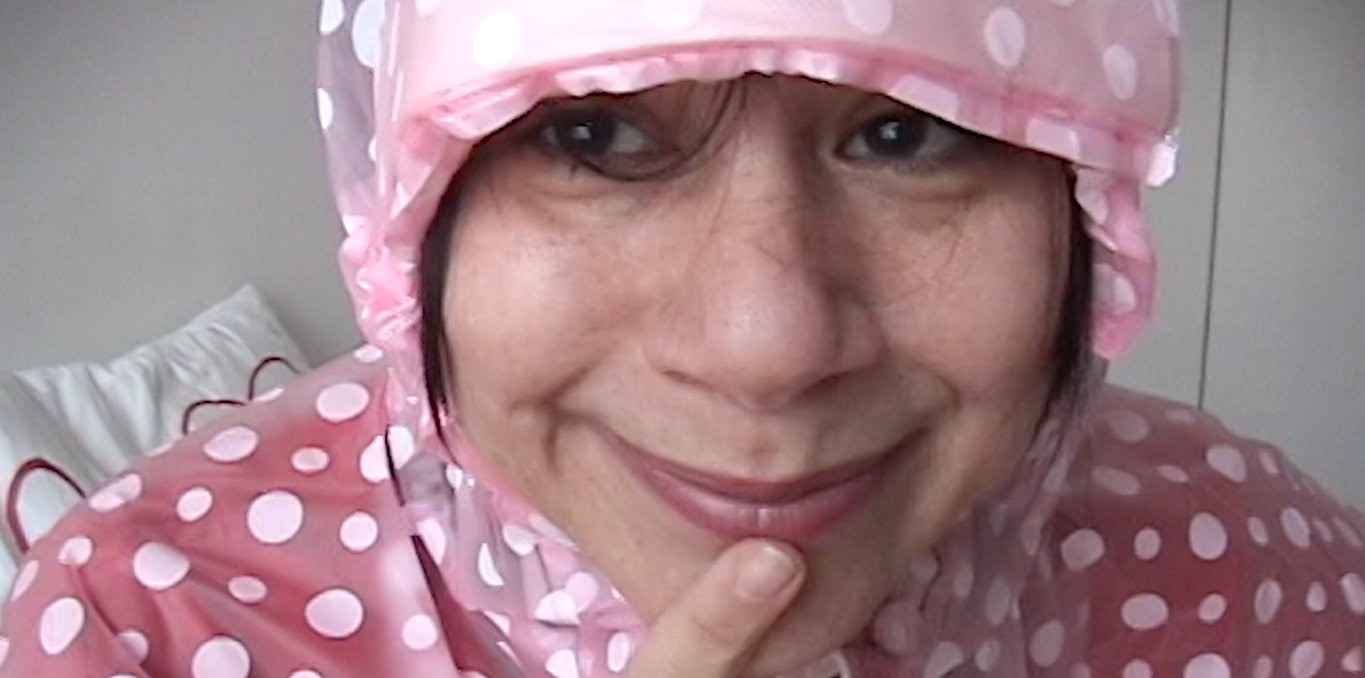
Happiness is a tautological state. Why is one happy? Because he or she is happy. It’s very simple. And it smells good. Still happy than one can be happy. This video was produced for Manif d’art 2003 in Québec focussing on happiness and its representation.
| Directors | Sylvie Laliberté, Sylvie Laliberté |
| Share on |
The simplest questions often call for the most complex answers. To “What is happiness?”, Sylvie Laliberté responds with pouts, grimaces, and babbles that serve as her answers. While nothing and no one provokes her, the videographer takes misfortune head-on to ensure it stays out of the frame. Filmed in an unadorned apartment, *Il n’est pas innocent que le bonheur soit heureux* begins like an infomercial for spray-on joy. The filmmaker embodies a whole range of characters simply by changing her tone of voice, always wrapped in her polka-dot raincoat. One moment, she’s a child. The next, she’s a factory worker, then an intellectual. But all of them have a vision of happiness on the tip of their tongues, to be shared in their own unique way—a vision to which Laliberté pays homage. For what is her cinema if not a work of stammering attempts that gradually reveal themselves and find their footing? Through her playful imagery and her facial expressions that fear no ridicule, Laliberté shows that happiness belongs to no one because it belongs to everyone. Amid all its noises and flights of fancy, it is just as valid in the form of a grunt as it is in an impeccably delivered speech. Even after all this time, the bottle of joy featured in the video is right there, next to you or behind your screen. Look for it—it’s there, guaranteed.
Mathieu Li-Goyette
Film critic, programmer, researcher
and editor-in-chief of Panorama-cinéma

-

Français
Language: Français
- Année 2003
- Pays Quebec
- Durée 13
- Producteur Sylvie Laliberté
- Langue French
- Résumé court Happiness is a tautological state. Why is one happy?
- TLF_Applismb_CA 1
- Date édito CA 2026-09-18
The simplest questions often call for the most complex answers. To “What is happiness?”, Sylvie Laliberté responds with pouts, grimaces, and babbles that serve as her answers. While nothing and no one provokes her, the videographer takes misfortune head-on to ensure it stays out of the frame. Filmed in an unadorned apartment, *Il n’est pas innocent que le bonheur soit heureux* begins like an infomercial for spray-on joy. The filmmaker embodies a whole range of characters simply by changing her tone of voice, always wrapped in her polka-dot raincoat. One moment, she’s a child. The next, she’s a factory worker, then an intellectual. But all of them have a vision of happiness on the tip of their tongues, to be shared in their own unique way—a vision to which Laliberté pays homage. For what is her cinema if not a work of stammering attempts that gradually reveal themselves and find their footing? Through her playful imagery and her facial expressions that fear no ridicule, Laliberté shows that happiness belongs to no one because it belongs to everyone. Amid all its noises and flights of fancy, it is just as valid in the form of a grunt as it is in an impeccably delivered speech. Even after all this time, the bottle of joy featured in the video is right there, next to you or behind your screen. Look for it—it’s there, guaranteed.
Mathieu Li-Goyette
Film critic, programmer, researcher
and editor-in-chief of Panorama-cinéma
-
Français
Language: Français
- Année 2003
- Pays Quebec
- Durée 13
- Producteur Sylvie Laliberté
- Langue French
- Résumé court Happiness is a tautological state. Why is one happy?
- TLF_Applismb_CA 1
- Date édito CA 2026-09-18