Le roi du drum
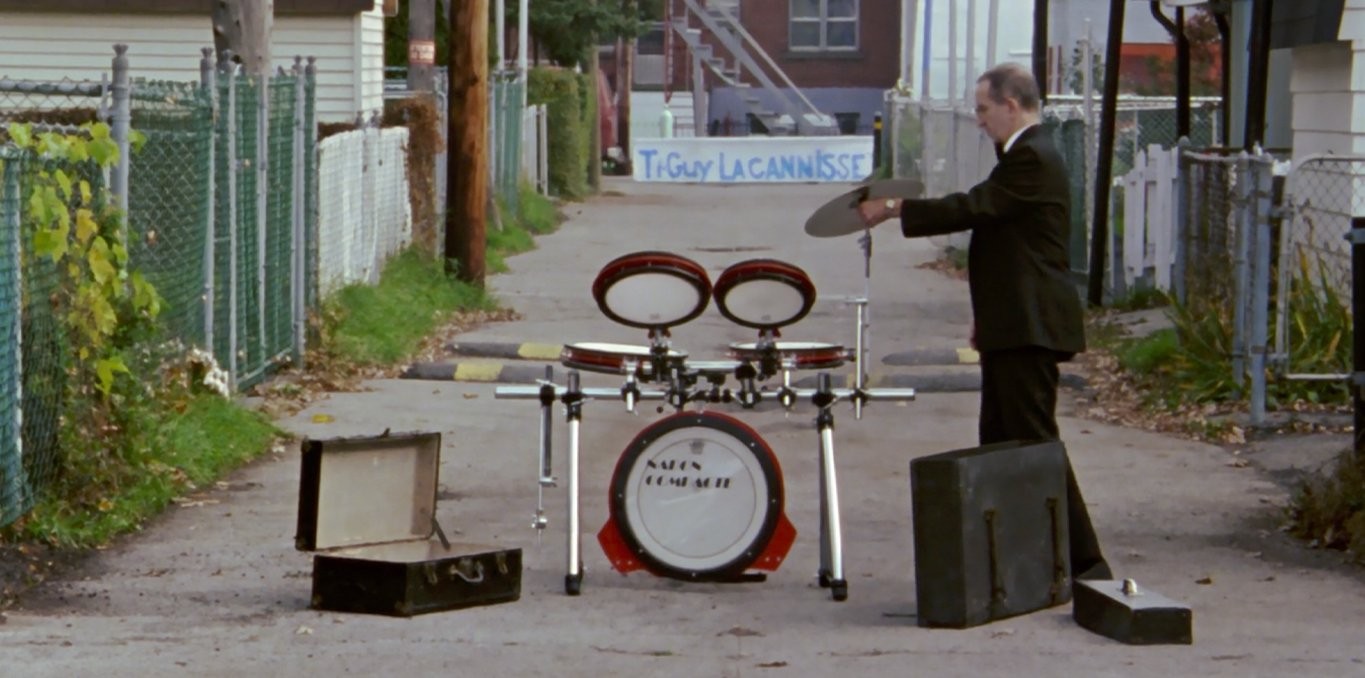
_Le roi du drum_ tells the story of a beloved folk hero from Montreal's East End: Guy Nadon, a gifted self-taught jazz musician whose only misfortune was being born in Quebec in the 1930s. A marginalized artist—often misunderstood and seldom supported—Nadon never stopped nurturing his boundless imagination as a percussionist and performer, all while remaining deeply rooted in his neighbourhood. Defying categorization, this deeply human portrait is crafted with the precision of a fiction film and infused with the same exuberance as its subject. It is also a film about Montreal's East End—about its ordinary, sincere people, sustained by hope.
| Director | Serge Giguère |
| Actor | Christine Chevarie |
| Share on |
It is the story of a young boy from Montreal’s East End who bangs on tin cans with chair rungs and becomes so fast that he turns it into a profession: drummer. Whenever Serge Giguère turns his camera toward another human being, we know we are about to develop a genuine and unmistakable affection for the person at the heart of his film. His portrait of Guy Nadon is a wonderful example.
Much like his 1986 documentary about Le Rapide blanc singer Oscar Thiffault, Serge Giguère introduces us to a man driven by dreams, a passion for music, and humility. The humility of those blessed with extraordinary talent who still take the bus to the hardware store.
Throughout the film, we feel the presence of the little boy Ti-Guy Nadon once was—and, in many ways, still is. We find him in Giguère's whimsical, poetic, and deeply endearing mise en scène; in the return to the places that shaped Guy Nadon's childhood; and in every moment that reveals his infectious sense of humour. For any number of reasons, he may never have reached the heights attained by others with the same passion and remarkable gifts, but he possesses the rare grace of having remained true to himself.
Shot on film, the documentary draws its visual richness from Giguère's fluid cinematography while beautifully capturing the singular character of "Guy-la-canisse". I challenge anyone to resist the wave of tenderness and delight inspired by this documentary from Serge Giguère, who once again pays tribute to life's little people—the true giants of this world.
Christine Chevarie
Filmmaker

-
Français
54 mn
Language: Français
- Année 1992
- Pays Quebec
- Durée 54
- Producteur Les Productions du Rapide-Blanc
- Langue French
- Résumé court A portrait of Guy Nadon, a master of musical improvisation and jazz drummer who finds rhythm in everything around him.
- TLF_Applismb_CA 1
- Date édito CA 2026-07-03
It is the story of a young boy from Montreal’s East End who bangs on tin cans with chair rungs and becomes so fast that he turns it into a profession: drummer. Whenever Serge Giguère turns his camera toward another human being, we know we are about to develop a genuine and unmistakable affection for the person at the heart of his film. His portrait of Guy Nadon is a wonderful example.
Much like his 1986 documentary about Le Rapide blanc singer Oscar Thiffault, Serge Giguère introduces us to a man driven by dreams, a passion for music, and humility. The humility of those blessed with extraordinary talent who still take the bus to the hardware store.
Throughout the film, we feel the presence of the little boy Ti-Guy Nadon once was—and, in many ways, still is. We find him in Giguère's whimsical, poetic, and deeply endearing mise en scène; in the return to the places that shaped Guy Nadon's childhood; and in every moment that reveals his infectious sense of humour. For any number of reasons, he may never have reached the heights attained by others with the same passion and remarkable gifts, but he possesses the rare grace of having remained true to himself.
Shot on film, the documentary draws its visual richness from Giguère's fluid cinematography while beautifully capturing the singular character of "Guy-la-canisse". I challenge anyone to resist the wave of tenderness and delight inspired by this documentary from Serge Giguère, who once again pays tribute to life's little people—the true giants of this world.
Christine Chevarie
Filmmaker
-
Français
Duration: 54 minutesLanguage: Français54 mn
- Année 1992
- Pays Quebec
- Durée 54
- Producteur Les Productions du Rapide-Blanc
- Langue French
- Résumé court A portrait of Guy Nadon, a master of musical improvisation and jazz drummer who finds rhythm in everything around him.
- TLF_Applismb_CA 1
- Date édito CA 2026-07-03