Claude Gosselin, témoignage à bâtons rompus
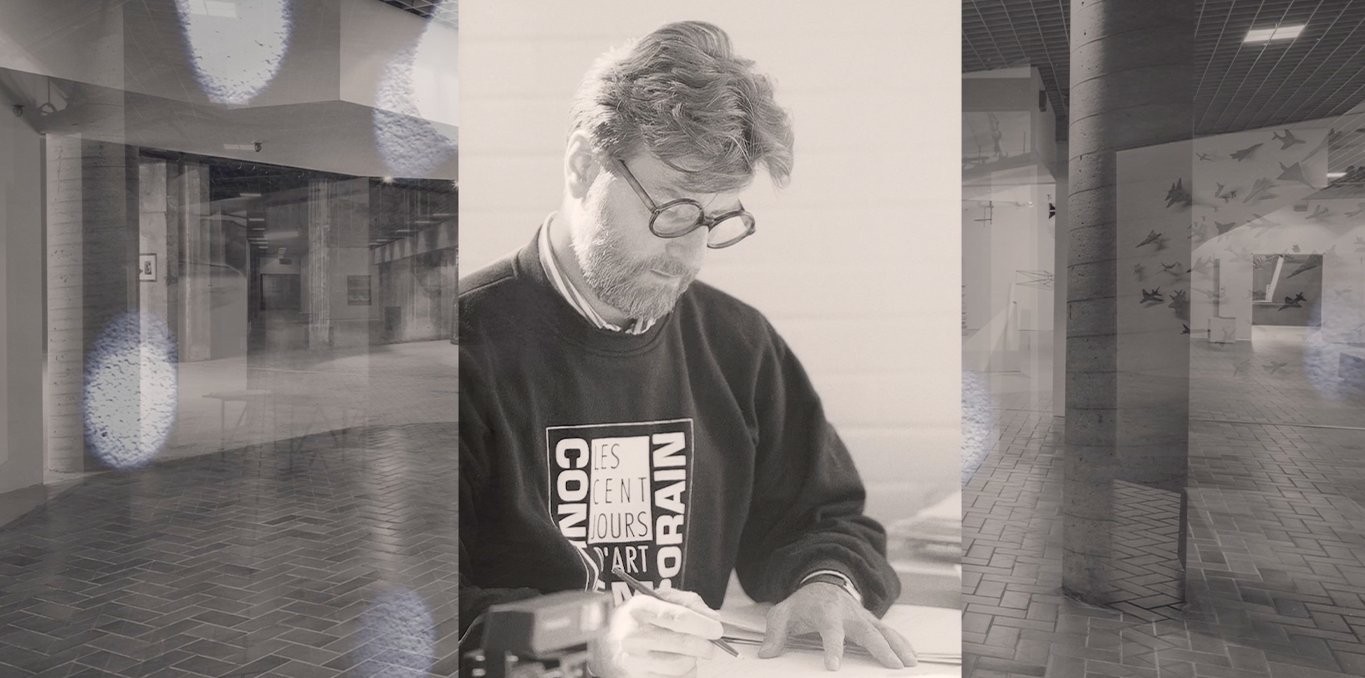
This documentary traces the history of _Les Cent jours d’art contemporain de Montréal_ (1985–1996) and _La_ _Biennale de Montréal_ (1998–2011), two landmark events in Quebec’s art scene. Their founder and executive director, Claude Gosselin, looks back on the origins of these initiatives, which stood out for their unconventional choice of venues. With an international scope, these events gave more than a hundred curators the opportunity to develop bold exhibitions, introducing new museological approaches and exploring the artistic and aesthetic concerns of their time. By challenging traditional exhibition conventions over nearly three decades, they helped introduce contemporary art to new audiences.
| Director | Mario Côté |
| Share on |
As you might expect, there’s never been a shortage of cultural, artistic, and popular events during the Montreal summer. In 1985, one of them took the risky gamble of bringing all three together: culture, art, and popular appeal. Its promise, as stated on the website of the International Centre for Contemporary Art (CIAC) — the organization behind the project —, was to create an event that would serve as “a gathering initiative for contemporary art.” The adventure would last eleven years. Boldly innovative in its unconventional approach and wonderfully unusual in its choice of venues (the vast, raw concrete spaces of the La Cité / Place du Parc shopping center, followed by other similar locations over the years), the annual event Les Cent jours d’art contemporain (The 100 Days of Contemporary Art) captivated the general public in a way that few events of its kind have managed to do. And what incredible memories I myself have of those extraordinarily stimulating and captivating encounters with dozens of the most vibrant and fascinating artists of the time!
While a few elegant visual flourishes enhance the narrative—such as the on-screen superimposition of all the names of the artists and curators who participated in Les Cent jours between 1985 and 1996 — Mario Côté’s film remains relatively conventional in style. The editing alternates between talking-head interviews with Claude Gosselin, the CIAC’s leading figure and the driving force behind the original concept, and incorporates archival photographs, videos and interviews, present-day visits to the venues, chapter divisions, and so on. But that is not really where the documentary’s appeal lies. It lives up remarkably well to its title as a “testimony.” What truly dazzles is Gosselin’s eloquence, his extraordinary memory, and his palpable passion for the subject. Beyond offering a personal account of this remarkable adventure, he also bears witness to an entire era in contemporary art, to the place of Montreal and, more broadly, Quebec on the national and international scene, to the proliferation of artworks, and to the city’s openness to the world.
The film is rich with contextual background, anecdotes, and fascinating digressions. For example, Gosselin recalls the circumstances that led to the construction of Place du Parc and the architectural preservation efforts in Montreal’s McGill Ghetto, championed by Phyllis Lambert and Héritage Montréal. He also discusses subsequent exhibitions, including the creation of the Montreal Biennale. Another particularly moving passage describes certain art outreach and educational activities that enabled diverse audiences to become familiar with contemporary art, demonstrating both that art truly is for everyone and that it can sometimes quite literally change lives. The film also carries a political significance that should not be underestimated today. Indeed, with his characteristic enthusiasm and fiery eloquence, Gosselin, a gifted speaker, does not hesitate to address the ups and downs of funding for the visual arts in Quebec and Canada, doing so with considerable skill and tact. One could listen to him for hours as he speaks about the essential place of art and artists in our lives.
Claire Valade
Critic and programmer

-

Français
Language: Français
- Année 2023
- Pays Quebec
- Durée 56
- Producteur Mario Côté
- Langue French
- Résumé court A look back at two landmark events in Montreal’s art scene that challenged conventions and introduced contemporary art to new audiences over nearly three decades.
- Ordre 3
- TLF_Applismb_CA 1
- Date édito CA 2026-10-29
As you might expect, there’s never been a shortage of cultural, artistic, and popular events during the Montreal summer. In 1985, one of them took the risky gamble of bringing all three together: culture, art, and popular appeal. Its promise, as stated on the website of the International Centre for Contemporary Art (CIAC) — the organization behind the project —, was to create an event that would serve as “a gathering initiative for contemporary art.” The adventure would last eleven years. Boldly innovative in its unconventional approach and wonderfully unusual in its choice of venues (the vast, raw concrete spaces of the La Cité / Place du Parc shopping center, followed by other similar locations over the years), the annual event Les Cent jours d’art contemporain (The 100 Days of Contemporary Art) captivated the general public in a way that few events of its kind have managed to do. And what incredible memories I myself have of those extraordinarily stimulating and captivating encounters with dozens of the most vibrant and fascinating artists of the time!
While a few elegant visual flourishes enhance the narrative—such as the on-screen superimposition of all the names of the artists and curators who participated in Les Cent jours between 1985 and 1996 — Mario Côté’s film remains relatively conventional in style. The editing alternates between talking-head interviews with Claude Gosselin, the CIAC’s leading figure and the driving force behind the original concept, and incorporates archival photographs, videos and interviews, present-day visits to the venues, chapter divisions, and so on. But that is not really where the documentary’s appeal lies. It lives up remarkably well to its title as a “testimony.” What truly dazzles is Gosselin’s eloquence, his extraordinary memory, and his palpable passion for the subject. Beyond offering a personal account of this remarkable adventure, he also bears witness to an entire era in contemporary art, to the place of Montreal and, more broadly, Quebec on the national and international scene, to the proliferation of artworks, and to the city’s openness to the world.
The film is rich with contextual background, anecdotes, and fascinating digressions. For example, Gosselin recalls the circumstances that led to the construction of Place du Parc and the architectural preservation efforts in Montreal’s McGill Ghetto, championed by Phyllis Lambert and Héritage Montréal. He also discusses subsequent exhibitions, including the creation of the Montreal Biennale. Another particularly moving passage describes certain art outreach and educational activities that enabled diverse audiences to become familiar with contemporary art, demonstrating both that art truly is for everyone and that it can sometimes quite literally change lives. The film also carries a political significance that should not be underestimated today. Indeed, with his characteristic enthusiasm and fiery eloquence, Gosselin, a gifted speaker, does not hesitate to address the ups and downs of funding for the visual arts in Quebec and Canada, doing so with considerable skill and tact. One could listen to him for hours as he speaks about the essential place of art and artists in our lives.
Claire Valade
Critic and programmer
-
Français
Language: Français
- Année 2023
- Pays Quebec
- Durée 56
- Producteur Mario Côté
- Langue French
- Résumé court A look back at two landmark events in Montreal’s art scene that challenged conventions and introduced contemporary art to new audiences over nearly three decades.
- Ordre 3
- TLF_Applismb_CA 1
- Date édito CA 2026-10-29