Scenes from the Life of Andy Warhol: Friendships and Intersections
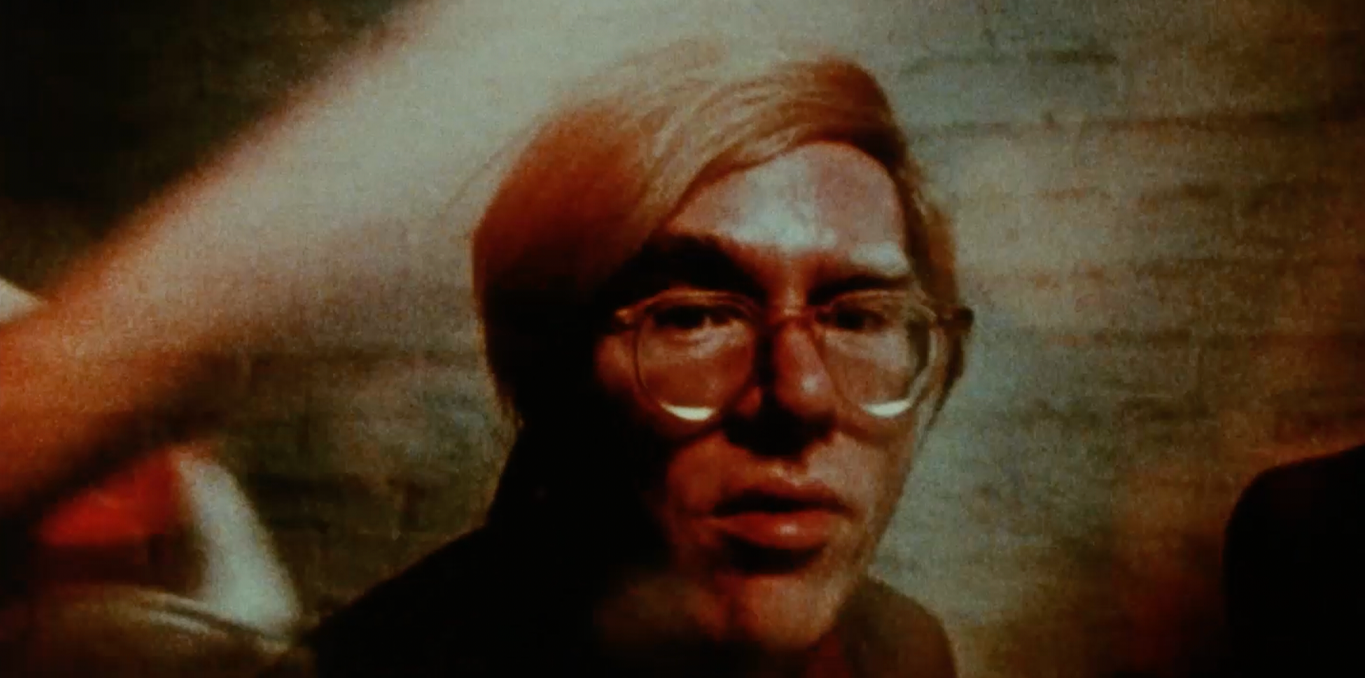
Jonas Mekas, a pioneer of the film diary, portrays his friend Andy Warhol and his inner circle from the early 1960s to the late 1980s, offering an intimate behind-the-scenes look at the artist’s life and career.
| Director | Jonas Mekas |
| Actor | Naomie Décarie-Daigneault |
| Share on |
What makes Mekas's work so moving?
There is, of course, the astonishing cast of characters: John Lennon, Yoko Ono, the Velvet Underground, George Maciunas, Allen Ginsberg, the Kennedy children, Lee Radziwill, Mick Jagger… There’s this distillation of the New York spirit from the 1960s to the 1980s—a veritable time capsule that gives us unprecedented access to this incomparable moment in he history of art.
But what makes Mekas's diaries so hypnotic and magnetic is that they reveal the sensibility not only of a great poet, but also of an incomparable friend.
Mekas overflows with tenderness. Here, it radiates toward Warhol. The gaze he casts upon him is neither indulgent nor starstruck, neither intrusive nor generic. It is full of life, laughter, joyful admiration, and reciprocity. It is the gaze of an artist, nourished, amused, and enchanted by another artist, with the heart and generosity of one who knows how to love without expectation or constraint.
Mekas is the poet behind the camera, but even more than that, he is the poet who loves—someone capable of making light radiate wherever he points his camera-eye. And engaging with his work is to be granted a share of that same gift: we emerge from it flooded with that same light, with the desire to pass it on in turn. This is the virtuous circle of love, within this vast, immortal—and free!—camaraderie that poets offer us.
Naomie Décarie-Daigneault
Tënk's Artistic Director

-
Français
37 mn
Language: Français
- Année 1990
- Pays United States
- Durée 37
- Producteur Jonas Mekas Films
- Langue English
- Sous-titres French
- Résumé court Jonas Mekas filmed his friend Andy Warhol (and his entourage) over the course of nearly 30 years, offering an intimate behind-the-scenes look at the artist’s life.
- Ordre 4
- TLF_Applismb_CA 1
- Date édito CA 2026-07-10
What makes Mekas's work so moving?
There is, of course, the astonishing cast of characters: John Lennon, Yoko Ono, the Velvet Underground, George Maciunas, Allen Ginsberg, the Kennedy children, Lee Radziwill, Mick Jagger… There’s this distillation of the New York spirit from the 1960s to the 1980s—a veritable time capsule that gives us unprecedented access to this incomparable moment in he history of art.
But what makes Mekas's diaries so hypnotic and magnetic is that they reveal the sensibility not only of a great poet, but also of an incomparable friend.
Mekas overflows with tenderness. Here, it radiates toward Warhol. The gaze he casts upon him is neither indulgent nor starstruck, neither intrusive nor generic. It is full of life, laughter, joyful admiration, and reciprocity. It is the gaze of an artist, nourished, amused, and enchanted by another artist, with the heart and generosity of one who knows how to love without expectation or constraint.
Mekas is the poet behind the camera, but even more than that, he is the poet who loves—someone capable of making light radiate wherever he points his camera-eye. And engaging with his work is to be granted a share of that same gift: we emerge from it flooded with that same light, with the desire to pass it on in turn. This is the virtuous circle of love, within this vast, immortal—and free!—camaraderie that poets offer us.
Naomie Décarie-Daigneault
Tënk's Artistic Director
-
Français
Duration: 37 minutesLanguage: Français37 mn
- Année 1990
- Pays United States
- Durée 37
- Producteur Jonas Mekas Films
- Langue English
- Sous-titres French
- Résumé court Jonas Mekas filmed his friend Andy Warhol (and his entourage) over the course of nearly 30 years, offering an intimate behind-the-scenes look at the artist’s life.
- Ordre 4
- TLF_Applismb_CA 1
- Date édito CA 2026-07-10