Natation
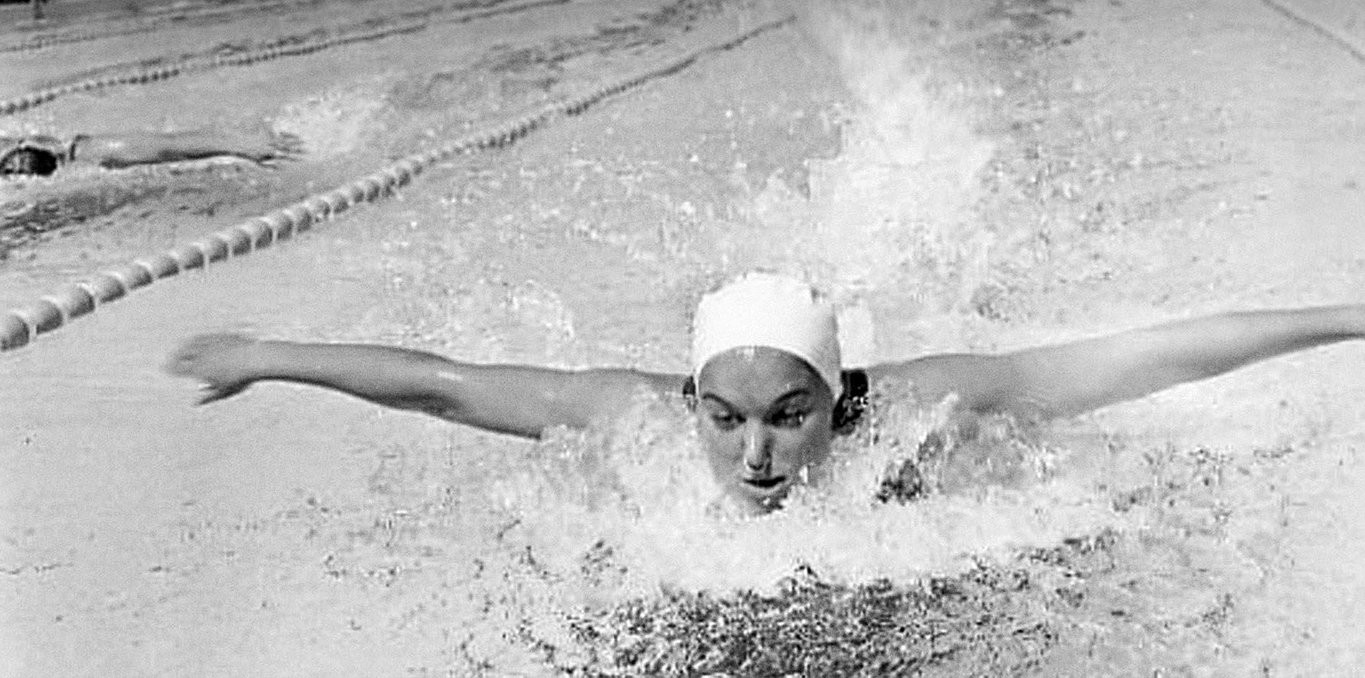
A portrait of Canadian athletes competing at the 1964 Summer Olympics in Tokyo, who devote every spare minute to training in the pool.
| Director | Gilles Carle |
| Share on |
Gilles Carle offers a unique perspective on the training and competitions of young Montreal swimmers striving to qualify for the 1964 Tokyo Olympics. At a time when the Cold War was reshaping the role of athletes within the geopolitical order, the state became a laboratory aimed at producing champions capable of demonstrating the superiority of its socioeconomic model. Commissioned by the National Film Board of Canada to document sporting practices, the film also helps define the specificity of the Canadian approach, serving as a compelling example of public diplomacy.
Through close attention to the indoor and outdoor sports facilities of Montreal and Vancouver, as well as the era's elaborate training devices—watches, stopwatches, clocks, magnifying glasses, and other instruments that now seem charmingly antiquated—Carle reveals a portrayal of the scientistic conception of sports. Yet he humorously contrasts this world of measurement and precision with moments of pure enjoyment among the young swimmers, these athletic ""Jane and Tarzan"" figures. Accompanied by lively jazz music and peppered with references to popular culture, the film ultimately subordinates its supposed scientific rigor to the joy of bodies in motion and to a generation determined to claim its place on both the national and international stage.
Looking back at this perspective is particularly interesting in light of the evolution of the Olympic movement. We witness the athletic feats of a young Richard “Dick” Pound, who would go on to become one of the most influential sports administrators, notably as vice president of the International Olympic Committee and as president of the World Anti-Doping Agency. Pound is one of many examples of Canada’s presence in the upper echelons of international sports. At the same time, the film's use of both male and female narration, together with its commitment to portraying women and men training side by side, offers a subtle challenge to the male dominance of the Olympic movement, hinting at the progressive potential of sports cinema. Considering that the Paris 2024 Olympic Games were the first to achieve full gender parity among athletes, one cannot help but reflect on how long that journey has been.
Mathieu Boivin-Chouinard
Teacher and historian

-
Français
27 mn
Language: Français
- Année 1964
- Pays Quebec
- Durée 27
- Producteur ONF / NFB
- Langue French
- Résumé court A portrait of Canadian athletes competing at the 1964 Summer Olympics in Tokyo, who devote every spare minute to training in the pool.
- Ordre 2
- TLF_Applismb_CA 1
- Date édito CA 2026-07-17
Gilles Carle offers a unique perspective on the training and competitions of young Montreal swimmers striving to qualify for the 1964 Tokyo Olympics. At a time when the Cold War was reshaping the role of athletes within the geopolitical order, the state became a laboratory aimed at producing champions capable of demonstrating the superiority of its socioeconomic model. Commissioned by the National Film Board of Canada to document sporting practices, the film also helps define the specificity of the Canadian approach, serving as a compelling example of public diplomacy.
Through close attention to the indoor and outdoor sports facilities of Montreal and Vancouver, as well as the era's elaborate training devices—watches, stopwatches, clocks, magnifying glasses, and other instruments that now seem charmingly antiquated—Carle reveals a portrayal of the scientistic conception of sports. Yet he humorously contrasts this world of measurement and precision with moments of pure enjoyment among the young swimmers, these athletic ""Jane and Tarzan"" figures. Accompanied by lively jazz music and peppered with references to popular culture, the film ultimately subordinates its supposed scientific rigor to the joy of bodies in motion and to a generation determined to claim its place on both the national and international stage.
Looking back at this perspective is particularly interesting in light of the evolution of the Olympic movement. We witness the athletic feats of a young Richard “Dick” Pound, who would go on to become one of the most influential sports administrators, notably as vice president of the International Olympic Committee and as president of the World Anti-Doping Agency. Pound is one of many examples of Canada’s presence in the upper echelons of international sports. At the same time, the film's use of both male and female narration, together with its commitment to portraying women and men training side by side, offers a subtle challenge to the male dominance of the Olympic movement, hinting at the progressive potential of sports cinema. Considering that the Paris 2024 Olympic Games were the first to achieve full gender parity among athletes, one cannot help but reflect on how long that journey has been.
Mathieu Boivin-Chouinard
Teacher and historian
-
Français
Duration: 27 minutesLanguage: Français27 mn
- Année 1964
- Pays Quebec
- Durée 27
- Producteur ONF / NFB
- Langue French
- Résumé court A portrait of Canadian athletes competing at the 1964 Summer Olympics in Tokyo, who devote every spare minute to training in the pool.
- Ordre 2
- TLF_Applismb_CA 1
- Date édito CA 2026-07-17