À hauteur d'homme
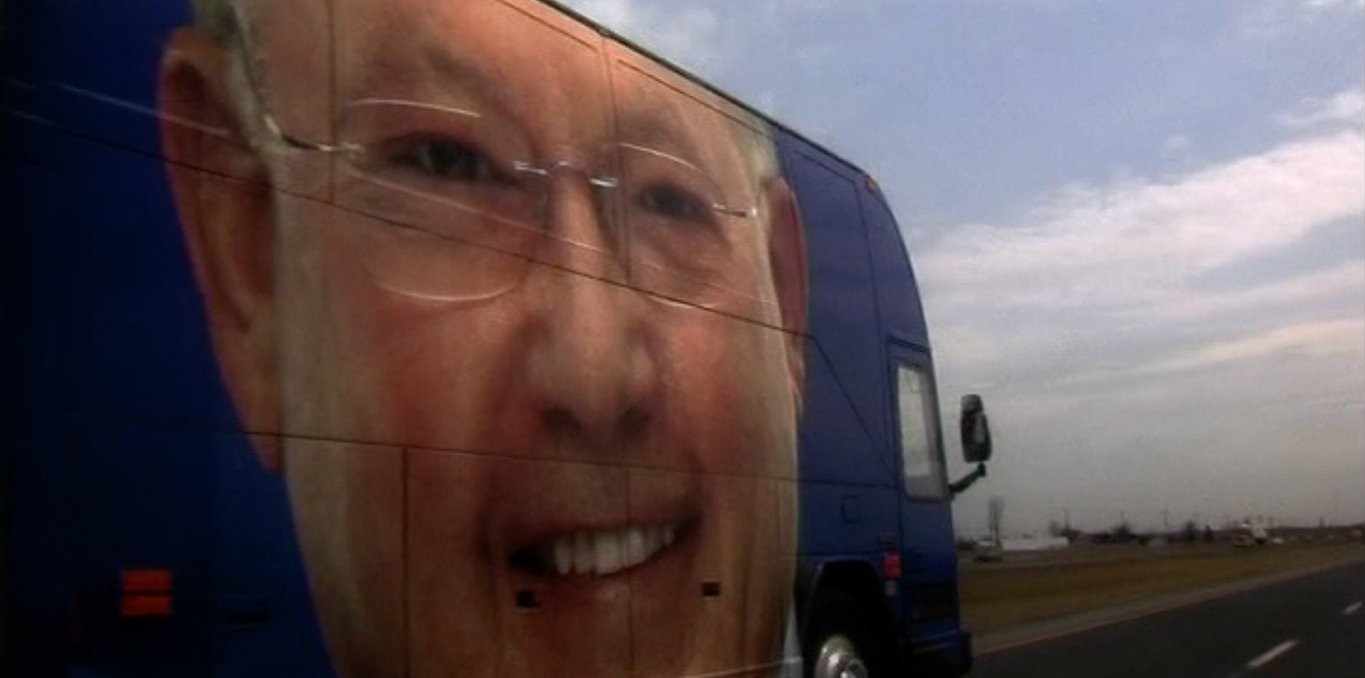
_À hauteur d'homme (At the Height of a Man)_ is a cinematic chronicle of the final weeks of Bernard Landry’s administration. Strategy meetings, closed-door sessions, cabinet meetings… This documentary offers an intimate glimpse into the world of Quebec’s 28th premier and unprecedented access to his final election campaign. A contemporary allegory of the exercise of power, directed by Jean-Claude Labrecque, one of Quebec’s masters of documentary filmmaking.
| Director | Jean-Claude Labrecque |
| Actor | Naomie Décarie-Daigneault |
| Share on |
In 2003, Bernard Landry agreed to let Jean-Claude Labrecque, one of Quebec’s greatest documentary filmmakers, follow him during his election campaign. Despite the risks involved in granting such access, the outgoing Quebec premier gave the filmmaker and his crew privileged access to his campaign bus, as well as to the behind-the-scenes proceedings of his team meetings and press conferences. The result is a portrait of Landry that gives equal weight to his vast erudition and to his more approachable side, revealed, among other things, by his judicious use of a few swear words.
Watching Labrecque’s film, the media’s relentless attacks on Landry, who was often described as hot-tempered and arrogant, is impossible to miss. During the campaign, journalists clearly tried to rattle him by relentlessly questioning him about a comment made by Jacques Parizeau, and then about a hypothetical referendum on independence. We know what happened next: Jean Charest’s PLQ won a majority of seats and formed the government until 2012. If the greatness of a statesman is measured by his rigour, integrity, and uprightness, À hauteur d’homme proves beyond a doubt that Bernard Landry possessed all three.
Jean-Philippe Desrochers
Critic
-

Français
Language: Français
- Année 2003
- Pays Quebec
- Durée 105
- Producteur Les productions Virage
- Langue French
- Résumé court A film crew gains unprecedented access to Quebec Premier Bernard Landry’s 2003 election campaign, offering an intimate look at power and politics.
- TLF_Applismb_CA 1
- Date édito CA 2026-10-02
In 2003, Bernard Landry agreed to let Jean-Claude Labrecque, one of Quebec’s greatest documentary filmmakers, follow him during his election campaign. Despite the risks involved in granting such access, the outgoing Quebec premier gave the filmmaker and his crew privileged access to his campaign bus, as well as to the behind-the-scenes proceedings of his team meetings and press conferences. The result is a portrait of Landry that gives equal weight to his vast erudition and to his more approachable side, revealed, among other things, by his judicious use of a few swear words.
Watching Labrecque’s film, the media’s relentless attacks on Landry, who was often described as hot-tempered and arrogant, is impossible to miss. During the campaign, journalists clearly tried to rattle him by relentlessly questioning him about a comment made by Jacques Parizeau, and then about a hypothetical referendum on independence. We know what happened next: Jean Charest’s PLQ won a majority of seats and formed the government until 2012. If the greatness of a statesman is measured by his rigour, integrity, and uprightness, À hauteur d’homme proves beyond a doubt that Bernard Landry possessed all three.
Jean-Philippe Desrochers
Critic
-
Français
Language: Français
- Année 2003
- Pays Quebec
- Durée 105
- Producteur Les productions Virage
- Langue French
- Résumé court A film crew gains unprecedented access to Quebec Premier Bernard Landry’s 2003 election campaign, offering an intimate look at power and politics.
- TLF_Applismb_CA 1
- Date édito CA 2026-10-02