Speak White
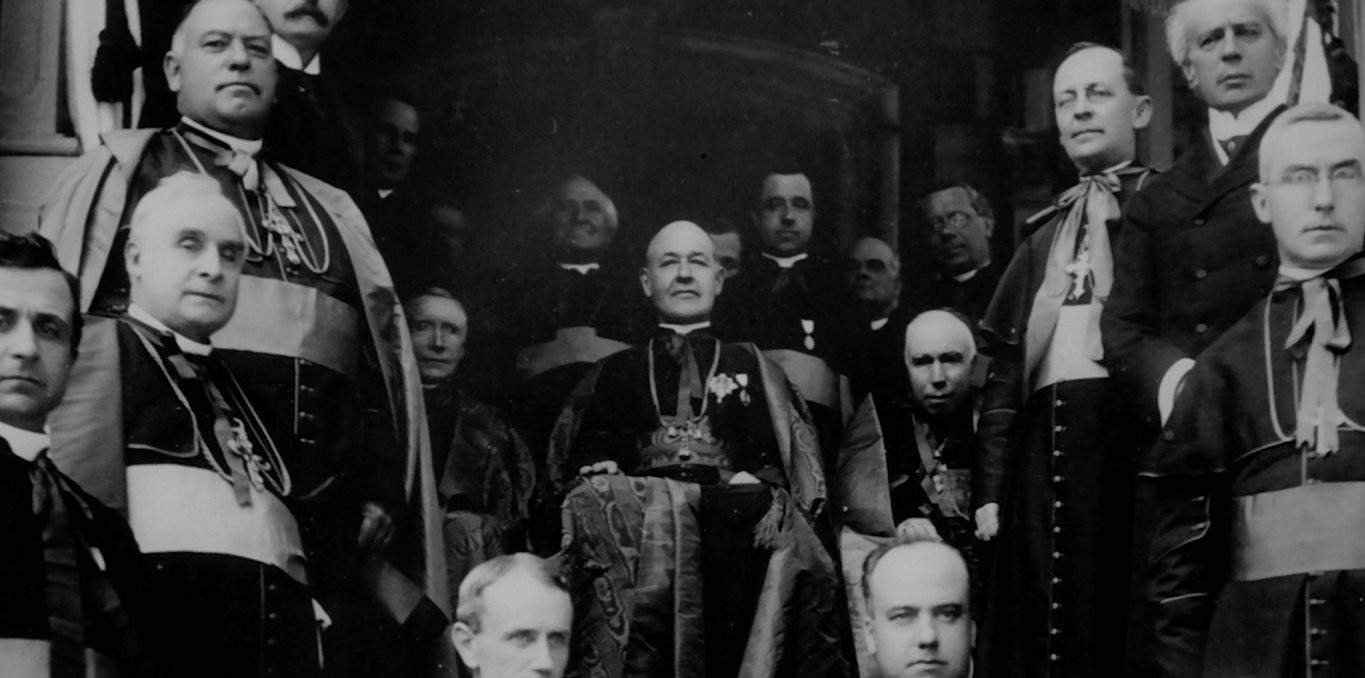
A short film based on a poem by Michèle Lalonde, first presented in 1970 at the inaugural Nuit de la poésie in Montreal. The poem unfolds over a montage of striking photographs, accompanied by an evocative soundtrack, in a film denouncing the economic and cultural imperialism of the ruling classes.
| Directors | Pierre Falardeau, Julien Poulin |
| Share on |
“Speak White”: speak the language of the conqueror. Up until the 80s, in Quebec and across North America, the expression meant: speak English, the language of the WASPs (White Anglo-Saxon Protestants) and the “big-shot bosses.” ¹ This short film is the result of archival photographic research in Quebec and the United States, and the first official collaboration of the duo Pierre Falardeau and Julien Poulin with the National Film Board of Canada (NFB). It possesses the same forceful spirit of protest and the same rebellious tone as the famous poem by Michèle Lalonde that it illustrates.
A full-throttle indictment of imperialism, colonialism, and capitalism, Speak White foreshadows in its own way—in both content and form, as well as in the controversy and distribution difficulties surrounding it—the iconic Time of the Buffoons (Pierre Falardeau, 1993). Anyone who has read or listened to Falardeau knows that, alongside his relentless advocacy for Quebec independence, he was equally committed to denouncing the exploitation of working people of all backgrounds by the ruling classes. The filmmaker-pamphleteer’s aim was always to forge solidarity “from Saint-Henri to Santo Domingo,” and well beyond the French-speaking world.
We must never forget, as Pierre Bourgault once declared, that fighting for the survival of French in Quebec means defending “all the languages of the world against the hegemony of a single one.” The Quebec independence movement must also always “remain faithful to the dreams that gave it birth.” ² As the final line of Michèle Lalonde’s poem makes clear, Falardeau and Poulin’s film is there to remind us “that we are not alone.”
Jean-Philippe Desrochers
Critic
1. Front de libération du Québec, Manifeste d’octobre 1970, Lux Éditeur, Montréal, 2010, p. 7
2. Pierre Bourgault’s speech « Sécurité, solidarité et respectabilité », available on YouTube

-

Français
Language: Français -
English
Language: English
- Année 1980
- Pays Quebec
- Durée 6
- Producteur ONF / NFB
- Langue French, English
- Sous-titres English
- Résumé court An adaptation of Michèle Lalonde’s famous poem, this short film denounces the economic and cultural imperialism of the ruling classes through a striking montage of photographs.
- TLF_Applismb_CA 1
- Date édito CA 2026-11-13
“Speak White”: speak the language of the conqueror. Up until the 80s, in Quebec and across North America, the expression meant: speak English, the language of the WASPs (White Anglo-Saxon Protestants) and the “big-shot bosses.” ¹ This short film is the result of archival photographic research in Quebec and the United States, and the first official collaboration of the duo Pierre Falardeau and Julien Poulin with the National Film Board of Canada (NFB). It possesses the same forceful spirit of protest and the same rebellious tone as the famous poem by Michèle Lalonde that it illustrates.
A full-throttle indictment of imperialism, colonialism, and capitalism, Speak White foreshadows in its own way—in both content and form, as well as in the controversy and distribution difficulties surrounding it—the iconic Time of the Buffoons (Pierre Falardeau, 1993). Anyone who has read or listened to Falardeau knows that, alongside his relentless advocacy for Quebec independence, he was equally committed to denouncing the exploitation of working people of all backgrounds by the ruling classes. The filmmaker-pamphleteer’s aim was always to forge solidarity “from Saint-Henri to Santo Domingo,” and well beyond the French-speaking world.
We must never forget, as Pierre Bourgault once declared, that fighting for the survival of French in Quebec means defending “all the languages of the world against the hegemony of a single one.” The Quebec independence movement must also always “remain faithful to the dreams that gave it birth.” ² As the final line of Michèle Lalonde’s poem makes clear, Falardeau and Poulin’s film is there to remind us “that we are not alone.”
Jean-Philippe Desrochers
Critic
1. Front de libération du Québec, Manifeste d’octobre 1970, Lux Éditeur, Montréal, 2010, p. 7
2. Pierre Bourgault’s speech « Sécurité, solidarité et respectabilité », available on YouTube
-
Français
Language: Français -
English
Language: English
- Année 1980
- Pays Quebec
- Durée 6
- Producteur ONF / NFB
- Langue French, English
- Sous-titres English
- Résumé court An adaptation of Michèle Lalonde’s famous poem, this short film denounces the economic and cultural imperialism of the ruling classes through a striking montage of photographs.
- TLF_Applismb_CA 1
- Date édito CA 2026-11-13