The Cat in the Bag
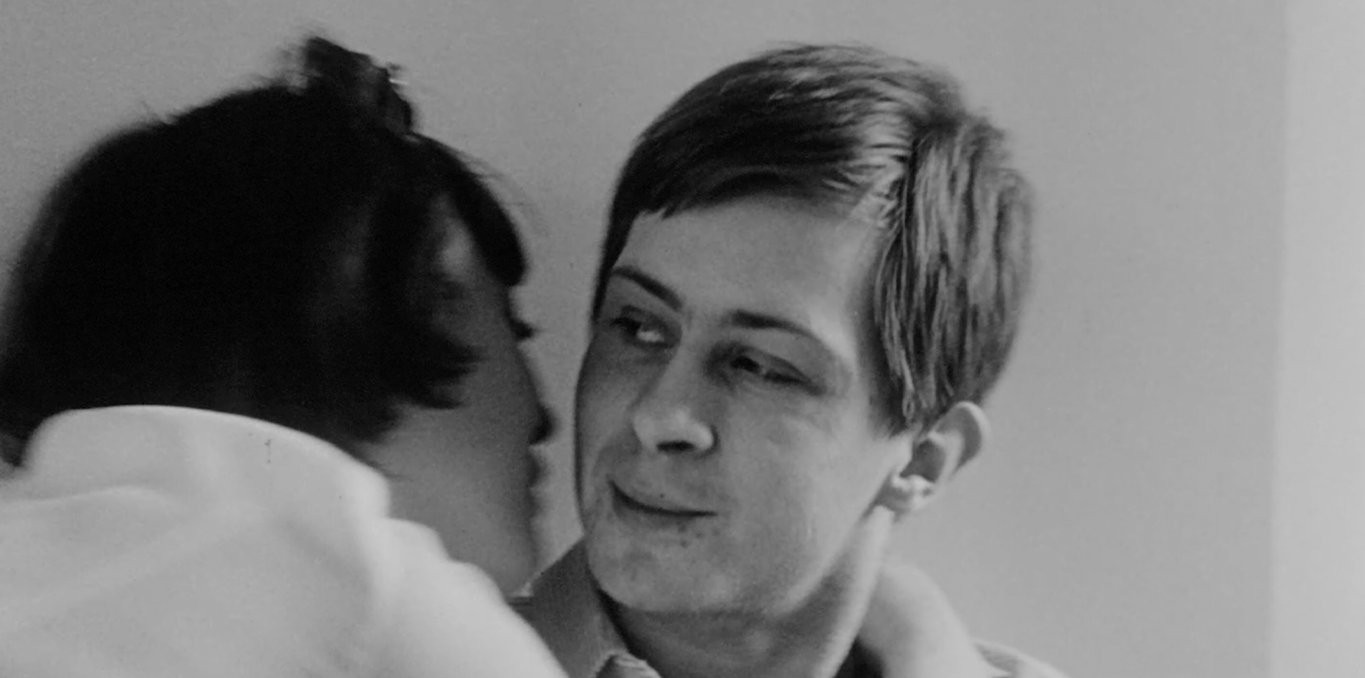
Through the portrayal of a twenty-three-year-old young man and his partner confronting adulthood, whose underlying struggle to find their place in the world symbolically reflects the destiny of an entire people, this film raises the profound question of the Quebec people's attainment of political maturity, as seen through the eyes of a filmmaker driven by ideals and the pursuit of the absolute.
| Director | Gilles Groulx |
| Share on |
In his first feature-length fiction film—which he would describe as a “mirror film”—Gilles Groulx portrays two characters who embody Quebec as it was in 1964. The Lesage government was beginning its second term; René Lévesque had just completed the nationalization of electricity and had yet to walk out on the Liberal Party. Just days after the film was shot, the Married Women’s Legal Capacity Act will grant married women the right to exist beyond the shadow of their husbands, as winds of change sweep across Quebec and people take to the streets chanting “Maîtres chez nous” (“Masters in Our Own Home”).
The film was released four years before the Parti québécois was founded. The fact that the party now thrives on insularity and fear of the other suddenly casts a different light on Claude, a bitter and gloomy man who claims that the only “way out is to remain alone,” before adding that Barbara—since she is Jewish and English-speaking—cannot be a Quebecer. “Because of your nationality (!), I thought you would be sympathetic to our aspirations,” he tells her, as though she were not unequivocally a Montrealer. Did Groulx have a premonition of what was to come?
I wonder what he would make of what we are becoming.
Jenny Cartwright
Documentarian and audio artist

-

Français
Language: Français -
English
Language: English
- Année 1964
- Pays Quebec
- Durée 74
- Producteur ONF / NFB
- Langue French
- Sous-titres English
- Résumé court Through the coming-of-age journey of two young adults, this film explores the Quebec people’s awakening to political maturity.
- TLF_Applismb_CA 1
- Date édito CA 2026-11-13
In his first feature-length fiction film—which he would describe as a “mirror film”—Gilles Groulx portrays two characters who embody Quebec as it was in 1964. The Lesage government was beginning its second term; René Lévesque had just completed the nationalization of electricity and had yet to walk out on the Liberal Party. Just days after the film was shot, the Married Women’s Legal Capacity Act will grant married women the right to exist beyond the shadow of their husbands, as winds of change sweep across Quebec and people take to the streets chanting “Maîtres chez nous” (“Masters in Our Own Home”).
The film was released four years before the Parti québécois was founded. The fact that the party now thrives on insularity and fear of the other suddenly casts a different light on Claude, a bitter and gloomy man who claims that the only “way out is to remain alone,” before adding that Barbara—since she is Jewish and English-speaking—cannot be a Quebecer. “Because of your nationality (!), I thought you would be sympathetic to our aspirations,” he tells her, as though she were not unequivocally a Montrealer. Did Groulx have a premonition of what was to come?
I wonder what he would make of what we are becoming.
Jenny Cartwright
Documentarian and audio artist
-
Français
Language: Français -
English
Language: English
- Année 1964
- Pays Quebec
- Durée 74
- Producteur ONF / NFB
- Langue French
- Sous-titres English
- Résumé court Through the coming-of-age journey of two young adults, this film explores the Quebec people’s awakening to political maturity.
- TLF_Applismb_CA 1
- Date édito CA 2026-11-13