The Little Ancestor
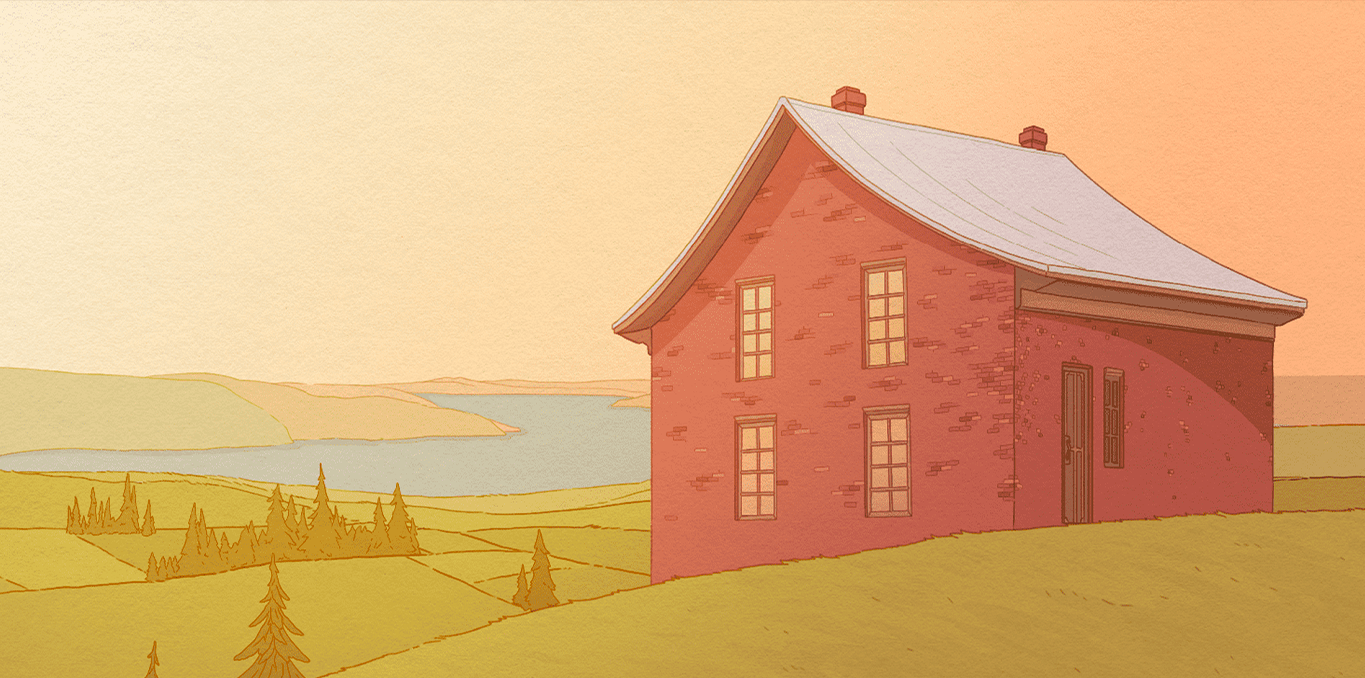
On a windswept hill, in a place still young and devoid of all life, an ancestral house builds itself. The house comes to life and unveils its long life of one hundred and fifty years. Over the years, it leads us to feel the passage of time, the transformations of its surroundings, and its vulnerability in the face of the unstoppable frenzy of our urban growth. The house evolves quietly in the heart of a growing and buzzing city that will eventually bring its end.
| Director | Alexa Tremblay-Francoeur |
| Share on |
On the ground, a few bricks come to life and set the stage; then, one by one, the stones, beams, and windows rise, stack, and fit together in rhythm, quickly taking on the appearance of a stately home on the banks of the Saguenay. The magical way in which the lines come together enhances the home’s simple charm. The house then welcomes the passing seasons and years, along with their share of occupants and twists of fate; and with them, it changes its face, evolving from a family home into a tourist inn, only to end up as an incongruity in the terribly functional landscape of modernity.
This silent, musical story is that of the Bossé House in Chicoutimi, built in 1870 and demolished in 2018, but also of many other old buildings once loved and later forgotten. Alexa Tremblay-Francoeur tells it with as much talent as grace, making the house the heroine of her film — humans, meanwhile, are only hinted at through their shadows cast on the walls or their boisterous activity. In this portrait of a building, everything is in motion. And the filmmaker beautifully takes the word “animation” literally: giving life to inanimate things, but also breathing a soul into them.
Apolline Caron-Ottavi
Programmer and writer
Cinémathèque québécoise

-
Français
11 mn
Language: Français -
English
11 mn
Language: English
- Année 2024
- Pays Quebec
- Durée 11
- Producteur Ha! Ha! Productions, Les Films de La Baie
- Langue Without dialogue
- Résumé court An ancestral house comes to life and reveals to us one hundred and fifty years of history.
- Mention festival Compétition officielle · 23e Sommets du cinéma d'animation
- Ordre 2
- TLF_Applismb_CA 1
- Date édito CA 2026-05-15
On the ground, a few bricks come to life and set the stage; then, one by one, the stones, beams, and windows rise, stack, and fit together in rhythm, quickly taking on the appearance of a stately home on the banks of the Saguenay. The magical way in which the lines come together enhances the home’s simple charm. The house then welcomes the passing seasons and years, along with their share of occupants and twists of fate; and with them, it changes its face, evolving from a family home into a tourist inn, only to end up as an incongruity in the terribly functional landscape of modernity.
This silent, musical story is that of the Bossé House in Chicoutimi, built in 1870 and demolished in 2018, but also of many other old buildings once loved and later forgotten. Alexa Tremblay-Francoeur tells it with as much talent as grace, making the house the heroine of her film — humans, meanwhile, are only hinted at through their shadows cast on the walls or their boisterous activity. In this portrait of a building, everything is in motion. And the filmmaker beautifully takes the word “animation” literally: giving life to inanimate things, but also breathing a soul into them.
Apolline Caron-Ottavi
Programmer and writer
Cinémathèque québécoise
-
Français
Duration: 11 minutesLanguage: Français11 mn -
English
Duration: 11 minutesLanguage: English11 mn
- Année 2024
- Pays Quebec
- Durée 11
- Producteur Ha! Ha! Productions, Les Films de La Baie
- Langue Without dialogue
- Résumé court An ancestral house comes to life and reveals to us one hundred and fifty years of history.
- Mention festival Compétition officielle · 23e Sommets du cinéma d'animation
- Ordre 2
- TLF_Applismb_CA 1
- Date édito CA 2026-05-15