499
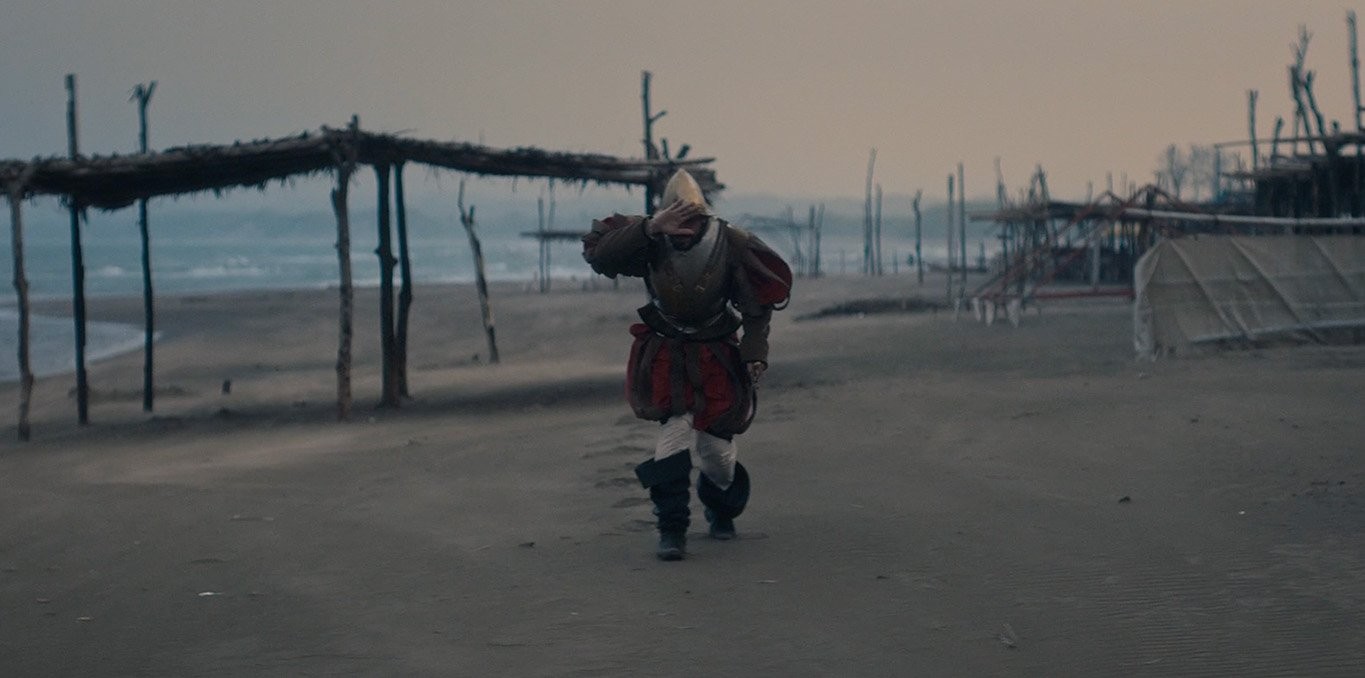
To reflect on the 500-year anniversary of the Spanish conquest of Mexico in 2021, director Reyes offers a bold hybrid cinema experience exploring the brutal legacy of colonialism in contemporary Mexico. Through the eyes of a ghostly conquistador, the film recreates Hérnan Cortés' epic journey from the coasts of Veracruz to the Aztec capital of Tenochtitlan, the site of contemporary Mexico City. As the anachronistic fictional character interacts with real-life victims of Mexico's failed drug wars and indigenous communities in resistance, the filmmaker portrays the country's current humanitarian crisis as part of a vicious and unfinished colonial project, still in motion, nearly five hundred years later.
| Director | Rodrigo Reyes |
| Share on |
The past and the future intertwine when one of Hernán Cortés's conquistadors is suddenly transported to contemporary Mexico, on the eve of the 500th anniversary of the country's invasion. The explorer travels and encounters the ruins of colonial violence, whose new forms—femicide, narco-politics, corruption, kidnapping, and more—extend the destruction of human bonds. Rodrigo Reyes's film in no way softens the brutality endured by the families of the disappeared, giving voice to those who refuse to let their loved ones be forgotten. Their testimonies are addressed to the film's central figure, this ghostly conquistador who wanders toward Mexico City, unable to understand what twist of fate has diverted him from his supposedly civilizing mission.
This character belongs to a whole repertoire of grotesque, greedy, and cruel figures. Yet he stands apart within this masculine lineage that embodies domination. Far removed from the frenzied conqueror portrayed in Aguirre, the Wrath of God (1972), this conquistador becomes instead the witness to the collapse of his own legacy. The melancholy that gradually overtakes him as he distances himself from the narratives of adventure and glory that sustained the conquest is striking. This disenchantment with history, experienced by one of its very agents of plunder, arises solely through his willingness to listen, until he ultimately relinquishes his own role as a "victor."
Renato Rodriguez-Lefebvre
Author and Ph.D. in Comparative Literature

-
English
1h28
Language: English
- Année 2020
- Pays Mexico, United States
- Durée 88
- Producteur RR Cinema, La Maroma Producciones
- Langue Spanish, Nahuatl
- Sous-titres English
- Résumé court A ghostly conquistador wanders through present-day Mexico, where history and reality intertwine in a meditation on colonialism’s lasting legacy.
- Mention festival Prix spécial du jury · Hot Docs 2020
- Ordre 9
- TLF_Applismb_CA 1
- Date édito CA 2026-06-12
The past and the future intertwine when one of Hernán Cortés's conquistadors is suddenly transported to contemporary Mexico, on the eve of the 500th anniversary of the country's invasion. The explorer travels and encounters the ruins of colonial violence, whose new forms—femicide, narco-politics, corruption, kidnapping, and more—extend the destruction of human bonds. Rodrigo Reyes's film in no way softens the brutality endured by the families of the disappeared, giving voice to those who refuse to let their loved ones be forgotten. Their testimonies are addressed to the film's central figure, this ghostly conquistador who wanders toward Mexico City, unable to understand what twist of fate has diverted him from his supposedly civilizing mission.
This character belongs to a whole repertoire of grotesque, greedy, and cruel figures. Yet he stands apart within this masculine lineage that embodies domination. Far removed from the frenzied conqueror portrayed in Aguirre, the Wrath of God (1972), this conquistador becomes instead the witness to the collapse of his own legacy. The melancholy that gradually overtakes him as he distances himself from the narratives of adventure and glory that sustained the conquest is striking. This disenchantment with history, experienced by one of its very agents of plunder, arises solely through his willingness to listen, until he ultimately relinquishes his own role as a "victor."
Renato Rodriguez-Lefebvre
Author and Ph.D. in Comparative Literature
-
English
Duration: 1h28Language: English1h28
- Année 2020
- Pays Mexico, United States
- Durée 88
- Producteur RR Cinema, La Maroma Producciones
- Langue Spanish, Nahuatl
- Sous-titres English
- Résumé court A ghostly conquistador wanders through present-day Mexico, where history and reality intertwine in a meditation on colonialism’s lasting legacy.
- Mention festival Prix spécial du jury · Hot Docs 2020
- Ordre 9
- TLF_Applismb_CA 1
- Date édito CA 2026-06-12