John McEnroe: In the Realm of Perfection
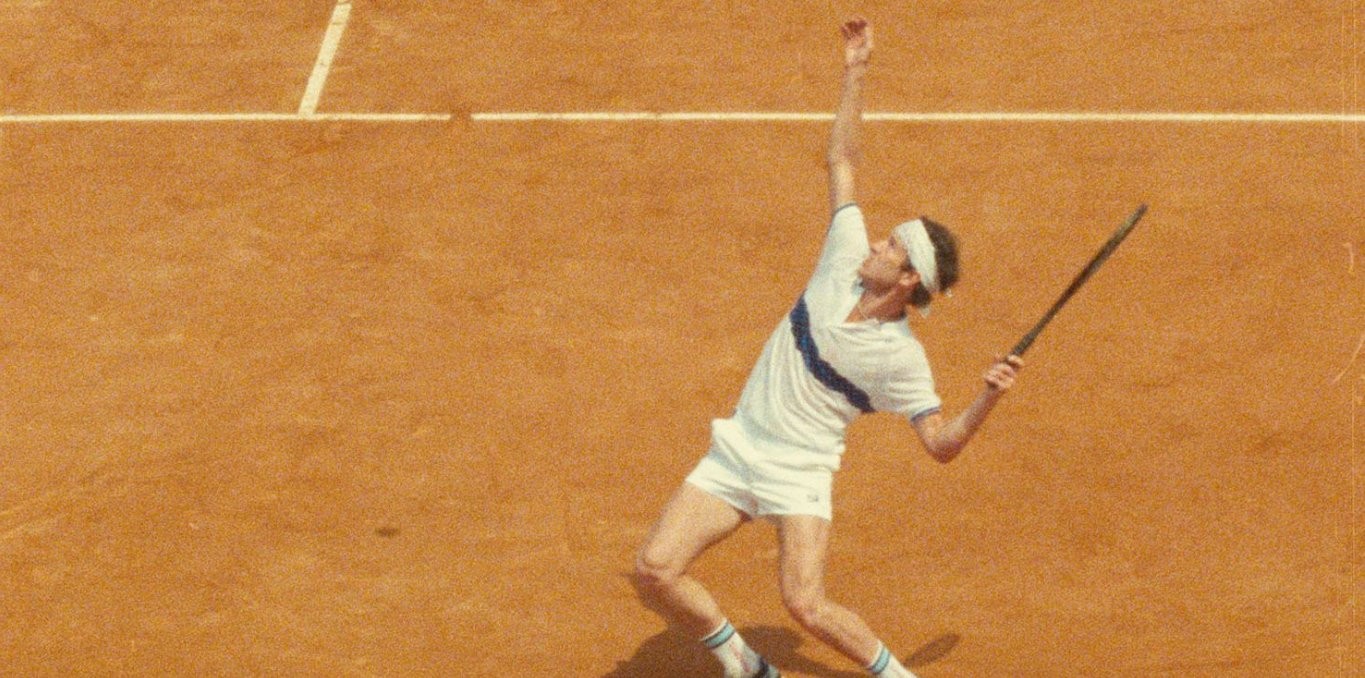
An immersive film essay on tennis legend John McEnroe at the height of his career as the world champion, documenting his strive for perfection, frustrations, and the hardest loss of his career at the 1984 Roland-Garros French Open.
| Director | Julien Faraut |
| Share on |
"Cinema lies, sport does not." This quote from Jean-Luc Godard, which opens Julien Faraut’s film, immediately sets the stage for his innovative approach: exploring sports and cinema in parallel. The ingenuity of the device becomes evident within the first few minutes, through the figure of tennis player-turned-filmmaker Gil de Kermadec, who became a director for the French Tennis Federation and whose career serves as the anchor for this exploration. The cinematic essay begins with excerpts from his instructional film from the mid-1960s, which sought to break down the mechanics of athletic movement through a pedagogical lens. However, de Kermadec soon encounters the limits of this scientific approach, as it fails to capture the genius of the greatest players.
Twenty years later, after spending a long time focusing his camera on one of the most unique geniuses of the tennis court—the American John McEnroe—Kermadec released a new film that stood in stark contrast to his early cinematic endeavors. Another thirty years later, Julien Faraut delved back into the raw footage from the shoot to try to capture the McEnroe phenomenon, and the result is astonishing.
The film employs cinematic language to delve into the complexity of sport’s intangible elements. The full richness of McEnroe’s style, transformed into a cinematic character who leaps off the screen, emerges through a profound reflection on the image itself, conceived in opposition to the conventional television coverage of matches and enhanced by a brilliant musical treatment. Filmed in this way, the explanatory elements behind victory acquire an unexpected depth.
Along the way, drawing on the writings about tennis by film critic Serge Daney — another figure fascinated by McEnroe — the de Kermadec/Faraut duo accomplishes a remarkable feat, exploring the many dimensions of genius: the relationship to time, rhythm, emotion, the audience, pleasure, injustice, and family lineage, all of which make McEnroe far more than a gifted but temperamental athlete. The sublime retelling of the 1984 tournament final between McEnroe and his great Czechoslovak rival Ivan Lendl reaches the very essence of sporting drama. The attempt to reduce such dramatic intensity to a series of mechanical movements ultimately appears all the more absurd. This extraordinary film invites us on a journey from the biomechanics of the body to the art of sport.
Mathieu Boivin-Chouinard
Teacher and historian

-
Français
1h35
Language: Français
- Année 2018
- Pays France
- Durée 95
- Producteur UFO Production
- Langue French
- Résumé court A dazzling immersion into the movements of the most fiery left-hander in tennis history: John McEnroe.
- Ordre 1
- TLF_Applismb_CA 1
- Date édito CA 2026-07-17
"Cinema lies, sport does not." This quote from Jean-Luc Godard, which opens Julien Faraut’s film, immediately sets the stage for his innovative approach: exploring sports and cinema in parallel. The ingenuity of the device becomes evident within the first few minutes, through the figure of tennis player-turned-filmmaker Gil de Kermadec, who became a director for the French Tennis Federation and whose career serves as the anchor for this exploration. The cinematic essay begins with excerpts from his instructional film from the mid-1960s, which sought to break down the mechanics of athletic movement through a pedagogical lens. However, de Kermadec soon encounters the limits of this scientific approach, as it fails to capture the genius of the greatest players.
Twenty years later, after spending a long time focusing his camera on one of the most unique geniuses of the tennis court—the American John McEnroe—Kermadec released a new film that stood in stark contrast to his early cinematic endeavors. Another thirty years later, Julien Faraut delved back into the raw footage from the shoot to try to capture the McEnroe phenomenon, and the result is astonishing.
The film employs cinematic language to delve into the complexity of sport’s intangible elements. The full richness of McEnroe’s style, transformed into a cinematic character who leaps off the screen, emerges through a profound reflection on the image itself, conceived in opposition to the conventional television coverage of matches and enhanced by a brilliant musical treatment. Filmed in this way, the explanatory elements behind victory acquire an unexpected depth.
Along the way, drawing on the writings about tennis by film critic Serge Daney — another figure fascinated by McEnroe — the de Kermadec/Faraut duo accomplishes a remarkable feat, exploring the many dimensions of genius: the relationship to time, rhythm, emotion, the audience, pleasure, injustice, and family lineage, all of which make McEnroe far more than a gifted but temperamental athlete. The sublime retelling of the 1984 tournament final between McEnroe and his great Czechoslovak rival Ivan Lendl reaches the very essence of sporting drama. The attempt to reduce such dramatic intensity to a series of mechanical movements ultimately appears all the more absurd. This extraordinary film invites us on a journey from the biomechanics of the body to the art of sport.
Mathieu Boivin-Chouinard
Teacher and historian
-
Français
Duration: 1h35Language: Français1h35
- Année 2018
- Pays France
- Durée 95
- Producteur UFO Production
- Langue French
- Résumé court A dazzling immersion into the movements of the most fiery left-hander in tennis history: John McEnroe.
- Ordre 1
- TLF_Applismb_CA 1
- Date édito CA 2026-07-17