Her Scream
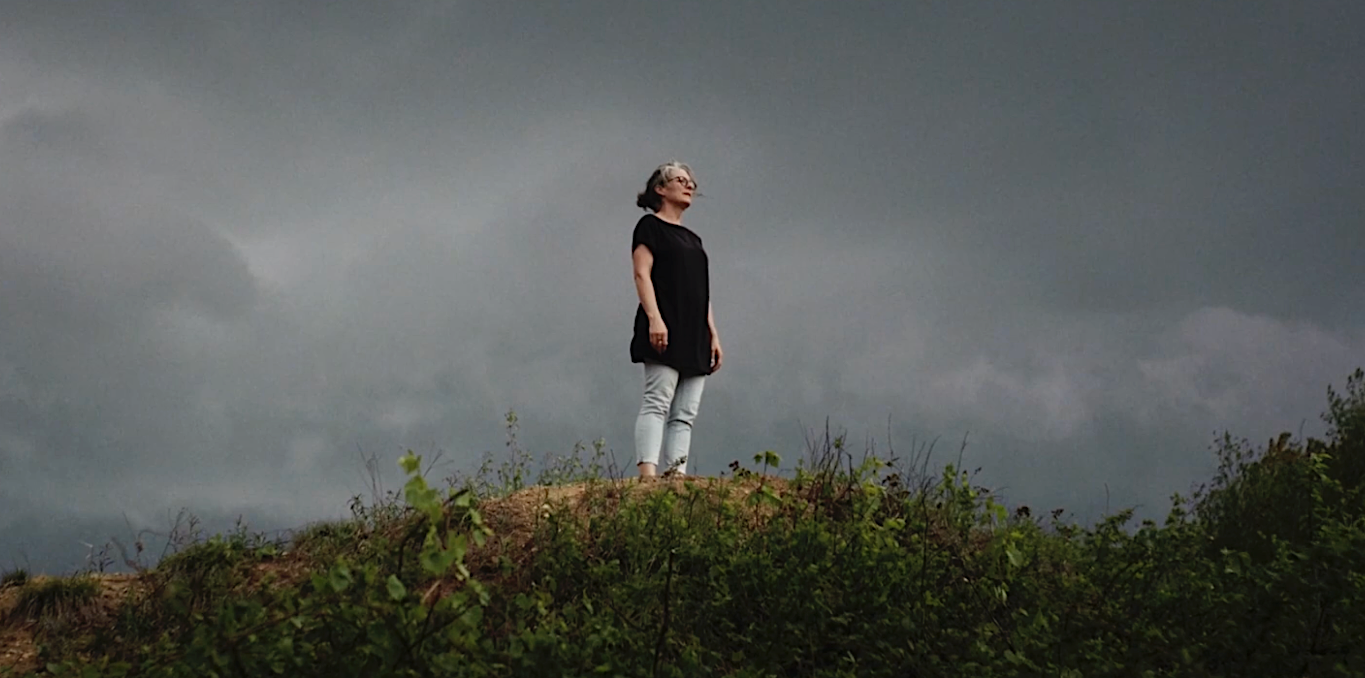
Audrey, a woman in her mid-fifties, has never been able to make peace with her tumultuous family history. She now decides to confront her demons. Supported by her son, the director of the documentary, she revisits a striking scene from her past: the moment when she told her parents that her grandfather had sexually assaulted her. Together, through a year-long production process, they transform this awkward exchange into a moment of communion, thanks to actors, a set and Audrey's desire to do herself justice.
| Director | Éloi Baril |
| Share on |
Audrey chose cinema as a way to tell her story, confront her demons, and make peace with life. While her parents never supported her in dealing with the trauma of being sexually abused by her grandfather, she turns to the next generation for support. Her filmmaker son accompanies her, ready to stand by her through whatever follows, from discomfort to liberation, through the difficulty of confessing and opening herself up to another person. Her Scream is a remarkable example of the power of art as a force for testimony, solace, reconciliation, and healing.
While the film briefly calls to mind Loïc Darses’s excellent short film A Woman and Her Car (2016), which tells—differently—the story of a similar experience and process shared by another mother-documentarian duo, the difference between the two films goes far beyond their respective lengths. Through staged scenes with actors, the film brings Audrey’s vision to life. These scenes allow her to revisit the painful memory of telling her parents what had happened, and then to imagine, through fiction, what she had hoped to hear from them. Éloi Baril takes an enormous risk, both for his mother and for himself. The reactions of every family member affected by this story, Audrey above all, are entirely unpredictable. But the possibility of catharsis is too important not to try.
What is most captivating about the film is not so much the raw emotion it conveys—though it is deeply moving—but the choice to make the process of working through and exploring this act, which is both therapeutic and cinematic, the very substance of the film itself. From assembling family photographs to the decision to keep recording sound after the camera has stopped rolling, every filmmaking act speaks to Audrey’s desire, and her son’s, to see the experience through to its end. To acknowledge that she is still affected today by what happened to her, without feeling guilty. To transcend this trauma by creating her own sense of justice in order to start a new life.
Claire Valade
Critic and programmer

-

Français
Language: Français -
English
Language: English
- Année 2024
- Pays Quebec
- Durée 61
- Producteur Sandrine Janelle et Éloi Baril
- Langue French
- Sous-titres English
- Résumé court Through creation comes healing. With the help of her son, a woman revisits her past and reimagines a painful memory through the lens of cinema.
- TLF_Applismb_CA 1
- Date édito CA 2026-09-11
Audrey chose cinema as a way to tell her story, confront her demons, and make peace with life. While her parents never supported her in dealing with the trauma of being sexually abused by her grandfather, she turns to the next generation for support. Her filmmaker son accompanies her, ready to stand by her through whatever follows, from discomfort to liberation, through the difficulty of confessing and opening herself up to another person. Her Scream is a remarkable example of the power of art as a force for testimony, solace, reconciliation, and healing.
While the film briefly calls to mind Loïc Darses’s excellent short film A Woman and Her Car (2016), which tells—differently—the story of a similar experience and process shared by another mother-documentarian duo, the difference between the two films goes far beyond their respective lengths. Through staged scenes with actors, the film brings Audrey’s vision to life. These scenes allow her to revisit the painful memory of telling her parents what had happened, and then to imagine, through fiction, what she had hoped to hear from them. Éloi Baril takes an enormous risk, both for his mother and for himself. The reactions of every family member affected by this story, Audrey above all, are entirely unpredictable. But the possibility of catharsis is too important not to try.
What is most captivating about the film is not so much the raw emotion it conveys—though it is deeply moving—but the choice to make the process of working through and exploring this act, which is both therapeutic and cinematic, the very substance of the film itself. From assembling family photographs to the decision to keep recording sound after the camera has stopped rolling, every filmmaking act speaks to Audrey’s desire, and her son’s, to see the experience through to its end. To acknowledge that she is still affected today by what happened to her, without feeling guilty. To transcend this trauma by creating her own sense of justice in order to start a new life.
Claire Valade
Critic and programmer
-
Français
Language: Français -
English
Language: English
- Année 2024
- Pays Quebec
- Durée 61
- Producteur Sandrine Janelle et Éloi Baril
- Langue French
- Sous-titres English
- Résumé court Through creation comes healing. With the help of her son, a woman revisits her past and reimagines a painful memory through the lens of cinema.
- TLF_Applismb_CA 1
- Date édito CA 2026-09-11